Want to be in the loop?
subscribe to
our notification
Business News
ONLINE SALES DRIVE BUSINESS SUCCESS TO NEW HEIGHTS
A report by market research firm Statista highlights that Vietnam’s e-commerce market is currently dominated by major platforms such as Shopee, TikTok Shop, Lazada, and Tiki.

Online sales drive business success to new heights, Source: freepik.com
Hanoi – As the global economy accelerates, online sales have emerged as a crucial factor in the success of many businesses.
A report by market research firm Statista highlights that Vietnam’s e-commerce market is currently dominated by major platforms such as Shopee, TikTok Shop, Lazada, and Tiki. Shopee leads with a commanding 67.9 per cent market share, followed by TikTok Shop 23.2 per cent, Lazada 7.6 per cent, and Tiki just 1.3 per cent.
Nguyen Thanh Son, Director of E-commerce at WINCO Group, emphasised that businesses are increasingly recognising the importance of selling across multiple platforms. However, many companies still rely on a single channel, thereby missing opportunities to expand their customer base. With the rapid rise of social media, failing to engage on these platforms can leave businesses behind. A significant challenge is managing and synchronising product information across different channels, which requires investment in both technology and human resources, Son added.
Pham Thuy Hanh, CEO of Lumos Cosmetics Vietnam Co. Ltd, underscored that multi-platform online sales are an inevitable trend for sustainable business growth. However, the road to success is not always smooth. Despite the rising demand for online shopping, many businesses have yet to fully understand the importance of having a presence across multiple platforms.
Hoang Trung Dung, CEO of Hoang Thinh Solutions Trading and Services Co. Ltd, pointed to limited resources as a key barrier. Many small and medium-sized enterprises (SMEs) struggle with manpower shortages and financial constraints. The pressure to invest in new technologies to keep pace with market developments can cause smaller businesses to fall behind larger competitors.
Another challenge is managing and synchronising data across platforms. Without an effective management system, inconsistencies in product details, pricing, and promotions may confuse customers and damage brand credibility. To succeed, businesses must go beyond developing quality products, but also enhance customer experience and support across multiple sales channels, he noted.
A Google study found that 53 per cent of consumers abandon a website if it takes more than three seconds to load, highlighting the critical need to optimise user experience across all platforms. Furthermore, many companies are leveraging multi-platform sales not only for revenue growth but also to strengthen brand recognition. As each platform requires a distinct approach, businesses must tailor their communication strategies to suit each one. Engaging content and targeted interactions, whether through social media ads or personalised website experiences, can help foster customer loyalty.
To help businesses, particularly SMEs, navigate multi-platform sales, experts advocate for a comprehensive approach to marketing and sales strategies.
Companies can utilise multi-channel management software to track orders, manage inventory, and analyse customer behavior. Some firms have successfully implemented these solutions. For example, Tiki has integrated artificial intelligence (AI) to personalise user experiences and boost conversion rates. Data analytics is also critical, as it provides valuable insights into consumer behaviour and market trends. A report by McKinsey & Company revealed that businesses effectively utilising data analytics can increase revenue by 5-6 per cent.
Strategic marketing and promotional campaigns are essential for expanding customer reach. For instance, during major shopping events like Black Friday or Cyber Monday, businesses can attract consumers with exclusive discounts and targeted promotions.
Le Van Dung, CEO of ABsoft JSC and a digital transformation expert, highlighted that multi-platform online sales not only help businesses expand their market but also mitigate risks associated with over-reliance on a single channel. According to company data, businesses operating on at least three platforms have reported a 40 per cent increase in revenue compared to the previous year. Utilising social media platforms such as Facebook and Instagram strengthens customer relations while fostering an interactive community where users can share and discuss products—an essential component of brand building.
Source: VIR
Related News

VIETNAM ECONOMY INVESTMENT
VIETNAMESE COMPANIES OPTIMISTIC ON INTERNATIONAL GROWTH
Vietnamese businesses are among the most confident about the outlook for international trade, according to HSBC’s Global Trade Pulse Survey 2026, released on November 16. The survey captures the views of 10,000 senior business leaders across 26 markets on trade, tariffs, supply chains, and technology. Findings show that 94 per cent of Vietnamese businesses expect their international trade to grow over the next two years. Vietnam ranks joint top in the survey with the Philippines, compared with 86 per cent globally.
TECHNOLOGY
VIỆT NAM'S DIGITAL TECHNOLOGY INDUSTRY REVENUE SURGES 53% TO $254.6B
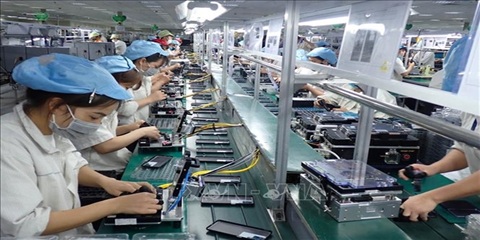
Việt Nam's digital technology industry generated an estimated US$254.6 billion in revenue in the first 10 months of 2026, up 53 per cent from a year earlier, while exports rose 46.2 per cent to $212 billion, the Ministry of Science and Technology said in its latest report. According to the report, hardware and electronics exports reached an estimated $30.681 billion in October, up 108 per cent from the same month last year.
CHARITY / EXHIBITION / OTHER EVENTS
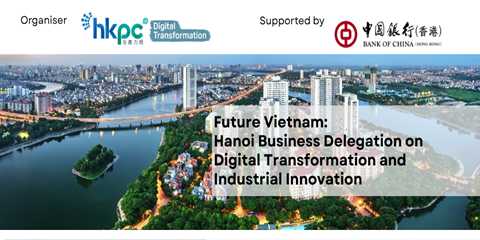
BOCHK ‧ HKPC FUTURE VIETNAM: HANOI BUSINESS DELEGATION ON DIGITAL TRANSFORMATION AND INDUSTRIAL INNOVATION
Interested in exploring Vietnam’s latest developments in digital transformation, technology adoption and industrial innovation? Organised by the Hong Kong Productivity Council (HKPC) and fully supported by Bank of China (Hong Kong) Limited, the "Future Vietnam: Hanoi Business Delegation on Digital Transformation and Industrial Innovation” will feature visits to leading high-tech enterprises across Vietnam and engage with local chambers of commerce, industry organisations and associations. Join us to expand your high-value business network and seize emerging opportunities in the ASEAN market!
GARMENT / TEXTILE
TEXTILE, GARMENT FIRMS REFORM TO MEET CPTPP ORIGIN RULES
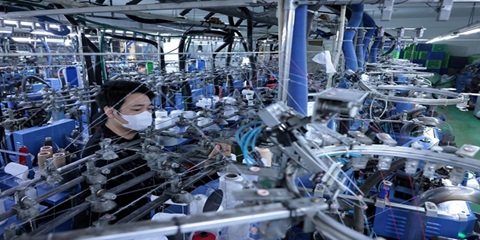
Vietnamese textile and garment manufacturers are aggressively restructuring their supply chains and diversifying material sources to unlock untapped tariff benefits. To capitalise on the Comprehensive and Progressive Agreement for Trans-Pacific Partnership (CPTPP), companies are racing to align with the pact's strict "yarn-forward" rules — a task made difficult by a shortage of raw materials within the trade bloc.

TECHNOLOGY
ĐÀ NẴNG SEEKS TO BUILD HIGH-TECH AGRICULTURE, INTEGRATED VALUE CHAINS
Đà Nẵng is seeking to transform its agricultural sector from a supplier of raw materials into a technology-driven, market-oriented economy, with investment opportunities spanning concentrated production areas, deep processing, logistics and agricultural product distribution. The city aims to shift from traditional agricultural production towards agricultural economic development, organising value chains and increasing the technological content and added value of products through closer links between production and processing.

INFRASTRUCTURE / CONSTRUCTION / LOGISTIC / PORT
HCM CITY ACCELERATES POWER INFRASTRUCTURE INVESTMENT TO ATTRACT HIGH-TECH CAPITAL
High-tech projects, particularly data centres, are not confined to SHTP but are also expanding into export processing zones and industrial parks across HCM City, driving up electricity demand. Proactively developing power infrastructure, diversifying energy supplies and expanding access to green energy are becoming essential for HCM City to maintain its competitive edge in attracting high-tech foreign direct investment (FDI).
Events Sponsors