Want to be in the loop?
subscribe to
our notification
Business News
OPTIMIZING LEGAL AND REGULATORY FRAMEWORKS FOR EFFICIENT PUBLIC INVESTMENT DISBURSEMENT
Public investment serves as an important engine for economic growth, yet the realization of plans is essential for this engine to fully harness its potential.
According to the Ministry of Planning and Investment, a 1% increase in public investment raises GDP by 0.058%, and each VND1 disbursed stimulates an extra VND1.61 from the non-state sector. However, plan implementation often falls short at around 80% annually, despite government efforts.
According to the Asian Development Bank (ADB), currently, approved projects with allocated budgets are sometimes not ready for implementation, causing long delays. Therefore, a systematic approach is needed to improve project readiness that can significantly increase implementation efficiency. Many projects require basic preparatory activities, such as feasibility studies, site clearance arrangements and procurement preparation in parallel with project approval procedures. Projects with high readiness to accelerate implementation will help minimize capital overruns.
Besides, projects sometimes need design or budget changes even after approval and budget allocation. This may cause prolonged disruption before project activities can begin. A major obstacle to the timely and quality preparation of projects is the complexity of regulations, especially land use planning, land acquisition and site clearance. This rigidity is an important challenge in volatile market situations. Rising prices due to lack of raw materials and production inputs – which occur due to legal restrictions – lead to higher costs, forcing contract renegotiations or requiring additional funding and additional approvals. Therefore, according to ADB, there is a need to amend the regulations to allow for principles-based and fit-for-purpose flexibility, as part of improving project cycle procedures.
Notably, poor coordination between public investment and the budget process leading to slow and insufficient budget allocation is still occurring. In recent years, reports have shown that central agencies received higher allocations than recommended, while provinces received too little compared to their needs. The urgent challenge of discrepancies between allocated budgets and investment mandates often leads to budget shortfalls and project implementation delays budgets may not be optimally allocated to the identified priority areas, leading to not making the most effective use of resources. This limits project progress and capital use efficiency.
The Government has applied measures to improve transparency, efficiency and accountability in budget allocation and disbursement. This promotes better coordination between central and local governments, prioritizing projects based on impact and readiness, and implementing rigorous monitoring mechanisms to ensure utilization of capital with high performance. However, the effectiveness of these measures appears to be limited. The disparity between implementation capacity at different levels of government highlights the need to strengthen capital allocation processes and build local government capacity. The ongoing decentralization of public investment and fiscal responsibilities has exposed weaknesses in addressing inter-provincial or inter-regional challenges. According to ADB experts, the budget process should be flexibly adjusted, and it will be more effective at any level (central or provincial) to contribute resources to a regionally coordinated project.
In 2024, public investment will continue to play an important role in supporting the economy. After the National Assembly approved the budget, the Prime Minister approved a plan to allocate VND688.5 trillion to continue building infrastructure and promote economic development. The government has implemented various policy measures to accelerate disbursement of public investment and improve implementation efficiency. These measures include a series of resolutions and directives focusing on different aspects of public investment disbursement. However, to maintain progress, ADB believes that more systematic measures are needed to improve legal and regulatory processes for successful implementation. By proactively overcoming these obstacles in a comprehensive manner throughout the project cycle, Vietnam can maximize the potential of public investment initiatives, promoting economic growth and sustainable development.
Source: VCCI
Related News

CHARITY / EXHIBITION / OTHER EVENTS
INVESTMENT OPPORTUNITIES IN CA MAU PROVINCE: 96 PROJECTS AND 20 STRATEGIC PROJECTS
We are pleased to share with you information on investment projects currently seeking investors in Ca Mau Province. Should your esteemed company or association be interested, we kindly invite you to review the project information and complete the registration form via the links provided. The Ho Chi Minh City Investment and Trade Promotion Centre (ITPC) will consolidate the expressions of interest and facilitate connections with the leadership of Ca Mau Province at a meeting tentatively scheduled for 13 November 2026 in Ho Chi Minh City.
MEMBER CORNER / PROMOTIONS
BẰNG KIỀU LIVESHOW - A SYMPHONY OF LOVE UNDER THE GOLDEN GLOW
A masterclass in live music that takes the audience on a soulful journey through immortal love songs, guided by the peerless artistry and emotive storytelling of renowned singer Bằng Kiều. The highlight of the night is his seamless musical chemistry with special guest Triệu Hồng Ngọc, promising passionate and deeply resonant duets inside the magnificent Grand Ballroom.
INFRASTRUCTURE / CONSTRUCTION / LOGISTIC / PORT
ĐÀ NẴNG GREEN-LIGHTS US$105 MILLION THAI DEVELOPMENT DEAL
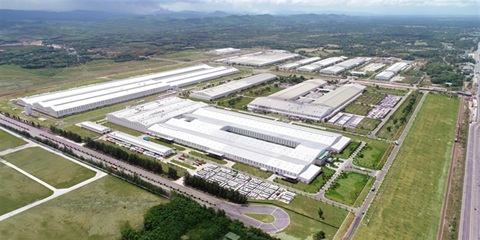
The central city has approved an investment proposal by Thailand’s WHA Group to develop infrastructure for the 400ha WHA Đà Nẵng Industrial Park project on two communes of Thăng Bình and Đồng Dương, with an investment of more than VNĐ2.7 trillion (US$105 million). The city said it approved WHA Industrial Development International's status as an investor in the project, which is expected to take place between 2027 and 2034.
VIETNAM ECONOMY INVESTMENT
MOBILE PHONE EXPORTS RISE 20% TO $51.8 BILLION IN FIRST NINE MONTHS
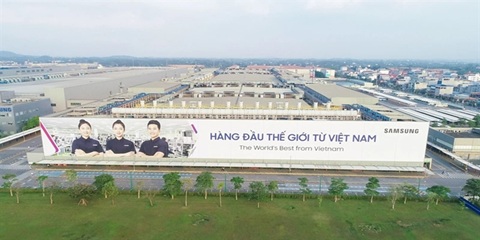
Exports of mobile phones and components rose 20 per cent year-on-year to nearly US$51.8 billion in the first nine months of 2026, with China, the US and Republic of Korea accounting for more than half of the total. Shipments to the three markets reached a combined $26.18 billion, or 50.6 per cent of total exports of the product group during the period, according to data from the Vietnam Department of Customs under the Ministry of Finance.
INFRASTRUCTURE / CONSTRUCTION / LOGISTIC / PORT
VIỆT NAM-CAMBODIA TRADE GATHERS PACE TOWARDS $20 BILLION TARGET
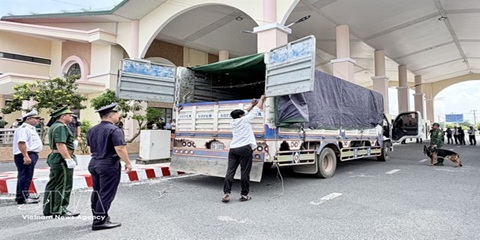
Trade between Việt Nam and Cambodia continues to grow, remaining a bright spot and a key pillar of bilateral cooperation as the two countries aim to raise two-way trade to US$20 billion in the coming years. After setting a record of more than $11.3 billion last year, bilateral trade reached about $8.7 billion in the first eight months of this year, up 8.3 per cent year on year.
VIETNAM ECONOMY INVESTMENT
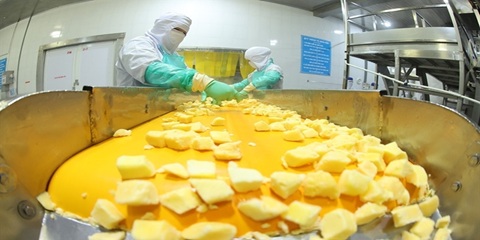
FRUIT AND VEGETABLE EXPORTS POISED TO HIT $10 BILLION IN 2026
Fruit and vegetable exports are on track to reach nearly US$10 billion in 2026, after rising 19.9 per cent year on year to nearly US$7.4 billion in the first nine months, driven by strong seasonal demand and abundant tropical fruit supplies. The Ministry of Agriculture and Environment said the growth reflected stronger international demand for fresh produce and processed agricultural products.
Events Sponsors






















