Want to be in the loop?
subscribe to
our notification
Business News
PEOPLE WILL BENEFIT FROM LIMITED-TERM APARTMENT OWNERSHIP: EXPERT
In the controversy over limited-term apartment ownership, some experts see positives and say it could change the situation of slum areas and reduce housing prices.
In the draft of the revised Housing Law, the Ministry of Construction (MoC) offered a proposal with two options for apartment ownership: from 50 to 70 years, or according to the life expectancy of the apartment building.
In the second option, depending on the grade of the project, the buyer will be given ownership for the corresponding term.
Phan Cong Chanh, a real estate expert, said: “Owning an apartment with a term of 20, 30 or 50 years is popular in many countries, with the aim of securing land funds and diversifying housing types while ensuring the safety and development of people's lives.”
He said it would be an option to solve the problem of renovating or rebuilding apartments at the end of their useful life without having to deal with ground clearance.
Meanwhile, Nguyen Van Dinh, vice chairman and general secretary of the Viet Nam Real Estate Brokers Association, said:” “If the proposal of a limited-term apartment building is applied, the psychology of apartment speculation will slow down. At that time, the apartment becomes a consumer asset, not a savings asset, and apartment buyers will be hesitant because using the house is a liability.”
Dinh said the current price of apartments was too high because home buyers are having to bear a large cost for the land value due to permanent purchases, adding that the proposal will affect prices in the apartment market in a downward direction, with the market only those who have a real need for an apartment.
Dinh told local media: "On the positive side, cheaper apartments are an opportunity for low-income people to buy an apartment that is suitable for their family's finances. That's not to mention, the right to use 50 years. If people have used it for 20 years and want to sell it, the selling price will only correspond to the remaining term of 30 years.”
Dinh considered the proposal a key solution to cool housing prices in urban areas, directing capital into manufacturing industries instead.
Chairman of SBLaw Law Firm Nguyen Thanh Ha said that many countries in the world such as the UK, the US, China, and Singapore have regulations on apartment ownership for a limited time.
Ha gave an example in Singapore, in the first phase, this country stipulates ownership of apartments for only 30 to 50 years. After that, when the quality of the work gradually improved, the state extended the apartment ownership period to 70 years, and with new construction zones today the "life expectancy" was raised to 99 years.
In China, the constitution of this country regulates the purpose and duration of land use with regulation of 40-70 years.
The life of the project has a limited time, and the issuance of a pink book for a limited-time apartment is also used.
Nguyen Manh Khoi, deputy director of MoC’s Housing and Realty Market Management Department said in Viet Nam, there are many different opinions regarding the time limit for apartment ownership.
According to Nguyen Quoc Khanh, chairman of G5 Real Estate Investment Joint Stock Company, the proposal could help void degraded collective areas that could not be renovated.
Deputy Minister of Natural Resources and Environment, Dang Hung Vo said many old apartment buildings in Thanh Cong and Nguyen Cong Tru needed renovation but the residents would not accept the compensation offered by the investor so they stayed as unsafe areas in the capital.
Vo said: “Viet Nam should not repair buildings that have expired but need to be demolished and rebuilt. If we let people use the apartment permanently, we will again fall into the state of old and dilapidated dormitory buildings.”
Owning an apartment with a term would solve many conflicts and obstacles for urban development as well as the real estate market, he added.
“To avoid shocking people, we need to propagate and build apartment culture. The shelf life of each apartment should only be 50 – 70 years depending on the construction quality of each project. Even mini-apartments need to be put into the framework and used for a limited time,” he said.
Source: VIR
Related News

VIETNAM ECONOMY INVESTMENT
VIETNAMESE COMPANIES OPTIMISTIC ON INTERNATIONAL GROWTH
Vietnamese businesses are among the most confident about the outlook for international trade, according to HSBC’s Global Trade Pulse Survey 2026, released on November 16. The survey captures the views of 10,000 senior business leaders across 26 markets on trade, tariffs, supply chains, and technology. Findings show that 94 per cent of Vietnamese businesses expect their international trade to grow over the next two years. Vietnam ranks joint top in the survey with the Philippines, compared with 86 per cent globally.
TECHNOLOGY
VIỆT NAM'S DIGITAL TECHNOLOGY INDUSTRY REVENUE SURGES 53% TO $254.6B
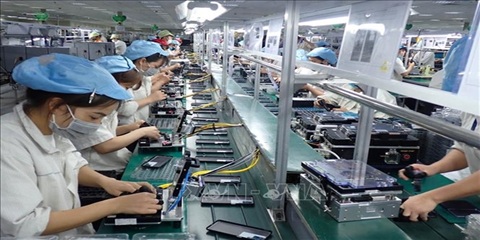
Việt Nam's digital technology industry generated an estimated US$254.6 billion in revenue in the first 10 months of 2026, up 53 per cent from a year earlier, while exports rose 46.2 per cent to $212 billion, the Ministry of Science and Technology said in its latest report. According to the report, hardware and electronics exports reached an estimated $30.681 billion in October, up 108 per cent from the same month last year.

CHARITY / EXHIBITION / OTHER EVENTS
BOCHK ‧ HKPC FUTURE VIETNAM: HANOI BUSINESS DELEGATION ON DIGITAL TRANSFORMATION AND INDUSTRIAL INNOVATION
Interested in exploring Vietnam’s latest developments in digital transformation, technology adoption and industrial innovation? Organised by the Hong Kong Productivity Council (HKPC) and fully supported by Bank of China (Hong Kong) Limited, the "Future Vietnam: Hanoi Business Delegation on Digital Transformation and Industrial Innovation” will feature visits to leading high-tech enterprises across Vietnam and engage with local chambers of commerce, industry organisations and associations. Join us to expand your high-value business network and seize emerging opportunities in the ASEAN market!
GARMENT / TEXTILE
TEXTILE, GARMENT FIRMS REFORM TO MEET CPTPP ORIGIN RULES
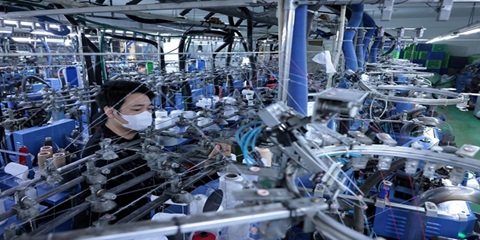
Vietnamese textile and garment manufacturers are aggressively restructuring their supply chains and diversifying material sources to unlock untapped tariff benefits. To capitalise on the Comprehensive and Progressive Agreement for Trans-Pacific Partnership (CPTPP), companies are racing to align with the pact's strict "yarn-forward" rules — a task made difficult by a shortage of raw materials within the trade bloc.
TECHNOLOGY
ĐÀ NẴNG SEEKS TO BUILD HIGH-TECH AGRICULTURE, INTEGRATED VALUE CHAINS
Đà Nẵng is seeking to transform its agricultural sector from a supplier of raw materials into a technology-driven, market-oriented economy, with investment opportunities spanning concentrated production areas, deep processing, logistics and agricultural product distribution. The city aims to shift from traditional agricultural production towards agricultural economic development, organising value chains and increasing the technological content and added value of products through closer links between production and processing.

INFRASTRUCTURE / CONSTRUCTION / LOGISTIC / PORT
HCM CITY ACCELERATES POWER INFRASTRUCTURE INVESTMENT TO ATTRACT HIGH-TECH CAPITAL
High-tech projects, particularly data centres, are not confined to SHTP but are also expanding into export processing zones and industrial parks across HCM City, driving up electricity demand. Proactively developing power infrastructure, diversifying energy supplies and expanding access to green energy are becoming essential for HCM City to maintain its competitive edge in attracting high-tech foreign direct investment (FDI).
Events Sponsors