Want to be in the loop?
subscribe to
our notification
Business News
PM EMPHASISES DIGITAL TRANSFORMATION CRUCIAL TO AN INDEPENDENT, SELF-RELIANT ECONOMY
Prime Minister Phạm Minh Chính described digital transformation as an important tool for the building of an independent and self-reliant economy and the extensive and effective integration into the world.
He made the remarks while chairing the third meeting to assess the digital transformation pace in the first six months of 2022 and outline the tasks ahead yesterday in Hà Nội. The meeting was held online, linking the Government Office with the People’s Committees of provinces and centrally-run cities across the country.
He noted that during the development of the pandemic, digital transformation had become an urgent need to effectively prevent and control the pandemic while maintaining and promoting socio-economic development.
The Government leader affirmed that digital transformation was a big policy of the Party and State, which must be implemented regularly and continuously in a fast and effective manner.
Chính said that in the first six months of this year, the country’s digital transformation had achieved basic results, and the awareness of the importance of digital transformation had changed drastically at all levels and sectors.
The Digital Transformation Steering Committee of 22 ministries, branches and 63 localities were established and put into operation.
The improvement of institutions and policies had been paid much attention to achieve positive results and create a legal framework for digital transformation.
The transformation of State management activities from the traditional method to the application of information technology and from paperwork to the digital environment had also been boosted and achieved initial results that were commendable. Many practical products and services had been offered to serve businesses and citizens in a timely and effective manner.
The Ministry of Information and Communications reported that digital transformation was promoted strongly and reaped encouraging outcomes in the first half of 2022.
So far, 100 per cent of the enterprises have used e-invoices, and e-commerce revenue reached 11.27 per cent of total retail sales (compared to the target of 7 per cent), according to the report.
A total of 66 per cent of the people aged 15 and above have payment accounts (one per cent higher than the target), 70.91 per cent of the adults own smartphones (compared to the target of 85 per cent), and 71.75 per cent of all the households use broadband cable internet (compared to the target of 75 per cent).
Digital infrastructure has continued to be improved, with fixed and mobile broadband internet speeds respectively reaching 71.79 Mbps and 35.29 Mbps, up 32.7 per cent and 4.7 per cent year on year.
Thirty-five national digital platforms have been developed, of which 31 have become operational and four on a trial basis.
Ministries and sectors have also coordinated to build 50 other platforms, including 18 serving the formation of a digital government, 16 for a digital economy, and 16 for a digital society.
Breakthroughs have also been recorded in the digital economy, whose added value has made up about 10.41 per cent of GDP, according to the ministry.
However, certain difficulties and shortcomings still exist, including the shortages of capable personnel and funding for the task and the lack of monitoring mechanisms.
PM Chính, who is also head of the national committee, said digital transformation needed constant reforms, a breakthrough mindset, a strategic vision, proactiveness, and creativity.
He underlined the importance of mobilising every resource for the work, especially through the public-private partnership, while ensuring harmonious interests among the State, people, and enterprises.
He asked ministers, heads of ministry-level bodies and Government agencies, chairpersons of the provincial-level People’s Committees, and the steering committees for digital transformation of ministries, sectors, and localities to drastically carry out the assigned tasks under the national digital transformation programme, the national strategy for developing the digital Government, and the national strategy for developing the digital economy and society to meet the targets for 2022.
The Government leader also gave out duties to each ministry and sector while requesting businesses, particularly those in the information, communications, and science-technology industries, to play an active role in the national digital transformation process.
Source: VNS
Related News

CHARITY / EXHIBITION / OTHER EVENTS
INVESTMENT OPPORTUNITIES IN CA MAU PROVINCE: 96 PROJECTS AND 20 STRATEGIC PROJECTS
We are pleased to share with you information on investment projects currently seeking investors in Ca Mau Province. Should your esteemed company or association be interested, we kindly invite you to review the project information and complete the registration form via the links provided. The Ho Chi Minh City Investment and Trade Promotion Centre (ITPC) will consolidate the expressions of interest and facilitate connections with the leadership of Ca Mau Province at a meeting tentatively scheduled for 13 November 2026 in Ho Chi Minh City.

MEMBER CORNER / PROMOTIONS
BẰNG KIỀU LIVESHOW - A SYMPHONY OF LOVE UNDER THE GOLDEN GLOW
A masterclass in live music that takes the audience on a soulful journey through immortal love songs, guided by the peerless artistry and emotive storytelling of renowned singer Bằng Kiều. The highlight of the night is his seamless musical chemistry with special guest Triệu Hồng Ngọc, promising passionate and deeply resonant duets inside the magnificent Grand Ballroom.
INFRASTRUCTURE / CONSTRUCTION / LOGISTIC / PORT
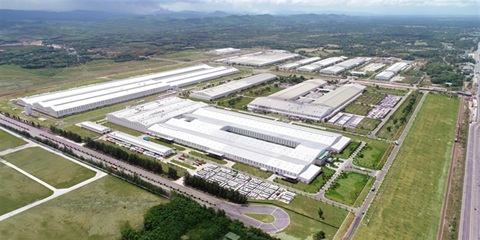
ĐÀ NẴNG GREEN-LIGHTS US$105 MILLION THAI DEVELOPMENT DEAL
The central city has approved an investment proposal by Thailand’s WHA Group to develop infrastructure for the 400ha WHA Đà Nẵng Industrial Park project on two communes of Thăng Bình and Đồng Dương, with an investment of more than VNĐ2.7 trillion (US$105 million). The city said it approved WHA Industrial Development International's status as an investor in the project, which is expected to take place between 2027 and 2034.
VIETNAM ECONOMY INVESTMENT
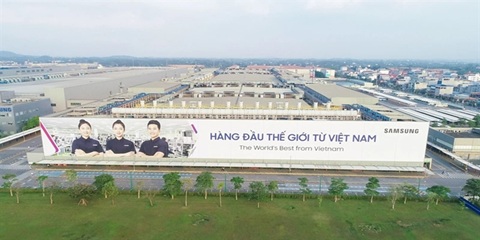
MOBILE PHONE EXPORTS RISE 20% TO $51.8 BILLION IN FIRST NINE MONTHS
Exports of mobile phones and components rose 20 per cent year-on-year to nearly US$51.8 billion in the first nine months of 2026, with China, the US and Republic of Korea accounting for more than half of the total. Shipments to the three markets reached a combined $26.18 billion, or 50.6 per cent of total exports of the product group during the period, according to data from the Vietnam Department of Customs under the Ministry of Finance.

INFRASTRUCTURE / CONSTRUCTION / LOGISTIC / PORT
VIỆT NAM-CAMBODIA TRADE GATHERS PACE TOWARDS $20 BILLION TARGET
Trade between Việt Nam and Cambodia continues to grow, remaining a bright spot and a key pillar of bilateral cooperation as the two countries aim to raise two-way trade to US$20 billion in the coming years. After setting a record of more than $11.3 billion last year, bilateral trade reached about $8.7 billion in the first eight months of this year, up 8.3 per cent year on year.
VIETNAM ECONOMY INVESTMENT
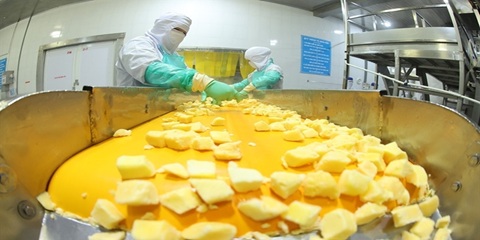
FRUIT AND VEGETABLE EXPORTS POISED TO HIT $10 BILLION IN 2026
Fruit and vegetable exports are on track to reach nearly US$10 billion in 2026, after rising 19.9 per cent year on year to nearly US$7.4 billion in the first nine months, driven by strong seasonal demand and abundant tropical fruit supplies. The Ministry of Agriculture and Environment said the growth reflected stronger international demand for fresh produce and processed agricultural products.
Events Sponsors






















