Want to be in the loop?
subscribe to
our notification
Business News
PM URGES LOWER INTEREST RATES, TAXES STABLE
The Government has instructed corresponding administrative authorities to aim for a 0.5 per cent decrease in lending interest rates from now until the end of 2017, while keeping taxes, fees and other charges unchanged, in order to propel the current disbursement rate in public spending and boost businesses’ productivity.
Under Resolution 84/NQ-CP issued last week, Prime Minister Nguyẽn Xuan Phuc signed the request for the State Bank of Vietnam (SBV) to take the initiative in monitoring the money supply and general monetary policy to suit the actuality of the country’s macroeconomic flows based on inflation rates and the money market.
At present, the PM has asked the SBV to strive for both a 0.5 per cent interest rate reduction and a 21 to 22 per cent annual credit growth rate for 2017.
Simultaneously, the Ministry of Planning and Investment (MPI), Ministry of Finance (MoF), and other central and local departments or agencies will shift their focus to accelerating the disbursement rates for public investment, as stated in Resolution 70/NQ-CP.
If these changes can be implemented, the country should be looking at a much better fourth quarter result for 2017, including the annual goal of 6.7 per cent GDP growth.
Additionally, all taxes, fees and charges should remain unchanged in 2017 to encourage exports and production, in the hope of achieving economic growth consistent with the domestic market.
In the last four months of 2017, increases in the disbursement of public spending on projects, including from official development assistance and the State budget, should play a significant role in helping economic sectors reach their year on year growth goals of 3.05 per cent for the agriculture sector, 7.91 for industrial production, and 7.19 per cent for tourism and services.
In the first eight months of 2017, the MoF has reported a total of VND137 trillion (US$6.1 billion) in State budget disbursement for public projects, amounting to 38.4 per cent of the yearly plan for public investment as approved by the National Assembly, in comparison with 2016’s 39 per cent over the same period.
On the other hand, the money and credit market has been stable, with credit rates marking a year on year increase of 10.06 per cent as of the end of August.
As the SBV is in charge of keeping lending rates low to encourage borrowing from businesses and other economic sectors, the MoF must take the lead in implementing support policies to monitor the State budget, guarding against misspending, promoting saving across all sectors and strictly following the Government’s regulations on financial and budget management.
The MoF has in turn asked local authorities to help reduce business related costs, and analyse the impact of an increase in value added tax on the general economy.
The Government also requested the MPI and the MoF to work with the Ministry of Transport on mobilising investment towards strategic public traffic infrastructure projects, helping speed up disbursement on the North to South Viet Nam highway project, as well as the national railway construction project and the Long Thanh airport project in HCM City.
Phúc also required the SBV to increase monitoring, inspection and dealing with any breaches in the credit sector, especially when it comes to the financial branch’s system security.
Source: VIR
Related News
VIETNAM ECONOMY INVESTMENT
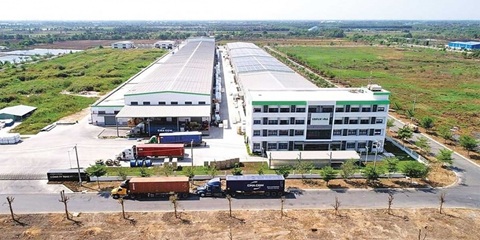
FOREIGN INVESTORS SEEKING A SYNCHRONISED MANUFACTURING ECOSYSTEM
Instead of focusing only on land costs and incentives as usual, foreign investors are seeking a synchronised manufacturing ecosystem, from stable power supply and logistics to shared infrastructure and the convenience of completing residence procedures for experts to serve their long-term investment in the country.
INFRASTRUCTURE / CONSTRUCTION / LOGISTIC / PORT
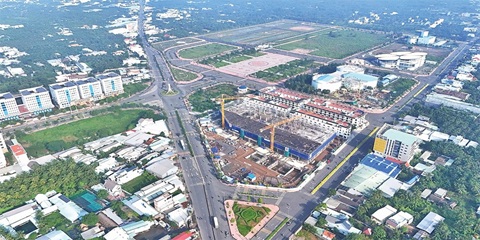
DONG THAP PROVINCE STEPS UP INDUSTRIAL EXPANSION AND INFRASTRUCTURE CONNECTIVITY
Accelerating public investment, strengthening inter-regional connectivity, and expanding industrial land are helping Dong Thap efficiently bolster competitiveness and drive economic growth. Following the 2025 merger of the former Dong Thap and Tien Giang provinces, the expanded Dong Thap province in the Mekong Delta faces mounting pressure to accelerate infrastructure development and strengthen connectivity among local economic zones, urban areas, industrial parks (IPs), and production centres.
PROPERTY / INDUSTRIAL ZONE
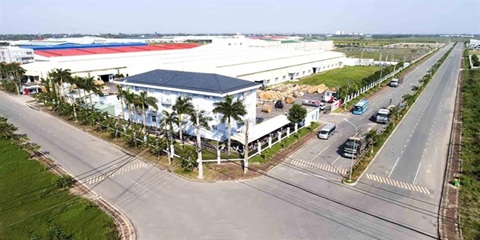
HCM CITY ATTRACTS US$5.7 BILLION INTO EXPORT PROCESSING AND INDUSTRIAL ZONES
HCM City attracted US$5.7 billion in domestic and foreign investment into its export processing and industrial zones during the first nine months of 2026. The figure exceeded the city's full-year target by 31 per cent, highlighting strong momentum in high-quality industrial investment under Resolution No.10-NQ/TW. Total investment reached 131 per cent of the 2026 target of $4.25 billion and represented a 29 per cent increase compared with the same period in 2025, according to the city's Export Processing and Industrial Zones Authority (HEPZA).
BANKING / FINANCE / INSURANCE / TAX
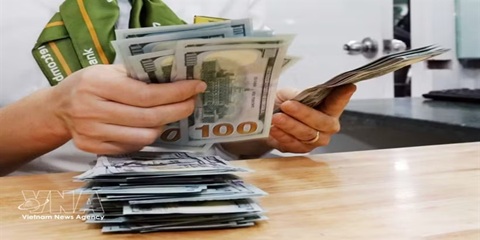
REMITTANCES TO HCM CITY RISE NEARLY 40% IN Q3
Remittances to HCM City reached more than US$2.83 billion in the third quarter of this year, up 39.5 per cent from the previous quarter and 3.6 per cent year-on-year. This was the first quarter showing positive annual growth this year, helping narrow the decline in remittance inflows over the first nine months. According to the State Bank of Vietnam (SBV)’s Regional Branch 2, remittances transferred to HCM City through credit institutions and economic organisations totalled $2.835 billion in Q3, an increase of more than $802 million from the previous quarter.
VIETNAM ECONOMY INVESTMENT
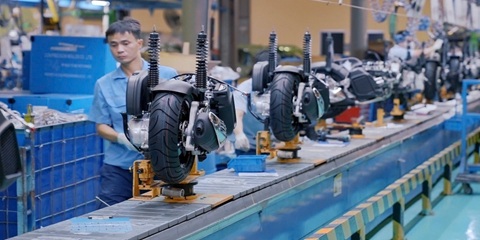
LOCALITIES REPORT BREAKTHROUGH RESULTS IN FDI IN FIRST NINE MONTHS
In Ho Chi Minh City, total registered capital reached $17.2 billion in the first nine months, up 4.2 times from the same period last year. The figure included more than $9.35 billion in newly registered capital and over $4.9 billion in additional capital for existing projects. Foreign investors also registered more than $2.9 billion through capital contributions and share purchases.
TECHNOLOGY
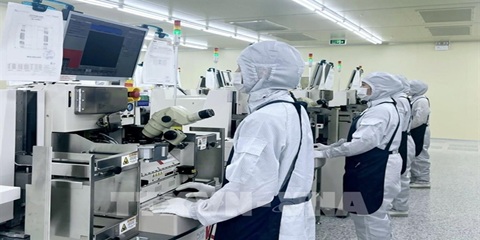
TECH SECTOR GROWTH OPENS UP OPPORTUNITIES FOR VIỆT NAM TO GO GLOBAL
The growth of the electronics, semiconductor and high-tech sectors worldwide is opening up a variety of opportunities for Vietnamese enterprises to integrate more deeply into the global supply chain. However, to become suppliers for these corporations, domestic enterprises must meet rigorous standards regarding quality, technology, productivity and order fulfilment capabilities.
Events Sponsors






















