Want to be in the loop?
subscribe to
our notification
Business News
POLICY RATE CUTS BOOSTING STOCK PRICES: VINACAPITAL
The stock market recovery, which has been driven by lower interest rates in 2023, is likely to be sustained by higher earnings and attractive valuations in 2023, according to Michael Kokalari, chief economist at VinaCapital.
In a recent note, he said the State Bank of Vietnam had cut policy interest rates four times this year -- the refinancing rate by 150 basis points to 4.5 per cent -- in stark contrast to its US counterpart, which has hiked rates four times, by 100bps to 5.5 per cent.
It also took other measures to boost growth, which fell to just 3.7 per cent in the first half of this year from 6.4 per cent a year earlier.
These policy rate cuts prompted banks to lower their deposit and lending rates, which helped boost the VN-Index by over 20 per cent for the year as of August 8.
Chart shows average 12-month deposit rates at State-owned and private banks in Việt Nam. Lower interest rates this year have helped drive up stock prices. Source VinaCapital “We expect a sharp recovery in both GDP growth and earnings growth next year to propel stock prices even higher. That said, we do not expect the SBV’s monetary easing will have much of an impact on 2023 GDP growth because banks are currently hesitant to extend loans, and because higher interest rates are not the main source of Việt Nam’s slow economy this year.”
The aggressive policy rate cuts come at a time when the US and the EU are still raising interest rates.
A widening gap between interest rates in Việt Nam and in the US has put some depreciation pressure on the USD-VND exchange rate, but that depreciation pressure has been mitigated by a stunning improvement in the country’s trade surplus from zero in 2022 to 6 per cent of GDP in 2023, according to the economist.
This surplus, coupled with FDI inflows of over 4 per cent of GDP in the first seven months, helped support the đồng, enabling the SBV to cut interest rates while maintaining a remarkably stable exchange rate.
Impact of lower rates on stock, property markets
The VN-Index is up because people have been taking money out of banks and ploughing it into the stock market as their six-month deposits mature and because the market was oversold last year.
The increase has been driven by a 30 per cent surge in bank share prices and a 20 per cent increase in the prices of real estate stocks.
The heavy weighting of these sectors in the VN-Index (at 35 per cent and 18 per cent respectively) means the increase in their share prices drove over two-thirds of the increase in the index.
“The improvement in sentiment towards bank share prices stems from investors’ reduced concerns about asset quality issues and expectations for higher credit growth in H2, prompted by lower interest rates," the economist said.
“But it is important to note that declines in lending rates by banks are not uniform, especially given the liquidity issues mentioned above, which are particularly acute at some smaller banks.”
Lower interest rates boosted sentiment in the real estate market, where transactions are starting to pick up again, partly because mortgage rates dropped by more than 50bps at many banks over the last month.
“We expect another 50-100bp decline in mortgage rates over the next six to 12 months and note that the improved sentiment in the real estate market has, not surprisingly, boosted the sentiment towards major real estate stocks as well as towards the beneficiaries of higher real estate development activity (construction companies, steel companies, etc.).
“Finally, we expect a sharp pick-up in earnings growth in 2024, which means that the stock market recovery, which has been driven by lower interest rates in 2023, will likely be sustained by higher earnings in 2023, as well as by the market’s current, attractive valuations.
“The VN-Index’s FY23 P/E ratio is currently 30 per cent below its average over the last five years, and more than 10 per cent below that of Việt Nam’s regional peers.”
Source: VNS
Related News

VIETNAM ECONOMY INVESTMENT
VIETNAMESE COMPANIES OPTIMISTIC ON INTERNATIONAL GROWTH
Vietnamese businesses are among the most confident about the outlook for international trade, according to HSBC’s Global Trade Pulse Survey 2026, released on November 16. The survey captures the views of 10,000 senior business leaders across 26 markets on trade, tariffs, supply chains, and technology. Findings show that 94 per cent of Vietnamese businesses expect their international trade to grow over the next two years. Vietnam ranks joint top in the survey with the Philippines, compared with 86 per cent globally.
TECHNOLOGY
VIỆT NAM'S DIGITAL TECHNOLOGY INDUSTRY REVENUE SURGES 53% TO $254.6B
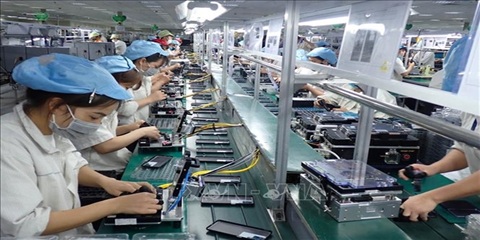
Việt Nam's digital technology industry generated an estimated US$254.6 billion in revenue in the first 10 months of 2026, up 53 per cent from a year earlier, while exports rose 46.2 per cent to $212 billion, the Ministry of Science and Technology said in its latest report. According to the report, hardware and electronics exports reached an estimated $30.681 billion in October, up 108 per cent from the same month last year.

CHARITY / EXHIBITION / OTHER EVENTS
BOCHK ‧ HKPC FUTURE VIETNAM: HANOI BUSINESS DELEGATION ON DIGITAL TRANSFORMATION AND INDUSTRIAL INNOVATION
Interested in exploring Vietnam’s latest developments in digital transformation, technology adoption and industrial innovation? Organised by the Hong Kong Productivity Council (HKPC) and fully supported by Bank of China (Hong Kong) Limited, the "Future Vietnam: Hanoi Business Delegation on Digital Transformation and Industrial Innovation” will feature visits to leading high-tech enterprises across Vietnam and engage with local chambers of commerce, industry organisations and associations. Join us to expand your high-value business network and seize emerging opportunities in the ASEAN market!
GARMENT / TEXTILE
TEXTILE, GARMENT FIRMS REFORM TO MEET CPTPP ORIGIN RULES
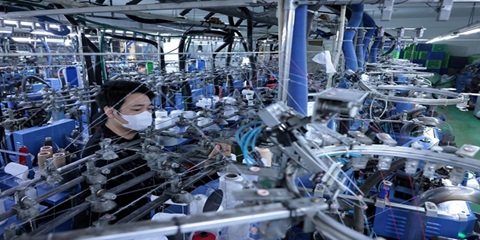
Vietnamese textile and garment manufacturers are aggressively restructuring their supply chains and diversifying material sources to unlock untapped tariff benefits. To capitalise on the Comprehensive and Progressive Agreement for Trans-Pacific Partnership (CPTPP), companies are racing to align with the pact's strict "yarn-forward" rules — a task made difficult by a shortage of raw materials within the trade bloc.

TECHNOLOGY
ĐÀ NẴNG SEEKS TO BUILD HIGH-TECH AGRICULTURE, INTEGRATED VALUE CHAINS
Đà Nẵng is seeking to transform its agricultural sector from a supplier of raw materials into a technology-driven, market-oriented economy, with investment opportunities spanning concentrated production areas, deep processing, logistics and agricultural product distribution. The city aims to shift from traditional agricultural production towards agricultural economic development, organising value chains and increasing the technological content and added value of products through closer links between production and processing.

INFRASTRUCTURE / CONSTRUCTION / LOGISTIC / PORT
HCM CITY ACCELERATES POWER INFRASTRUCTURE INVESTMENT TO ATTRACT HIGH-TECH CAPITAL
High-tech projects, particularly data centres, are not confined to SHTP but are also expanding into export processing zones and industrial parks across HCM City, driving up electricity demand. Proactively developing power infrastructure, diversifying energy supplies and expanding access to green energy are becoming essential for HCM City to maintain its competitive edge in attracting high-tech foreign direct investment (FDI).
Events Sponsors