Want to be in the loop?
subscribe to
our notification
Business News
PRIVATE SECTOR SUGGESTS WIDER VISA EXEMPTIONS
At the Vietnam Private Sector Economic Forum 2019, representatives from travel agencies from the private sector highlighted visa as one of the barriers to attracting foreigners to Vietnam, whereas representatives from the Ministry of Foreign Affairs and the Ministry of Public Security have a different view.
Private sector considers visa a roadblock to tourism
In the morning on May 2, at the session about tourism in the Vietnam Private Sector Economic Forum 2019, travel enterprises and functional authorities have discussed the barriers to development to attract 17-20 million international visitors by 2020. During the discussion, visa emerged as one of the major roadblocks to private sector representatives.
In his keynote opening speech for the session, Ngo Van Tuan, vice chairman of the Central Economic Commission, affirmed that 99 per cent of travel enterprises are from the private sector.
Tourism is a wide economic sector and needs to be developed as a key economic sector to boost the development of each region.
Truong Tan Son, representative from Saigontourist, said that to develop tourism in Vietnam, the country should extend its visa exemption policy to more countries or even consider individuals. Vietnam should have a clear orientation to become a resting or shopping heaven.
"We can also actively issue 5-10 year visas for some special markets or high-income people and their relatives who travel frequently,” said Truong Tan Son.
Sharing the idea, Pham Ha, director of Luxury Travel Vietnam Co., Ltd., also suggested that Vietnam should extend visa exemption from the current 15 to 30 days or longer.
"I suggest giving visa exemptions to as many countries as possible. Indonesia has given up visa for 169 countries. Vietnam is a peaceful and friendly country, but has yet to give up visas," Ha said.
Bringing the example of South Korea’s visa policy, Dinh Viet Phuong, deputy general director of Vietjet, said that the number of Vietnamese people travelling to Korea has increased sharply after Korea began giving out five-year visas to Vietnamese nationals.
Response from government authorities
Vietnam currently gives exemption to 13 nations, including the Russian Federation, Japan, Korea, Norway, Finland, Denmark, Sweden, England, France, Germany, Spain, Italy, and Belarus, and for members of the Board of Secretary of the ASEAN, as well as allows e-visa applications for citizens of 80 countries.
Visa exemption between Vietnam and rest of world
E-visa scheme to be extended by two years
However, according to Deputy Minister of Foreign Affairs To Anh Dung, even as 10 million Vietnamese people travel abroad each year, they still face many difficulties in applying for visa, even in countries that enjoy visa exemption when entering Vietnam. "Therefore, when developing a visa-related policy, we have to ensure the rights and interests of Vietnamese citizens," Dung said.
Vietnam to extend visa exemption for Western citizens
Nguyen Thi Huong Lan, deputy director of the Consular Department under the Ministry of Foreign Affairs also expressed that visa exemption is not the linchpin of the Vietnamese tourism market.
Huong Lan also quoted that according to a report from the Vietnam National Administration of Tourism, the growth rate of visitors from countries like the US or Canada is higher than countries that enjoy visa exemption. She also rejected the idea that Vietnam's visa ranking affects the competitiveness of its tourism industry.
Huong Lan also said that visa is one of the criteria to assess openness to the world, but does not fully decide the competitiveness of a country. For example, countries such as Spain, Japan or the US have high competitiveness in tourism, although their visa policies are not too open.
Nguyen Van Thong, deputy director of the National Web Portal on Immigration under the Ministry of Public Security, agreed with Nguyen Thi Huong Lan and said that visa is not a major criteria for tourists to choose on a holiday destination.
Van Thong also affirmed that visa application procedures in Vietnam are simple and only take three days. Along with that, the National Web Portal on Immigration would consult with the Ministry of Public Security to amend and supplement some articles in immigration law No.47/2014/QH13 to create more conditions for foreigners to enter Vietnam.
Arguing about visa exemption
The tourism session at the Vietnam Private Sector Economic Forum 2019 continued with prolonged arguments from other private sector representatives.
Luong Hoai Nam, deputy CEO of Vietstar Airlines Multirole Corporation (VSA), a member of the Tourism Advisory Board (TAB), gave the example that Thailand welcomed a million Vietnamese tourists in 2018.
“If Thailand did not provide visa exemption, how many Vietnamese people would have gone to Thailand?” Nam said, making a case for visa being an important part of the travel policies of major countries.
According to Nam, the group of rich customers, who are not from the 13 countries enjoying visa exemption in Vietnam, asked why Vietnam does not extend its policy to them when countries like Thailand, Singapore, and Malaysia have already done so.
In addition, Kenneth Atkinson, chairman of Grant Thornton Vietnam, said that the government need to make information related to visa more transparent. He thought that websites and policies disseminating information are hard to find. Visitors to Vietnam find it difficult to seek out information and the result of their visa application.
To balance ideas at the session, Nguyen Quoc Ky, CEO of Vietravel, proposed that Vietnam needs a flexible visa policy. Ky also pointed out the disadvantages in exempting visa for 13 countries, saying, “Some of the countries which enjoy visa exemption provide hardly any visitors or the exemption has not increased their tourism market share. While other countries that already show good growth without visa exemption could be accelerated even further. Therefore, it is necessary to amend the visa policy.”
Acknowledging the recommendations from private travel and airline enterprises, Deputy Minister of Foreign Affairs To Anh Dung affirmed that the ministry will always stand on the side of the tourism industry, continue to listen and build new policies, creating favourable conditions for international tourists to enter Vietnam.
Source: VIR
Related News

CHARITY / EXHIBITION / OTHER EVENTS
INVESTMENT OPPORTUNITIES IN CA MAU PROVINCE: 96 PROJECTS AND 20 STRATEGIC PROJECTS
We are pleased to share with you information on investment projects currently seeking investors in Ca Mau Province. Should your esteemed company or association be interested, we kindly invite you to review the project information and complete the registration form via the links provided. The Ho Chi Minh City Investment and Trade Promotion Centre (ITPC) will consolidate the expressions of interest and facilitate connections with the leadership of Ca Mau Province at a meeting tentatively scheduled for 13 November 2026 in Ho Chi Minh City.

MEMBER CORNER / PROMOTIONS
BẰNG KIỀU LIVESHOW - A SYMPHONY OF LOVE UNDER THE GOLDEN GLOW
A masterclass in live music that takes the audience on a soulful journey through immortal love songs, guided by the peerless artistry and emotive storytelling of renowned singer Bằng Kiều. The highlight of the night is his seamless musical chemistry with special guest Triệu Hồng Ngọc, promising passionate and deeply resonant duets inside the magnificent Grand Ballroom.
INFRASTRUCTURE / CONSTRUCTION / LOGISTIC / PORT
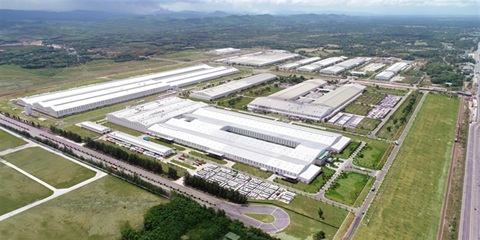
ĐÀ NẴNG GREEN-LIGHTS US$105 MILLION THAI DEVELOPMENT DEAL
The central city has approved an investment proposal by Thailand’s WHA Group to develop infrastructure for the 400ha WHA Đà Nẵng Industrial Park project on two communes of Thăng Bình and Đồng Dương, with an investment of more than VNĐ2.7 trillion (US$105 million). The city said it approved WHA Industrial Development International's status as an investor in the project, which is expected to take place between 2027 and 2034.
VIETNAM ECONOMY INVESTMENT
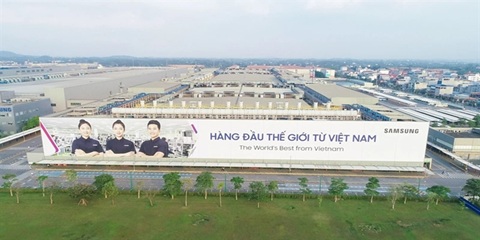
MOBILE PHONE EXPORTS RISE 20% TO $51.8 BILLION IN FIRST NINE MONTHS
Exports of mobile phones and components rose 20 per cent year-on-year to nearly US$51.8 billion in the first nine months of 2026, with China, the US and Republic of Korea accounting for more than half of the total. Shipments to the three markets reached a combined $26.18 billion, or 50.6 per cent of total exports of the product group during the period, according to data from the Vietnam Department of Customs under the Ministry of Finance.
INFRASTRUCTURE / CONSTRUCTION / LOGISTIC / PORT
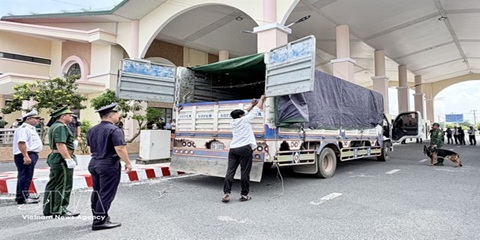
VIỆT NAM-CAMBODIA TRADE GATHERS PACE TOWARDS $20 BILLION TARGET
Trade between Việt Nam and Cambodia continues to grow, remaining a bright spot and a key pillar of bilateral cooperation as the two countries aim to raise two-way trade to US$20 billion in the coming years. After setting a record of more than $11.3 billion last year, bilateral trade reached about $8.7 billion in the first eight months of this year, up 8.3 per cent year on year.
VIETNAM ECONOMY INVESTMENT
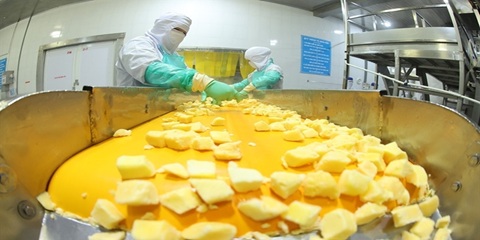
FRUIT AND VEGETABLE EXPORTS POISED TO HIT $10 BILLION IN 2026
Fruit and vegetable exports are on track to reach nearly US$10 billion in 2026, after rising 19.9 per cent year on year to nearly US$7.4 billion in the first nine months, driven by strong seasonal demand and abundant tropical fruit supplies. The Ministry of Agriculture and Environment said the growth reflected stronger international demand for fresh produce and processed agricultural products.
Events Sponsors






















