Want to be in the loop?
subscribe to
our notification
Business News
PROPERTY MARKET STAYS STRONG
Strong economic growth since 2015 has created a thriving domestic property market that is likely to continue next year, said Construction Minister Pham Hong Ha.
The Minister told the first annual Vietnam Real Estate Forum in Hanoi this week that the market’s growth had made significant contributions to the country’s socio-economic development.
“Upbeat signs have been seen in the market index. Property inventories have fallen sharply due to growing housing demand, while the flow of direct and indirect foreign investment into the sector has soared,” he said.
The property market’s recovery has also bolstered the financial-securities market and other related industrial sectors, such as construction and building materials, the Minister said, predicting that resort properties would also continue to develop.
However, he said the market had displayed a lack of transparency. Further, parts of the real estate market had been manipulated by those with vested interests.
Most investment in property projects had come from credit institutions, banks and by mobilising home buyers.
“The structure of property products has not been suitable or closely managed. The supply of high-end estate segments has been higher than demand, while there has been a lack of commercial and social housing projects,” the minister added.
In addition, he said, State management agencies had not developed policies to respond to changes in the market. Also, he claimed the Government had not had adequate policies regarding taxes, credits and land, to regulate resources for market development, and had not encouraged social housing projects.
Nguyen Tran Nam, chairman of the Vietnam Real Estate Association (VNREA), agreed, saying that the estate market would be more stable next year.
Statistics indicate that Hanoi has some 20,000 apartments for sale. In total, the capital and HCM City have 45,000 to 50,000 apartments that are offered for sale in the market, while consumption results in only 30,000 sales per year.
“Therefore, the market has enough apartments to meet current demand,” Nam said, adding that there is no speculation in the market.
Nguyen Trong Ninh, director of the ministry’s Department of Housing Management and Real Estate Market, said the property market continued to see stable growth, including in resort properties at Da Nang, Nha Trang – Khanh Hoa and Phu Quoc – Kien Giang, which were attracting investments from local and foreign investors.
Credit in estate under control
Outstanding loans in the property sector are in line with the Government’s orientation and the market’s real demand. By the end of July, outstanding loans in the sector rose 4% from last year. Property loans account for 9% of the country’s total outstanding loans.
“The portion has been stable since 2013. The loans in the estate sector have focused on apartment projects, which are suitable for people’s demand,” said Nguyen Quoc Hung, director of the Credit Department under the State Bank of Vietnam (SBV).
In addition, the central bank has asked credit institutions to actively resolve bad debts, especially in the property sector. The bad debt rate in the sector was sharply reduced from 7.05% in 2013 to 4.06% in 2017.
Hung said the SBV would continue to stabilise the monetary market, while closely supervising credit in the estate sector to ensure effective and sustainable credit growth.
He proposed to continue renewing and improving planning, while shortening the time for approving social and commercial housing projects. Meanwhile, policies for these new types of properties, such as condotels and officetels, should be completed.
He said the Government was also on guard against speculation-driven growth in the market. Further, banks will not issue loans worth more than 70% of a project to property developers, and investors must use the loans to invest only in the project for which they received the loan.
Economist Le Xuan Nghia said he believed that financing for social housing projects has been challenging, as it mainly comes from bank loans instead of non-profit or Governmental resources.
“Bank loans should not be a long-term solution, as they cause pressure on the banking sector. I think the Ministry of Construction should study experiences from other countries in mobilising resources. This could include the establishment of a fund for social and inexpensive housing projects,” he added.
VNREA’s vice chairman Nguyen Manh Ha said social housing projects have been mostly located in big cities, such as Hanoi and Ho Chi Minh City.
The projects should be set in locations that are not too far from the city centres, and receive support through tax breaks.
Ha said establishing the fund could be difficult, as low and middle-income residents would likely be unable to contribute to the fund. Deep-pocketed donors would need to step up.
“The issue is that each locality should have their own solution to resolve the problem,” he said.
The forum, organised by VNREA in co-operation with the financial-economic channel VITV, is a large event that will assess the real estate market in a comprehensive manner, from commodities and segments to housing-related issues, such as land, finance, credit and tax.
Source: VIR
Related News

INFRASTRUCTURE / CONSTRUCTION / LOGISTIC / PORT
VIỆT NAM-CAMBODIA TRADE GATHERS PACE TOWARDS $20 BILLION TARGET
Trade between Việt Nam and Cambodia continues to grow, remaining a bright spot and a key pillar of bilateral cooperation as the two countries aim to raise two-way trade to US$20 billion in the coming years. After setting a record of more than $11.3 billion last year, bilateral trade reached about $8.7 billion in the first eight months of this year, up 8.3 per cent year on year.
TECHNOLOGY
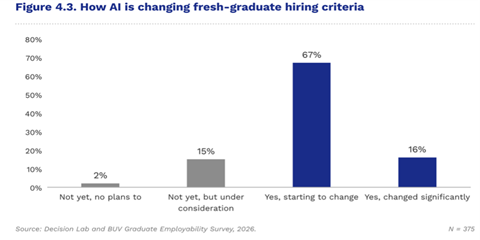
AI BEGINNING TO RESHAPE RECRUITMENT CRITERIA
Digital literacy is the only capability area in which fresh graduates meet employers’ expectations, according to a new report. Yet, it is also the standard rising fastest, as businesses increasingly expect new hires to use AI effectively in the workplace. Some 83 per cent of employers say AI has changed, or is beginning to change, their hiring criteria, while 94 per cent report higher expectations for digital and AI capabilities than they had two to three years ago.

INFRASTRUCTURE / CONSTRUCTION / LOGISTIC / PORT
ĐÀ NẴNG GREEN-LIGHTS US$105 MILLION THAI DEVELOPMENT DEAL
The central city has approved an investment proposal by Thailand’s WHA Group to develop infrastructure for the 400ha WHA Đà Nẵng Industrial Park project on two communes of Thăng Bình and Đồng Dương, with an investment of more than VNĐ2.7 trillion (US$105 million). The city said it approved WHA Industrial Development International's status as an investor in the project, which is expected to take place between 2027 and 2034.

VIETNAM ECONOMY INVESTMENT
MOBILE PHONE EXPORTS RISE 20% TO $51.8 BILLION IN FIRST NINE MONTHS
Exports of mobile phones and components rose 20 per cent year-on-year to nearly US$51.8 billion in the first nine months of 2026, with China, the US and Republic of Korea accounting for more than half of the total. Shipments to the three markets reached a combined $26.18 billion, or 50.6 per cent of total exports of the product group during the period, according to data from the Vietnam Department of Customs under the Ministry of Finance.

VIETNAM ECONOMY INVESTMENT
FRUIT AND VEGETABLE EXPORTS POISED TO HIT $10 BILLION IN 2026
Fruit and vegetable exports are on track to reach nearly US$10 billion in 2026, after rising 19.9 per cent year on year to nearly US$7.4 billion in the first nine months, driven by strong seasonal demand and abundant tropical fruit supplies. The Ministry of Agriculture and Environment said the growth reflected stronger international demand for fresh produce and processed agricultural products.
GARMENT / TEXTILE
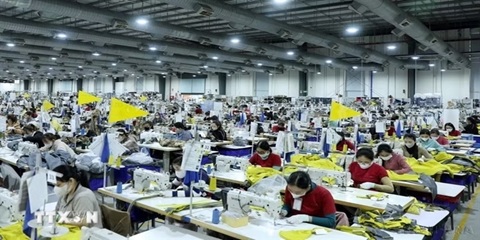
TEXTILE EXPORTS FACE DUAL CHALLENGES OF SUSTAINING ORDERS AND BOOSTING EFFICIENCY AMID GROWING COMPETITION
Data shows that the textile and garment sector maintained its growth momentum in the first nine months of this year. The industry's total export turnover reached an estimated US$35.721 billion in the first nine months of this year, up 3.3 per cent year-on-year. Despite posting encouraging export figures, Vietnamese textile and garment enterprises continue to navigate unpredictable market variables.
Events Sponsors






















