Want to be in the loop?
subscribe to
our notification
Business News
PROPERTY SALES IN INDUSTRY 4.0 ERA
Applying advanced technology is not only helping real estate buyers and sellers to manage information and transactions in an easy and efficient manner, but also enhancing the sellers’ ability to connect and advertise their products. However, this is just the beginning of a long journey.
Tech on every step of the way
Trying to sell a property of some 40 square metres in Vinh Hung, Hanoi, a seller named Hoang often visits Facebook and other online property trading platforms to check out the prices of properties of the same size. His online activities have in fact been collected by software developers and he is considered a target for pop-up ads and email marketing. Hoang has been seeing the ads of properties that he once browsed through or those in similar price and size ranges in the neighbouring areas that are of concern to him.
Most people like Hoang are rather surprised about these new types of marketing and advertising. They do not even know how these ad companies or real estate agencies get their phone numbers. It turns out that this is just a new trend of accessing potential customers among property developers and distributors—the beginning of Industry 4.0 in the property sector.
Given the development of the Internet of Things (IoT) and artificial intelligence (AI), software programmers and Internet providers can collect data from users to form a big data warehouse, scrutinising the trends of Internet usage, online shopping, and products of interest.
In a bid to reach target customers in a rather competitive market, mortgage brokers that are sensitive enough have launched their marketing campaigns on social media platforms, such as Facebook or Zalo, or through professional online advertising channels like Google AdSense. Many mortgage brokers even purchase customer data, which may include not only the customers’ contacts but also their relationships, habits, and demands.
Nguyen Quoc Anh, deputy general director of Dai Viet Group, the operator of online property trading platform batdongsan.com.vn, noted that with the development of technology, the online trading of properties has gained popularity due to its convenience and cost savings.
Property Technology, or PropTech, is the new generation of technology that helps transform the housing market through three main arms, comprising property information, property transaction, and property management. Through PropTech, developers will be able to manage their property trading and transactions completely online, targeting the tech-savvy younger generation.
In the past two years alone, data from batdongsan.com.vn shows that some 52 per cent of homebuyers were in the 25-34 age bracket. This age group grew up with technology, social media, and integrated economies. They are highly adaptable and always willing to share facilities with one another.
As a result, they are very fond of PropTech that helps them check information, compare the prices and products, calculate loans, and find financial solutions that fit them best. What is more, it reduces the risks of buying and selling houses, particularly when making the purchase through an agency. Procedures for housing transactions are also carried out online to save time.
Professionalism needed
According to Pham Thanh Hung, vice president of CEN Group, the opportunity to tap into the real estate market through disruptive technologies is huge, yet many PropTech startups have ended in failure. A reason for this is that they are often followers and thus cannot make predictions. That being said, if they had started off with a PropTech app back during 2013-2014, right before the housing market begun to warm up, they would have been far more successful.
Yet there have been a number of startups that develop property-related technologies. With large-scale marketing campaigns and customer networks, they have been reasonably successful. However, there were difficulties along the way.
User behaviour is one of them when many Internet or smartphone users are still new or rather unfamiliar with the PropTech apps or the application of disruptive technologies in real estate. Mortgage brokers, at the same time, do not fully understand the apps themselves and so cannot apply the advanced technology in their property sales.
In addition, technology cannot replace the human factor, in this case, the professional mortgage brokers. Should mortgage apps be developed and welcomed by users, real estate agents may no longer find work, as sellers and buyers could contact each other through the apps. But a property buyer still needs a professional service provider to advise him on a purchase and whether the prices are reasonable. Especially, the related legal procedures require professional assistance.
Last but not least, in property dealings, creditability is the most important thing. If an app fails to build trust amongst mortgage brokers, buyers, and sellers, it is destined to fail. This has in fact happened to some e-commerce businesses that forged information and at the end lost customers’ trust.
According to Hung, the application of technology is an indispensable trend in online property trading. While it cannot completely replace human agents, it is a new breeze of change promising to revolutionise the real estate sector to usher in the era of Industry 4.0.
Adopting disruptive technologies is the new real estate trend, and it is a costly game to play as tech changes are unpredictable. The more startups or businesses join the race of advanced technology, the fiercer the competition will be, helping drive it towards professionalism. The ultimate beneficiaries will be homebuyers.
Source: VIR
Related News

INFRASTRUCTURE / CONSTRUCTION / LOGISTIC / PORT
VIỆT NAM-CAMBODIA TRADE GATHERS PACE TOWARDS $20 BILLION TARGET
Trade between Việt Nam and Cambodia continues to grow, remaining a bright spot and a key pillar of bilateral cooperation as the two countries aim to raise two-way trade to US$20 billion in the coming years. After setting a record of more than $11.3 billion last year, bilateral trade reached about $8.7 billion in the first eight months of this year, up 8.3 per cent year on year.
TECHNOLOGY
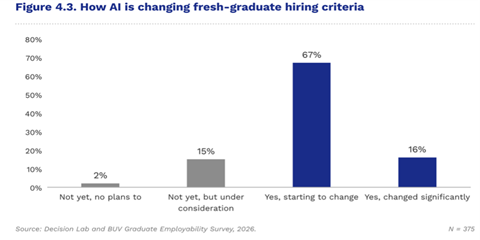
AI BEGINNING TO RESHAPE RECRUITMENT CRITERIA
Digital literacy is the only capability area in which fresh graduates meet employers’ expectations, according to a new report. Yet, it is also the standard rising fastest, as businesses increasingly expect new hires to use AI effectively in the workplace. Some 83 per cent of employers say AI has changed, or is beginning to change, their hiring criteria, while 94 per cent report higher expectations for digital and AI capabilities than they had two to three years ago.

INFRASTRUCTURE / CONSTRUCTION / LOGISTIC / PORT
ĐÀ NẴNG GREEN-LIGHTS US$105 MILLION THAI DEVELOPMENT DEAL
The central city has approved an investment proposal by Thailand’s WHA Group to develop infrastructure for the 400ha WHA Đà Nẵng Industrial Park project on two communes of Thăng Bình and Đồng Dương, with an investment of more than VNĐ2.7 trillion (US$105 million). The city said it approved WHA Industrial Development International's status as an investor in the project, which is expected to take place between 2027 and 2034.

VIETNAM ECONOMY INVESTMENT
MOBILE PHONE EXPORTS RISE 20% TO $51.8 BILLION IN FIRST NINE MONTHS
Exports of mobile phones and components rose 20 per cent year-on-year to nearly US$51.8 billion in the first nine months of 2026, with China, the US and Republic of Korea accounting for more than half of the total. Shipments to the three markets reached a combined $26.18 billion, or 50.6 per cent of total exports of the product group during the period, according to data from the Vietnam Department of Customs under the Ministry of Finance.

VIETNAM ECONOMY INVESTMENT
FRUIT AND VEGETABLE EXPORTS POISED TO HIT $10 BILLION IN 2026
Fruit and vegetable exports are on track to reach nearly US$10 billion in 2026, after rising 19.9 per cent year on year to nearly US$7.4 billion in the first nine months, driven by strong seasonal demand and abundant tropical fruit supplies. The Ministry of Agriculture and Environment said the growth reflected stronger international demand for fresh produce and processed agricultural products.
GARMENT / TEXTILE
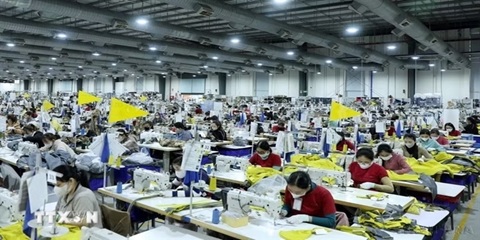
TEXTILE EXPORTS FACE DUAL CHALLENGES OF SUSTAINING ORDERS AND BOOSTING EFFICIENCY AMID GROWING COMPETITION
Data shows that the textile and garment sector maintained its growth momentum in the first nine months of this year. The industry's total export turnover reached an estimated US$35.721 billion in the first nine months of this year, up 3.3 per cent year-on-year. Despite posting encouraging export figures, Vietnamese textile and garment enterprises continue to navigate unpredictable market variables.
Events Sponsors






















