Want to be in the loop?
subscribe to
our notification
Business News
PROPERTY TARIFF NECESSARILY FORMULATED
At the recent Vietnam Finance Forum 2017 in Hanoi, many economists pointed out that it is time to reform the national financial system and focus on tariffs such as added value (VAT) and commodity tax to ensure a sustainable source of funding.
Squeezing public spending
Finance Minister Dinh Tien Dung said that Vietnam's public finances have been fundamentally reformed towards transparency and efficiency following the amendment and promulgation of new frame laws. For example, the Law on Charges and Fees 2015 shifts some fees into pricing mechanism, thus encouraging investment for production and business development, foreign trade expansion, rational and sustainable growth, and budgetary revenue balancing.
However, under macroeconomic reform pressure, national budget revenue is at risk of falling short for rebuilding socioeconomic infrastructure. Such burdens as public debt above the upper limit, irrecoverable construction debt and ineffective loan management and use are requiring the financial sector to have strategic calculations to ensure financial takings in the coming period. Accordingly, the Ministry of Finance will step by step restructure state budget expenditures in order to increase the share of investment and reduce the share of recurrent expenditures at the back of vigorous reform of the public service sector, reform State budget expenditure, improve the efficiency of budget spending and carry out result-based budget management.
Deputy Finance Minister Do Hoang Anh Tuan said that it is time for Vietnam to have radical solutions to reduce public debt and ease budget tensions, stop the augmentation of recurrent expenditures, and concentrate resources for development. Currently, public investment accounts for a relatively high rate of 8 - 10 per cent of the gross domestic product (GDP) but it is ineffectively used. ODA-sourced public investment accounted for 10 - 15 per cent of total investment. Most key projects in the country are funded by official development assistance (ODA). Domestic capital invested in key transport sector does not exceed 2 per cent. These percentage proportions force stakeholders to have more reasonable calculations in order to have a reasonable collection and spending regimen.
Taxing properties
“We need to tax properties,” said Dr Nguyen Thanh Long, Chairman of the Board of Directors of the Hanoi Securities Exchange (HNX), adding that authorities should soon study and apply property tax in accordance with international standards. This globally popular tax is a source for local authorities to mobilise more funds for infrastructure development investment. He cited reports by E&Y as saying that indirect taxes in countries in the Organisation for Economic Co-operation and Development (OECD) and in Europe account for 50 - 60 per cent of State budget revenue. In China, the rate nearly doubled, from 33 per cent in 2004 to over 60 per cent in 2016.
In addition to studying the increase of indirect taxes, it is also necessary to further improve direct taxation policies to ensure equity. If the government can reduce the above tax, it will be financially leveraged investment and support business growth, especially small and medium enterprises, said Long.
Sebastian Eckardt, Lead Economist of the World Bank (WB) for Vietnam, said the global trend is shifting from income tax to consumption tax. Current taxes still have the room to go up, for example sin tax - excise tax specifically levied on certain goods deemed harmful to society. Meanwhile, the standard VAT rate of Vietnam is still as low as the bottom of the region. In addition, corporate income tax must be narrowed due to investment incentive policies. And, it is important for the Government of Vietnam to develop a regular tax policy on land and property at local levels in the current context.
Source: VCCI
Related News

INFRASTRUCTURE / CONSTRUCTION / LOGISTIC / PORT
VIỆT NAM-CAMBODIA TRADE GATHERS PACE TOWARDS $20 BILLION TARGET
Trade between Việt Nam and Cambodia continues to grow, remaining a bright spot and a key pillar of bilateral cooperation as the two countries aim to raise two-way trade to US$20 billion in the coming years. After setting a record of more than $11.3 billion last year, bilateral trade reached about $8.7 billion in the first eight months of this year, up 8.3 per cent year on year.
TECHNOLOGY
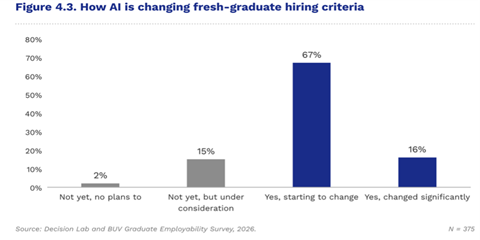
AI BEGINNING TO RESHAPE RECRUITMENT CRITERIA
Digital literacy is the only capability area in which fresh graduates meet employers’ expectations, according to a new report. Yet, it is also the standard rising fastest, as businesses increasingly expect new hires to use AI effectively in the workplace. Some 83 per cent of employers say AI has changed, or is beginning to change, their hiring criteria, while 94 per cent report higher expectations for digital and AI capabilities than they had two to three years ago.

INFRASTRUCTURE / CONSTRUCTION / LOGISTIC / PORT
ĐÀ NẴNG GREEN-LIGHTS US$105 MILLION THAI DEVELOPMENT DEAL
The central city has approved an investment proposal by Thailand’s WHA Group to develop infrastructure for the 400ha WHA Đà Nẵng Industrial Park project on two communes of Thăng Bình and Đồng Dương, with an investment of more than VNĐ2.7 trillion (US$105 million). The city said it approved WHA Industrial Development International's status as an investor in the project, which is expected to take place between 2027 and 2034.

VIETNAM ECONOMY INVESTMENT
MOBILE PHONE EXPORTS RISE 20% TO $51.8 BILLION IN FIRST NINE MONTHS
Exports of mobile phones and components rose 20 per cent year-on-year to nearly US$51.8 billion in the first nine months of 2026, with China, the US and Republic of Korea accounting for more than half of the total. Shipments to the three markets reached a combined $26.18 billion, or 50.6 per cent of total exports of the product group during the period, according to data from the Vietnam Department of Customs under the Ministry of Finance.

VIETNAM ECONOMY INVESTMENT
FRUIT AND VEGETABLE EXPORTS POISED TO HIT $10 BILLION IN 2026
Fruit and vegetable exports are on track to reach nearly US$10 billion in 2026, after rising 19.9 per cent year on year to nearly US$7.4 billion in the first nine months, driven by strong seasonal demand and abundant tropical fruit supplies. The Ministry of Agriculture and Environment said the growth reflected stronger international demand for fresh produce and processed agricultural products.
GARMENT / TEXTILE
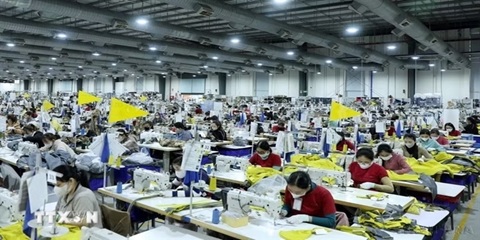
TEXTILE EXPORTS FACE DUAL CHALLENGES OF SUSTAINING ORDERS AND BOOSTING EFFICIENCY AMID GROWING COMPETITION
Data shows that the textile and garment sector maintained its growth momentum in the first nine months of this year. The industry's total export turnover reached an estimated US$35.721 billion in the first nine months of this year, up 3.3 per cent year-on-year. Despite posting encouraging export figures, Vietnamese textile and garment enterprises continue to navigate unpredictable market variables.
Events Sponsors






















