Want to be in the loop?
subscribe to
our notification
Business News
PUBLIC INVESTMENT DISBURSEMENT IN 2025 REACHES FIVE-YEAR HIGH

Stacks of Vietnamese banknotes are seen at a bank in HCMC - PHOTO: ARCHIVES
HCMC – Vietnam’s public investment disbursement in 2025 reached the highest level in the 2021–2025 period, according to the Ministry of Finance.
For capital carried forward from prior years, disbursement in all of 2025 totaled VND49.5 trillion, equivalent to 74.4% of the plan of over VND66.6 trillion.
For the 2025 plan, total disbursement as of January 31, 2026 amounted to VND858.6 trillion, or 94.8% of the plan assigned by the prime minister (VND905.5 trillion). Of this amount, central budget capital was VND320.4 trillion, equal to 74.5%, while local budget capital reached VND538.3 trillion, or 113.1%.
Compared with 2024, disbursement grew by 3.4 percentage points and by more than VND234.1 trillion in absolute terms.
The Ministry of Finance said overall national disbursement progress as of January 31, 2026, based on commitments by ministries, central agencies and localities, exceeded 2024 levels in both absolute value and ratio. However, the target of 100% disbursement of the assigned plan was not achieved.
Total public investment capital assigned for 2025, including the PM-assigned plan, additional locally balanced capital and carryover from previous years, exceeded VND1,180.9 trillion. Of this, ministries, central agencies and localities allocated VND1,106.0 trillion in detail to projects and tasks. Excluding additional locally balanced capital of VND208.8 trillion, detailed allocation was more than VND897.1 trillion, or 99.1% of the PM-assigned plan.
Unallocated capital was VND8.35 trillion of central budget funds, accounting for 0.9% of the assigned plan.
According to the ministry, 2025 was the final year of the 2021–2025 medium-term public investment period and recorded the largest investment volume of the phase, increasing pressure on disbursement. Natural disasters during the year also caused significant damage to people and construction infrastructure, affecting project implementation.
Based on the PM-assigned plan, 16 ministries and central agencies and 17 localities achieved disbursement rates at or above the national average, while 19 ministries and central agencies and 16 localities recorded below-average rates. Localities with below-average disbursement included Tuyen Quang, Dak Lak, Quang Tri, Can Tho, Lam Dong, Khanh Hoa, Son La, Ca Mau, Danang, An Giang, Vinh Long, HCMC, Quang Ngai, Dien Bien, Lai Chau and Hue.
The ministry said differences in performance occurred despite a common legal framework and the reorganization of the administrative system. To support the 2026 growth target of 10% or higher, the ministry said public investment disbursement must be treated as a key political task from the start of the year, with full allocation of capital plans, monthly and quarterly disbursement schedules, and accountability linked to the performance of heads of agencies and localities.
Source: The Saigon Times
Related News
VIETNAM ECONOMY INVESTMENT
VIETNAMESE COMPANIES OPTIMISTIC ON INTERNATIONAL GROWTH
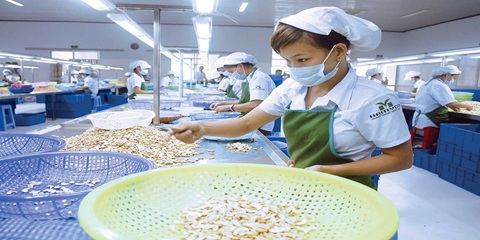
Vietnamese businesses are among the most confident about the outlook for international trade, according to HSBC’s Global Trade Pulse Survey 2026, released on November 16. The survey captures the views of 10,000 senior business leaders across 26 markets on trade, tariffs, supply chains, and technology. Findings show that 94 per cent of Vietnamese businesses expect their international trade to grow over the next two years. Vietnam ranks joint top in the survey with the Philippines, compared with 86 per cent globally.
TECHNOLOGY
VIỆT NAM'S DIGITAL TECHNOLOGY INDUSTRY REVENUE SURGES 53% TO $254.6B
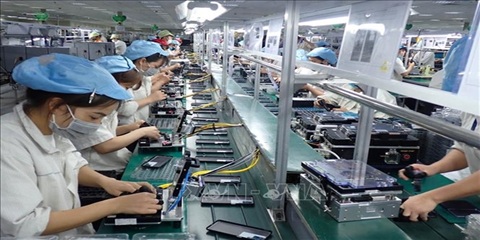
Việt Nam's digital technology industry generated an estimated US$254.6 billion in revenue in the first 10 months of 2026, up 53 per cent from a year earlier, while exports rose 46.2 per cent to $212 billion, the Ministry of Science and Technology said in its latest report. According to the report, hardware and electronics exports reached an estimated $30.681 billion in October, up 108 per cent from the same month last year.
CHARITY / EXHIBITION / OTHER EVENTS
BOCHK ‧ HKPC FUTURE VIETNAM: HANOI BUSINESS DELEGATION ON DIGITAL TRANSFORMATION AND INDUSTRIAL INNOVATION
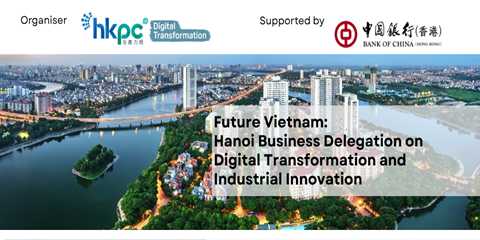
Interested in exploring Vietnam’s latest developments in digital transformation, technology adoption and industrial innovation? Organised by the Hong Kong Productivity Council (HKPC) and fully supported by Bank of China (Hong Kong) Limited, the "Future Vietnam: Hanoi Business Delegation on Digital Transformation and Industrial Innovation” will feature visits to leading high-tech enterprises across Vietnam and engage with local chambers of commerce, industry organisations and associations. Join us to expand your high-value business network and seize emerging opportunities in the ASEAN market!
GARMENT / TEXTILE
TEXTILE, GARMENT FIRMS REFORM TO MEET CPTPP ORIGIN RULES
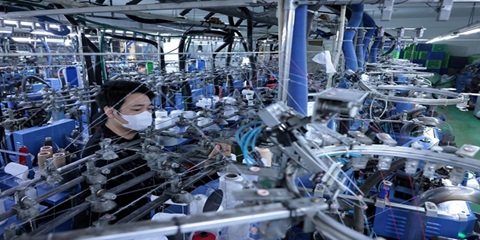
Vietnamese textile and garment manufacturers are aggressively restructuring their supply chains and diversifying material sources to unlock untapped tariff benefits. To capitalise on the Comprehensive and Progressive Agreement for Trans-Pacific Partnership (CPTPP), companies are racing to align with the pact's strict "yarn-forward" rules — a task made difficult by a shortage of raw materials within the trade bloc.
TECHNOLOGY
ĐÀ NẴNG SEEKS TO BUILD HIGH-TECH AGRICULTURE, INTEGRATED VALUE CHAINS
Đà Nẵng is seeking to transform its agricultural sector from a supplier of raw materials into a technology-driven, market-oriented economy, with investment opportunities spanning concentrated production areas, deep processing, logistics and agricultural product distribution. The city aims to shift from traditional agricultural production towards agricultural economic development, organising value chains and increasing the technological content and added value of products through closer links between production and processing.
INFRASTRUCTURE / CONSTRUCTION / LOGISTIC / PORT
HCM CITY ACCELERATES POWER INFRASTRUCTURE INVESTMENT TO ATTRACT HIGH-TECH CAPITAL
High-tech projects, particularly data centres, are not confined to SHTP but are also expanding into export processing zones and industrial parks across HCM City, driving up electricity demand. Proactively developing power infrastructure, diversifying energy supplies and expanding access to green energy are becoming essential for HCM City to maintain its competitive edge in attracting high-tech foreign direct investment (FDI).
Events Sponsors