Want to be in the loop?
subscribe to
our notification
Business News
PUBLIC INVESTMENT MAKING AN IMPACT
The Ministry of Finance has shown optimism about the country’s progress in public investment, which is helping the economy achieve its desired growth and control inflation.
Deputy Minister of Finance Nguyen Duc Chi last week reported that there have been quite positive signals in disbursement of public investment in the first nine months of this year, providing more support for the economy to reach its desired economic growth target of 8.3-8.5 per cent this year.
As of late September, an estimated $18.13 billion in public investment capital was disbursed, achieving 51.2 per cent of the target set by the prime minister.
This marks an improvement compared to the same period in 2024, when disbursement hit $12.31 billion, or 45.3 per cent of the plan - representing a 5.9 percentage point increase and an absolute increase of $5.8 billion, the MoF stated.
“Amid a complex and unpredictable global and regional landscape, public investment has been playing an increasingly crucial role in maintaining macroeconomic stability and supporting the 2025 GDP growth target,” Deputy Minister Chi said.
Since the beginning of this year, the government has placed a priority on fully disbursing all of the allocated public investment capital. To this end, the MoF provides monthly reports to the government and the prime minister, assessing progress, identifying obstacles, analysing root causes, and recommending targeted solutions to accelerate disbursement.
According to the directive of the prime minister, the total public investment capital from the state budget for 2025 is set at over $35.38 billion, comprising $16.35 billion from the central budget and $19.03 billion from local budgets.
In practice, local authorities have allocated an additional $6.54 billion in local budget capital compared to the plan assigned by the prime minister. Additionally, nearly $2.6 billion in capital from previous years has been permitted for carry-over and disbursement in 2025.
Thus, the total public investment capital allocated for 2025 amounts to more than $44.5 billion.
The MoF has made an assessment about the impacts of fully disbursing public investment capital on macroeconomic stability, inflation, and public debt.
“Timely disbursement of public investment capital ensures the injection of financial resources into the economy, spurring production and business activity, and helping sustain GDP growth,” Chi said. “In contrast, delays in disbursement risk freezing capital flows, reducing the effective use of budget resources, and slowing infrastructure projects, leading to wasted resources.”
“Achieving full disbursement of the 2025 public investment plan is not only a vital political and economic priority, but also acts as a stimulus for short-term employment, consumption, and social welfare,” Chi continued. “Furthermore, it also supports long-term goals such as infrastructure development, economic competitiveness, and the mobilisation of additional private and other investment sources in the society.”
Accelerated disbursement also helps bolsters the liquidity of the banking system, stabilise monetary markets, and facilitates government bond issuance to raise capital, according to the MoF.
Throughout the implementation of the 2025 Socioeconomic Development Plan, the government and prime minister have maintained inflation control as a top priority - committing to keeping the consumer price index (CPI) growth below 4.5 per cent, as mandated by the National Assembly.
In the first eight months of 2025, price management policies have been proactively and flexibly executed. As a result, the average CPI rose 3.24 per cent on-year, with core inflation at 3.19 per cent - both within the target range and significantly below the 4.5 per cent cap.
According to the 2025 public debt borrowing and repayment plan and the three-year public debt management programme for 2025-2027, capital mobilisation for this year is proceeding in accordance with plan. Notably, foreign-sourced public investment disbursement under the 2025 state budget is projected to reach 100 per cent.
By the end of 2025, public debt indicators are expected to remain well within the safety thresholds approved by the legislative body.
They include public debt-to-GDP ratio at approximately 35-36 per cent; government debt-to-GDP ratio at about 33-34 per cent; and the government’s direct debt servicing-to-budget revenue ratio estimated at 19-20 per cent.
“These figures are substantially below the ceiling levels allowed by the legislature, indicating a healthy and sustainable public debt profile. In summary, accelerating the disbursement of public investment capital is not only essential for achieving short-term growth targets, but also for ensuring the long-term sustainability and resilience of the national economy. It also helps control inflation and does not affect public debt,” the MoF stated.
Two weeks ago, Prime Minister Pham Minh Chinh requested leaders of relevant authorities to report on the capital allocation and disbursement situation every Friday, instead of a monthly-based format. The government aims to achieve a 100 per cent rate in 2025 disbursement.
Source: VIR
Related News

INFRASTRUCTURE / CONSTRUCTION / LOGISTIC / PORT
VIỆT NAM-CAMBODIA TRADE GATHERS PACE TOWARDS $20 BILLION TARGET
Trade between Việt Nam and Cambodia continues to grow, remaining a bright spot and a key pillar of bilateral cooperation as the two countries aim to raise two-way trade to US$20 billion in the coming years. After setting a record of more than $11.3 billion last year, bilateral trade reached about $8.7 billion in the first eight months of this year, up 8.3 per cent year on year.
TECHNOLOGY
AI BEGINNING TO RESHAPE RECRUITMENT CRITERIA
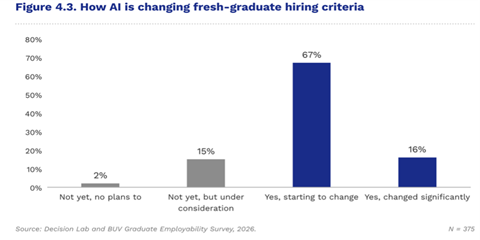
Digital literacy is the only capability area in which fresh graduates meet employers’ expectations, according to a new report. Yet, it is also the standard rising fastest, as businesses increasingly expect new hires to use AI effectively in the workplace. Some 83 per cent of employers say AI has changed, or is beginning to change, their hiring criteria, while 94 per cent report higher expectations for digital and AI capabilities than they had two to three years ago.

INFRASTRUCTURE / CONSTRUCTION / LOGISTIC / PORT
ĐÀ NẴNG GREEN-LIGHTS US$105 MILLION THAI DEVELOPMENT DEAL
The central city has approved an investment proposal by Thailand’s WHA Group to develop infrastructure for the 400ha WHA Đà Nẵng Industrial Park project on two communes of Thăng Bình and Đồng Dương, with an investment of more than VNĐ2.7 trillion (US$105 million). The city said it approved WHA Industrial Development International's status as an investor in the project, which is expected to take place between 2027 and 2034.

VIETNAM ECONOMY INVESTMENT
MOBILE PHONE EXPORTS RISE 20% TO $51.8 BILLION IN FIRST NINE MONTHS
Exports of mobile phones and components rose 20 per cent year-on-year to nearly US$51.8 billion in the first nine months of 2026, with China, the US and Republic of Korea accounting for more than half of the total. Shipments to the three markets reached a combined $26.18 billion, or 50.6 per cent of total exports of the product group during the period, according to data from the Vietnam Department of Customs under the Ministry of Finance.

VIETNAM ECONOMY INVESTMENT
FRUIT AND VEGETABLE EXPORTS POISED TO HIT $10 BILLION IN 2026
Fruit and vegetable exports are on track to reach nearly US$10 billion in 2026, after rising 19.9 per cent year on year to nearly US$7.4 billion in the first nine months, driven by strong seasonal demand and abundant tropical fruit supplies. The Ministry of Agriculture and Environment said the growth reflected stronger international demand for fresh produce and processed agricultural products.
GARMENT / TEXTILE
TEXTILE EXPORTS FACE DUAL CHALLENGES OF SUSTAINING ORDERS AND BOOSTING EFFICIENCY AMID GROWING COMPETITION
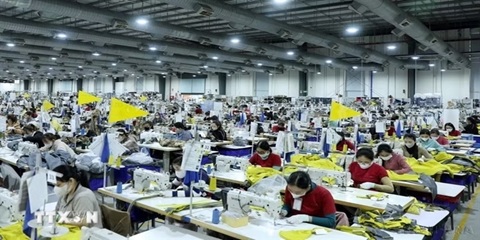
Data shows that the textile and garment sector maintained its growth momentum in the first nine months of this year. The industry's total export turnover reached an estimated US$35.721 billion in the first nine months of this year, up 3.3 per cent year-on-year. Despite posting encouraging export figures, Vietnamese textile and garment enterprises continue to navigate unpredictable market variables.
Events Sponsors






















