Want to be in the loop?
subscribe to
our notification
Business News
RATE CUT: FROM POLICY TO REALITY
The State Bank of Vietnam (SBV) has decided to cut regulatory interest rates, in stark contrast to concerns about the pickup of interest rates because deposit growth is lower than credit growth in the midst of bad debt anxiety.
This was the first time in more than two years that the market witnessed on a slew of regulatory rate cuts by 0.25 per cent. The ceiling rate of short-term loans in priority areas is lowered by 0.5 per cent per annum.
Market-signalled cuts
The decision on regulatory rate cut was partly based on the liquidity of the banking system and the short-term outlook. According to SBV Governor Le Minh Hung, a 0.25 cent per cent rate reduction was primarily a signal to the market. This was also a precautionary adjustment.
The reduction of operating rates will indirectly support costs of credit institutions and help lower lending rates in the market.
On the interbank market, overnight dong rates recently dropped to below 2 per cent per annum. Mortgage-based lending at credit institutions on the open market was stopped with a zero balance from June 22 to date.
The SBV's rate cut decision reconfirmed the market regulator’s direction of using necessary tools and conditions to stabilise exchange rates in the event that the US Federal Reserve (Fed) may continue to raise interest rates further. In addition to stabilising exchange rates, Hung also affirmed that one of priority objectives is controlling inflation.
According to experts, inflation was low in the first half of this year but its inflationary expectation remained high. Hence, monetary policy must be cautious. This rate cut reflected this approach. The SBV said it will closely monitor lending sources in the economy.
Pressures on interest rates stay high
As SBV Governor Hung said, the operating rate cut decision has signalling values, heralding the new wave of lending rate cuts after the common ground of interest rates had been brought to the low level before 2006 - 2007.
From this signal, some commercial banks may start to cut market rates. A director from a commercial bank anticipated that the SBV allows credit institutions to consider access to refinancing channels via VAMC's special bonds after it sells bad debts. After the 0.25 per cent cut, the refinancing rate was brought to 6.25 per cent per annum and the maximum rate on this channel may be at most 4.25 per cent per annum. This cost is worth considering since the ceiling rate of short-term deposit rate is 5.5 per cent per annum.
In addition, from August 2017, the resolution on bad debt settlement adopted by the National Assembly will go into force. The system has got a catalyst in support of settling bad debt and expected on a better, quicker results. Major resources in bad debt treatment will be recreated to further stimulate lending rate cuts.
However, it is important that interest rates are still under upward pressure. The first pressure still comes from bad debts which have amounted to over VND600 trillion while owner's equity of banks was just VND667 trillion at the end of the first quarter of 2017, according to the SBV. It is obvious that bad debt is almost equal to the owner's equity of banks.
The resolution on bad debt handling will accelerate and substantially improve the process of debt settlement. Banks will announce their debts as stated in the resolution and will cause bad debts to go up, thus driving up operating expenses and increasing pressures on interest rate hikes.
On the other hand, deposit growth has not been as high as credit growth since the beginning of the year, resulting in a paradox and danger for the illiquid banking system.
According to banking experts, in VND100 mobilised, VND80 will be lent out and VND20 will be retained to ensure liquidity in case customers withdraw money. Banks cannot lend all VND100 or even more than VND100 because risks will be enormous, e.g. liquidity risk and interest rate risk.
In conclusion, the regulator's rate direction aimed to support businesses and the economy will face many daunting challenges.
Source: VCCI
Related News
VIETNAM ECONOMY INVESTMENT
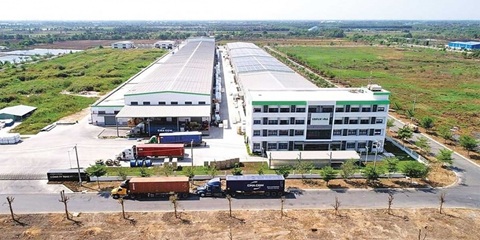
FOREIGN INVESTORS SEEKING A SYNCHRONISED MANUFACTURING ECOSYSTEM
Instead of focusing only on land costs and incentives as usual, foreign investors are seeking a synchronised manufacturing ecosystem, from stable power supply and logistics to shared infrastructure and the convenience of completing residence procedures for experts to serve their long-term investment in the country.
INFRASTRUCTURE / CONSTRUCTION / LOGISTIC / PORT
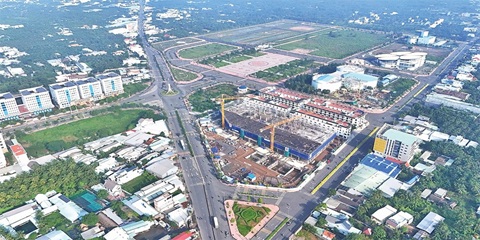
DONG THAP PROVINCE STEPS UP INDUSTRIAL EXPANSION AND INFRASTRUCTURE CONNECTIVITY
Accelerating public investment, strengthening inter-regional connectivity, and expanding industrial land are helping Dong Thap efficiently bolster competitiveness and drive economic growth. Following the 2025 merger of the former Dong Thap and Tien Giang provinces, the expanded Dong Thap province in the Mekong Delta faces mounting pressure to accelerate infrastructure development and strengthen connectivity among local economic zones, urban areas, industrial parks (IPs), and production centres.
PROPERTY / INDUSTRIAL ZONE
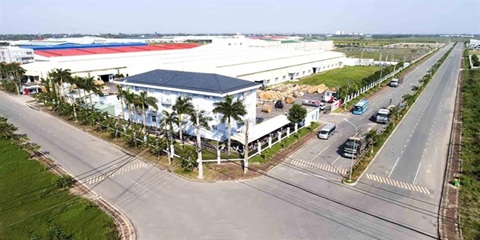
HCM CITY ATTRACTS US$5.7 BILLION INTO EXPORT PROCESSING AND INDUSTRIAL ZONES
HCM City attracted US$5.7 billion in domestic and foreign investment into its export processing and industrial zones during the first nine months of 2026. The figure exceeded the city's full-year target by 31 per cent, highlighting strong momentum in high-quality industrial investment under Resolution No.10-NQ/TW. Total investment reached 131 per cent of the 2026 target of $4.25 billion and represented a 29 per cent increase compared with the same period in 2025, according to the city's Export Processing and Industrial Zones Authority (HEPZA).
BANKING / FINANCE / INSURANCE / TAX
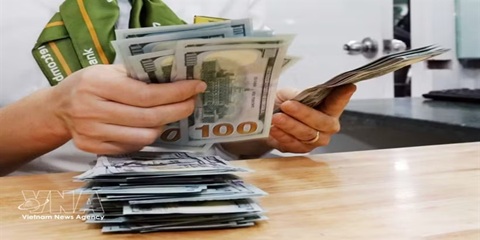
REMITTANCES TO HCM CITY RISE NEARLY 40% IN Q3
Remittances to HCM City reached more than US$2.83 billion in the third quarter of this year, up 39.5 per cent from the previous quarter and 3.6 per cent year-on-year. This was the first quarter showing positive annual growth this year, helping narrow the decline in remittance inflows over the first nine months. According to the State Bank of Vietnam (SBV)’s Regional Branch 2, remittances transferred to HCM City through credit institutions and economic organisations totalled $2.835 billion in Q3, an increase of more than $802 million from the previous quarter.

VIETNAM ECONOMY INVESTMENT
LOCALITIES REPORT BREAKTHROUGH RESULTS IN FDI IN FIRST NINE MONTHS
In Ho Chi Minh City, total registered capital reached $17.2 billion in the first nine months, up 4.2 times from the same period last year. The figure included more than $9.35 billion in newly registered capital and over $4.9 billion in additional capital for existing projects. Foreign investors also registered more than $2.9 billion through capital contributions and share purchases.

TECHNOLOGY
TECH SECTOR GROWTH OPENS UP OPPORTUNITIES FOR VIỆT NAM TO GO GLOBAL
The growth of the electronics, semiconductor and high-tech sectors worldwide is opening up a variety of opportunities for Vietnamese enterprises to integrate more deeply into the global supply chain. However, to become suppliers for these corporations, domestic enterprises must meet rigorous standards regarding quality, technology, productivity and order fulfilment capabilities.
Events Sponsors






















