Want to be in the loop?
subscribe to
our notification
Business News
REAL ESTATE FIRMS GEAR UP FOR THE RACE AFTER PANDEMIC
Property firms are gearing up to tap opportunities from the post-pandemic recovery of the real estate market, which was predicted to soon get back on its feet.
The real estate market has been frozen since the beginning of this year due to the COVID-19 pandemic.
The Ministry of Construction’s statistics showed that about 80 per cent of real estate sale agents were closed or temporarily halted operations in the first quarter of this year while the others maintained operations at a modest level.
The number of new real estate firms founded in the quarter also dropped by 12 per cent while of those who temporarily halted operation increased by 94 per cent.
Transactions also slumped in the quarter, equivalent to 40 per cent of the same period of 2019. Only 14 per cent of property products available in the market in the quarter were sold, the lowest level in the past four years.
However, industry insiders believed that the impacts would only be short term and the market would be robust in the next two years.
According to Nguyen Quoc Bao, deputy director of real estate firm Danh Khoi Group, the real estate market was undergoing a purification process, pushed by the COVID-19 pandemic, to prepare for a new growth cycle.
This would be a difficult time for companies of weak capacity, but for those with strong financial capacity and professional operation, obstacles like the COVID-19 pandemic would only be short term. The pandemic even created opportunities, he said.
Tran Le Thanh Hien, chairman of Danh Viet Group, said the difficulties of the real estate market were just temporary, adding that in the long term, the market had significant potential for development.
It was time for real estate companies to expand land banks, especially those with strong financial capacity.
According to Pham Lam, chairman of real estate services firm DKRA Vietnam, the market would see increasing competition in the post-pandemic period with the participation of diversified developers, from giants to start-ups, which would create a robust picture in 2020-21.
Nguyen Van Hau, general director of Asian Holding, said that real estate firms must improve resilience and flexibility to cope with market shocks.
Although there were difficulties, the market saw positive signs, Hau said. The State Bank of Viet Nam’s move to cut rates would support the property market, he said.
According to Su Ngoc Khuong, Director of Savills Viet Nam, the COVID-19 pandemic had negative impacts not only on the real estate market but also on more than 50 relevant industries, including construction, building materials, labour and financial markets.
However, the real estate market of Viet Nam still had a number of advantages and was attractive to investors, given the population of nearly 100 million people, 55 per cent aged between 25 and 40 who had high housing demand and strong purchasing power, together with the country’s stable economic growth, improved transport infrastructure and rapid urbanisation.
The Government’s efforts in hastening administrative reforms and speeding up disbursement of public investment were expected to create impetus for economic growth which would benefit the real estate market, Khuong said.
Source: VIR
Related News

INFRASTRUCTURE / CONSTRUCTION / LOGISTIC / PORT
VIỆT NAM-CAMBODIA TRADE GATHERS PACE TOWARDS $20 BILLION TARGET
Trade between Việt Nam and Cambodia continues to grow, remaining a bright spot and a key pillar of bilateral cooperation as the two countries aim to raise two-way trade to US$20 billion in the coming years. After setting a record of more than $11.3 billion last year, bilateral trade reached about $8.7 billion in the first eight months of this year, up 8.3 per cent year on year.
TECHNOLOGY
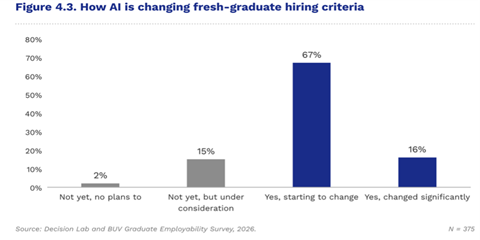
AI BEGINNING TO RESHAPE RECRUITMENT CRITERIA
Digital literacy is the only capability area in which fresh graduates meet employers’ expectations, according to a new report. Yet, it is also the standard rising fastest, as businesses increasingly expect new hires to use AI effectively in the workplace. Some 83 per cent of employers say AI has changed, or is beginning to change, their hiring criteria, while 94 per cent report higher expectations for digital and AI capabilities than they had two to three years ago.

INFRASTRUCTURE / CONSTRUCTION / LOGISTIC / PORT
ĐÀ NẴNG GREEN-LIGHTS US$105 MILLION THAI DEVELOPMENT DEAL
The central city has approved an investment proposal by Thailand’s WHA Group to develop infrastructure for the 400ha WHA Đà Nẵng Industrial Park project on two communes of Thăng Bình and Đồng Dương, with an investment of more than VNĐ2.7 trillion (US$105 million). The city said it approved WHA Industrial Development International's status as an investor in the project, which is expected to take place between 2027 and 2034.

VIETNAM ECONOMY INVESTMENT
MOBILE PHONE EXPORTS RISE 20% TO $51.8 BILLION IN FIRST NINE MONTHS
Exports of mobile phones and components rose 20 per cent year-on-year to nearly US$51.8 billion in the first nine months of 2026, with China, the US and Republic of Korea accounting for more than half of the total. Shipments to the three markets reached a combined $26.18 billion, or 50.6 per cent of total exports of the product group during the period, according to data from the Vietnam Department of Customs under the Ministry of Finance.

VIETNAM ECONOMY INVESTMENT
FRUIT AND VEGETABLE EXPORTS POISED TO HIT $10 BILLION IN 2026
Fruit and vegetable exports are on track to reach nearly US$10 billion in 2026, after rising 19.9 per cent year on year to nearly US$7.4 billion in the first nine months, driven by strong seasonal demand and abundant tropical fruit supplies. The Ministry of Agriculture and Environment said the growth reflected stronger international demand for fresh produce and processed agricultural products.
GARMENT / TEXTILE
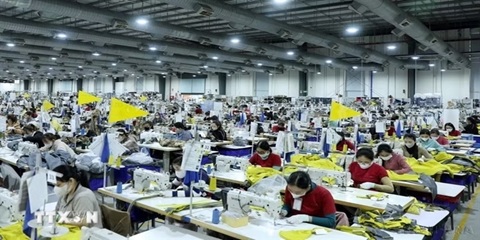
TEXTILE EXPORTS FACE DUAL CHALLENGES OF SUSTAINING ORDERS AND BOOSTING EFFICIENCY AMID GROWING COMPETITION
Data shows that the textile and garment sector maintained its growth momentum in the first nine months of this year. The industry's total export turnover reached an estimated US$35.721 billion in the first nine months of this year, up 3.3 per cent year-on-year. Despite posting encouraging export figures, Vietnamese textile and garment enterprises continue to navigate unpredictable market variables.
Events Sponsors






















