Want to be in the loop?
subscribe to
our notification
Business News
REAL ESTATE MARKET IN 2017: EXPERT FORECASTS
Although the property market showed strong signs of recovery driven by significantly improved liquidity in 2016, all segments generated growth momentum. Notably, no bubble was seen in the year as warned earlier. Transactions were mainly concluded by end-buyers rather than speculators.
Experts are optimistic about the real estate market in 2017. Specifically, vacation property and non-traditional investment forms will continue to exert a strong pull on retail investors. These forms will attract a large amount of unemployed money from the public as well as overseas remittances. However, retail investors need to improve professionalism in picking up best investment locations, investment projects and investors.
Housing will be still the central segment and catch the greatest interest of the market. This segment is expected to see an upward spiral in 2017 because demand always exceeds supply.
According to experts, the supply can only meet a quarter of demand for affordable housing. This will lead to certain inadequacies of pricing and construction quality. Housing prices in this segment may be pushed up on under-supply.
As for capital sources for the real estate market in 2017, foreign direct investment (FDI) flows are expected to be stronger than in 2016 and FDI for property development will still keep the biggest share. Domestic credit funds for real estate development will remain a main resource and ensure a rise in property supply on to greater investment opportunities. Nevertheless, this source will still be tightly controlled by the State Bank of Vietnam (SBV). Some other sources from overseas Vietnamese (remittances) and from the public will be further stimulated to be channelled into the property market, especially in vacation property segment.
According to Dr Dang Hung Vo, persistent concerns of the property market are always mechanisms, policies and laws. The Government and the National Assembly need greater determinations and efforts to make and amend laws and ensure the publicity and transparency of real estate information. This will be a prerequisite to deal with risks in development investment and market development forecast.
2017 real estate market is still prone to risk
Mr Le Hoang Chau, Chairman of the HCM City Real Estate Association
Impacts of the legal system, particularly the Law on Land, the Law on Housing, the Law on Real Estate, the Law on Construction, the Law on Investment, the Law on Credit, the Law on Tax and other legal documents are heavy on the property market. The legal system, which is being completed, will affect economic development, including the property market.
Besides, objective factors such as the uncertainty of the Trans-Pacific Partnership (TPP) and China’s attitude towards the Regional Comprehensive Economic Partnership (RCEP) will have direct impacts on investment flows in Vietnam and will directly affect the real estate market in the medium and long terms.
Inherent inadequacies of the property market such as supply and demand imbalances in the premium segment and the fact that some big companies hold huge amount of funds and successfully mobilise from society are posing potential risks to the property market.
House prices are unlikely to fall further
Mr Lai Van Tu, Director of Phuc Ha Real Estate Exchange
In 2017, customers will benefit more when investors place a greater emphasis on the quality of products. However, house prices are unlikely to fall further because the profit margin is now not big after a long period of lacklustre market performance and price slumps.
Price drops will largely depend on various reasons. If land prices do not go down, housing prices will be unlikely to decline. At present, most investors have to borrow money from banks and prices are unlikely to change unless interest rates fall. Prices of construction materials like cement and steel will affect housing prices. Hence, key competitive factors among investors are product quality in addition to location advantage.
There will be pricing competition
Mr Nguyen Quoc Khanh, General Director and President of DTJ Investment and Distribution Joint Stock Company
Houses priced below VND2 billion will be still the hot pick in 2017. A highly liquid project must gather following factors in combination: Having good infrastructure, situating in populated areas and selling midmarket houses.
In 2017, the supply of affordable housing will be much more diverse than in 2016. Therefore, investors must analyse to shift to the midmarket segment in order to increase their competitiveness on the market. Pricing competition is inevitable among locations and segments.
Selling prices will depend on many factors including government policies on land use fees because these fees are increased annually. This is one of the constituents of selling prices. So, to reduce house prices, State supports in capital and land-use fees are essential.
Real estate bubble may be formed
Dr Dang Hung Vo
Hanoi and Ho Chi Minh City property markets will go in different directions. While Ho Chi Minh City will focus on medium segments, Hanoi will develop higher classes. The rates among high, medium or low segments depend on how we manage. In the coming year, we need to increase the supply of low-priced segments to at least 60 - 80 per cent and higher classes to 40 per cent. Otherwise, oversupply will happen.
Given the market growth in 2016, we should not exclude the possibility that the market may form a bubble and price fever in the second half 2017.
Source: VCCI
Related News

INFRASTRUCTURE / CONSTRUCTION / LOGISTIC / PORT
VIỆT NAM-CAMBODIA TRADE GATHERS PACE TOWARDS $20 BILLION TARGET
Trade between Việt Nam and Cambodia continues to grow, remaining a bright spot and a key pillar of bilateral cooperation as the two countries aim to raise two-way trade to US$20 billion in the coming years. After setting a record of more than $11.3 billion last year, bilateral trade reached about $8.7 billion in the first eight months of this year, up 8.3 per cent year on year.
TECHNOLOGY
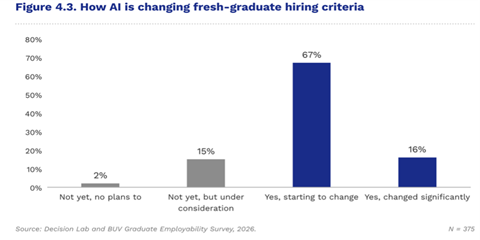
AI BEGINNING TO RESHAPE RECRUITMENT CRITERIA
Digital literacy is the only capability area in which fresh graduates meet employers’ expectations, according to a new report. Yet, it is also the standard rising fastest, as businesses increasingly expect new hires to use AI effectively in the workplace. Some 83 per cent of employers say AI has changed, or is beginning to change, their hiring criteria, while 94 per cent report higher expectations for digital and AI capabilities than they had two to three years ago.

INFRASTRUCTURE / CONSTRUCTION / LOGISTIC / PORT
ĐÀ NẴNG GREEN-LIGHTS US$105 MILLION THAI DEVELOPMENT DEAL
The central city has approved an investment proposal by Thailand’s WHA Group to develop infrastructure for the 400ha WHA Đà Nẵng Industrial Park project on two communes of Thăng Bình and Đồng Dương, with an investment of more than VNĐ2.7 trillion (US$105 million). The city said it approved WHA Industrial Development International's status as an investor in the project, which is expected to take place between 2027 and 2034.

VIETNAM ECONOMY INVESTMENT
MOBILE PHONE EXPORTS RISE 20% TO $51.8 BILLION IN FIRST NINE MONTHS
Exports of mobile phones and components rose 20 per cent year-on-year to nearly US$51.8 billion in the first nine months of 2026, with China, the US and Republic of Korea accounting for more than half of the total. Shipments to the three markets reached a combined $26.18 billion, or 50.6 per cent of total exports of the product group during the period, according to data from the Vietnam Department of Customs under the Ministry of Finance.

VIETNAM ECONOMY INVESTMENT
FRUIT AND VEGETABLE EXPORTS POISED TO HIT $10 BILLION IN 2026
Fruit and vegetable exports are on track to reach nearly US$10 billion in 2026, after rising 19.9 per cent year on year to nearly US$7.4 billion in the first nine months, driven by strong seasonal demand and abundant tropical fruit supplies. The Ministry of Agriculture and Environment said the growth reflected stronger international demand for fresh produce and processed agricultural products.
GARMENT / TEXTILE
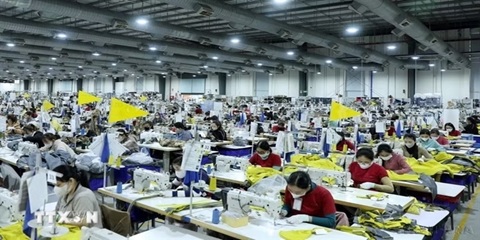
TEXTILE EXPORTS FACE DUAL CHALLENGES OF SUSTAINING ORDERS AND BOOSTING EFFICIENCY AMID GROWING COMPETITION
Data shows that the textile and garment sector maintained its growth momentum in the first nine months of this year. The industry's total export turnover reached an estimated US$35.721 billion in the first nine months of this year, up 3.3 per cent year-on-year. Despite posting encouraging export figures, Vietnamese textile and garment enterprises continue to navigate unpredictable market variables.
Events Sponsors






















