Want to be in the loop?
subscribe to
our notification
Business News
REAL ESTATE STRONGLY APPEALING TO FOREIGN INVESTORS
The real estate sector ranked second in the list of industries attracting FDI in 2022, with more than US$4.45 billion, accounting for 16.1% of total registered investment capital.
According to the Foreign Investment Agency, Ministry of Planning and Investment, in the past year, foreign investors poured funds into 19 industries out of a total of 21 national economic sectors.
Foreign capital increases by US$1.85 billion
Specifically, the processing and manufacturing sector took the lead with a total investment of more than US$16.8 billion, accounting for 60.6% of the total registered investment capital. Notably, the real estate sector ranked second with a total investment of more than US$4.45 billion, accounting for 16.1% of total registered investment capital. According to data reported by the Foreign Investment Agency, foreign capital in the real estate sector for the whole year of 2022 increased by US$1.85 billion, an increase of more than 70% compared to 2021.
According to Mr. Do Duy Thanh, Manager of the Investment Consulting Division Savills Hanoi, if we look back at the picture of investment since the financial crisis that ended in 2013, the amount of new FDI capital increased clearly and steadily over the years, in which FDI capital in the real estate sector always accounts for a large proportion. Two-thirds of FDI enterprises in the real estate sector in Vietnam are large-scale enterprises with increasingly diversified and better-quality forms.
Many other experts also believe that foreign capital has increased sharply in the real estate sector because investors continue to put their faith in Vietnam's investment environment in general, as well as the real estate sector in particular.
Especially now, Vietnam is one of the countries with a strong economic recovery in the post-pandemic period, attracting more and more investment from abroad. Especially after the Government relaunched international flights in October 2021, many economic sectors including the tourism and hospitality industry benefited greatly. The above factors have encouraged foreign enterprises to enter the Vietnamese market, in the context of limited investment opportunities in their country.
The experts also said that the Vietnamese market attracts foreign investors because it is considered an attractive place to do business due to its large working-age population and many attractive policies. In addition, Vietnam is identified as a market with positive growth, suitable for long-term and low-risk investments, and a safe inflation rate. Currently, FDI capital invested in Vietnam mainly comes from East Asia such as Japan, the Republic of Korea, Singapore, Hong Kong, and Taiwan (China) because of many similar characteristics.
Removing hurdles to attract foreign investment
According to Dr. Dinh Trong Thinh, an economist, legal entanglements are a major issue for the Vietnamese real estate market. Removing this hurdle will help the market attract FDI inflows. In addition, the planning must also be improved for socio-economic development, cultural tourism services, or housing, to meet people's needs. If it can be done, capital flows will come from within the country and abroad. On the other hand, administrative procedures related to the land sector need to be streamlined, because complicated procedures easily cause investors to hesitate to inject money into the real estate sector.
This expert said that Vietnam's real estate still has gaps in some segments, so there are still many opportunities to attract FDI. In particular, infrastructure investment is the segment that helps attract foreign investment to Vietnam in general and in real estate in particular. Other segments include tourism and resort real estate. In the past, Vietnam had a number of relatively good resorts, but the way of business management and the large customer base have not yet developed. If foreign enterprises invest in the sector, the number of international visitors to Vietnam will rise. Besides, there are very few products in the low-cost commercial housing segment because the investment mainly focuses on high-end products.
According to some market research units, recently, the emergence of the healthcare real estate segment, a very new type in Vietnam, is also a great opportunity for investors with a vision and a grasping ability. In particular, it is worth mentioning the breakthrough of industrial real estate that promises to become a bright spot in the real estate sector in the coming time.
According to experts, real estate is a cyclical market. With each cycle, the market tends to become more complex, creating more opportunities for many investors. Therefore, in the face of existing difficulties and opportunities, the Vietnamese market will improve in quality and diversify products. It is expected that in 2023, with the attention of the Government and ministries, branches and localities, legal entanglements related to real estate are gradually removed, which will further promote capital flows, in which FDI continues to flow into real estate.
Source: VCCI
Related News

INFRASTRUCTURE / CONSTRUCTION / LOGISTIC / PORT
VIỆT NAM-CAMBODIA TRADE GATHERS PACE TOWARDS $20 BILLION TARGET
Trade between Việt Nam and Cambodia continues to grow, remaining a bright spot and a key pillar of bilateral cooperation as the two countries aim to raise two-way trade to US$20 billion in the coming years. After setting a record of more than $11.3 billion last year, bilateral trade reached about $8.7 billion in the first eight months of this year, up 8.3 per cent year on year.
TECHNOLOGY
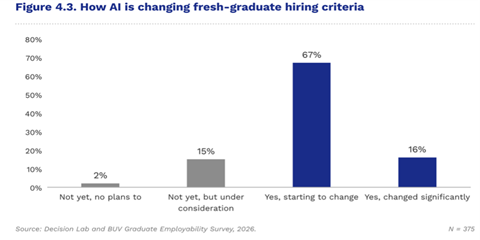
AI BEGINNING TO RESHAPE RECRUITMENT CRITERIA
Digital literacy is the only capability area in which fresh graduates meet employers’ expectations, according to a new report. Yet, it is also the standard rising fastest, as businesses increasingly expect new hires to use AI effectively in the workplace. Some 83 per cent of employers say AI has changed, or is beginning to change, their hiring criteria, while 94 per cent report higher expectations for digital and AI capabilities than they had two to three years ago.
INFRASTRUCTURE / CONSTRUCTION / LOGISTIC / PORT
ĐÀ NẴNG GREEN-LIGHTS US$105 MILLION THAI DEVELOPMENT DEAL
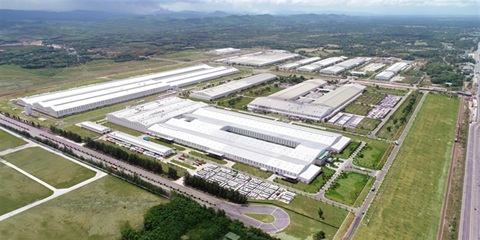
The central city has approved an investment proposal by Thailand’s WHA Group to develop infrastructure for the 400ha WHA Đà Nẵng Industrial Park project on two communes of Thăng Bình and Đồng Dương, with an investment of more than VNĐ2.7 trillion (US$105 million). The city said it approved WHA Industrial Development International's status as an investor in the project, which is expected to take place between 2027 and 2034.
VIETNAM ECONOMY INVESTMENT
MOBILE PHONE EXPORTS RISE 20% TO $51.8 BILLION IN FIRST NINE MONTHS
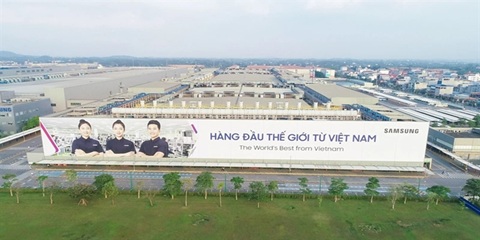
Exports of mobile phones and components rose 20 per cent year-on-year to nearly US$51.8 billion in the first nine months of 2026, with China, the US and Republic of Korea accounting for more than half of the total. Shipments to the three markets reached a combined $26.18 billion, or 50.6 per cent of total exports of the product group during the period, according to data from the Vietnam Department of Customs under the Ministry of Finance.
VIETNAM ECONOMY INVESTMENT
FRUIT AND VEGETABLE EXPORTS POISED TO HIT $10 BILLION IN 2026
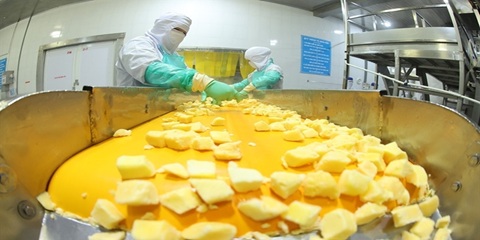
Fruit and vegetable exports are on track to reach nearly US$10 billion in 2026, after rising 19.9 per cent year on year to nearly US$7.4 billion in the first nine months, driven by strong seasonal demand and abundant tropical fruit supplies. The Ministry of Agriculture and Environment said the growth reflected stronger international demand for fresh produce and processed agricultural products.
GARMENT / TEXTILE
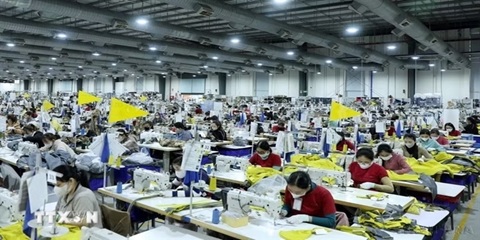
TEXTILE EXPORTS FACE DUAL CHALLENGES OF SUSTAINING ORDERS AND BOOSTING EFFICIENCY AMID GROWING COMPETITION
Data shows that the textile and garment sector maintained its growth momentum in the first nine months of this year. The industry's total export turnover reached an estimated US$35.721 billion in the first nine months of this year, up 3.3 per cent year-on-year. Despite posting encouraging export figures, Vietnamese textile and garment enterprises continue to navigate unpredictable market variables.
Events Sponsors






















