Want to be in the loop?
subscribe to
our notification
Business News
REAL ESTATE TRANSACTIONS SHOULD BE PERFORMED ON TRADING FLOORS: MOC
The Ministry of Construction (MoC) has proposed that real estate projects must sell their products on real estate trading floors, according to the draft amending the Law on Real Estate Business. The ministry has also suggested that individuals engaged in brokerage activities must have a practising certificate.
Deputy Minister of Construction Nguyen Van Sinh said this revision is mainly to clarify some contents relating to real estate trading floors, regulations on trading property products via the floor, and new types of real estate products. Notably, the amendment includes regulations for the real estate market to ensure stable and sustainable development.
The domestic real estate market saw strong growth in many localities in the first half of 2021. At that moment, the market needed the State to have policies and regulatory tools to help its sustainable development. They included regulatory tools on tax, credit, land and finance.
The Law on Real Estate Business will be revised to solve inadequacies that hinder socio-economic development; and eliminate overlaps in enforcement and administrative procedures.
According to director of the Department of Housing and Real Estate Market Management Bui Xuan Dung, the draft would add regulations on the types of marketed real estate products and clarify the types of available houses and future residential houses.
Regarding the types of houses, Hoang Van Cuong, member of the National Assembly's Finance and Budget Committee, said that it is necessary to pay attention to the type of future housing products. This includes whether they should be recognised or not as they are just on paper.
Therefore, the transactions, management and registration cannot be the same as those for finished housing products.
At present, the market often witnesses disputes regarding this type of housing product, according to Cuong.
Pham Thanh Hung, vice chairman of the Cen Group, said future real estate products often cause market growth. Therefore, the proposal on transactions on trading floors is necessary.
These projects are formed without a red book until they are completed, so they must be verified on a trading floor to ensure legality and safety for buyers and sellers, Hung said. Payment for this product often takes a long time, therefore the transactions via the floor will ensure benefits for the traders.
Hung said brokerage activities need to be certified, and it is also necessary to distinguish between brokers and sales agents. Brokers can be individuals or organisations with legal status.
Now, there are many individuals who are engaged in agency-style sales, but they have poor experience, so it is necessary to consider the authority in signing and closing the transaction.
Hung has proposed only brokers with practising certificates should be eligible to appraise and sign transactions.
Vice Chairman of the Vietnam Real Estate Brokers Association Nguyen Chi Thanh agreed that trading future housing products on trading floors should be compulsory, but the law needs to have specific conditions for establishing a real estate trading floor.
Thanh has added that the draft sets out detailed conditions for granting practising certificates for real estate brokers, but making the certificate valid for two years is not reasonable. This puts pressure on the brokers because the examination is difficult.
Many countries do not specify the period of validity for this certificate, which makes the brokers feel safe in doing business, he said.
Apartments
The ministry has proposed regulations on the duration of ownership and use of apartments in the draft amending the Law on Housing.
According to Cuong, a member of the National Assembly's Finance and Budget Committee, this draft has many new points, including the regulation of apartment use terms. This regulation will help people have more chances to buy apartments.
People want to have permanent ownership of property products to hand down to their children. If the State has regulations on switching to ownership with a term, then people will have to consider renting or buying.
If there is a term of ownership for the apartment, it should also have a term of renting land for projects building those apartments.
Nguyen Quoc Hiep, chairman of the Vietnam Construction Contractors Association, said the proposal setting a term of ownership for apartments is reasonable because the apartments do not exist permanently.
Hiep said the State should solve existing obstacles for old apartment buildings before having regulations on terms of ownership. That would help get agreement from the people.
Now, there are hundreds or thousands of households in apartment buildings, so it is difficult to renovate apartments.
Lawyer Nguyen Dinh Vinh, director of VietThink Law Firm, said many countries have regulations on the term of using apartments. Condotel, a type of apartment, has better quality than many current apartment buildings. However, the condotel only has a 50 year lease, while apartment buildings are granted indefinite ownership. Therefore, the Housing Law should be equal in terms of apartment ownership.
However, some businesses such as CEO Group, Sunshine, Sun Group, and VinaCapital, believe that regulations on terms of apartment ownership may affect the property market.
With this regulation, it is possible that people will want to buy land to build houses for long-term ownership, affecting apartment development.
Meanwhile, apartment buildings are a current suitable development model to save land resources. At the same time, the enterprises are afraid of investing in the development of apartment buildings.
Source: VIR
Related News

INFRASTRUCTURE / CONSTRUCTION / LOGISTIC / PORT
VIỆT NAM-CAMBODIA TRADE GATHERS PACE TOWARDS $20 BILLION TARGET
Trade between Việt Nam and Cambodia continues to grow, remaining a bright spot and a key pillar of bilateral cooperation as the two countries aim to raise two-way trade to US$20 billion in the coming years. After setting a record of more than $11.3 billion last year, bilateral trade reached about $8.7 billion in the first eight months of this year, up 8.3 per cent year on year.
TECHNOLOGY
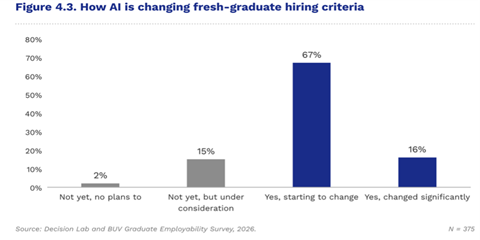
AI BEGINNING TO RESHAPE RECRUITMENT CRITERIA
Digital literacy is the only capability area in which fresh graduates meet employers’ expectations, according to a new report. Yet, it is also the standard rising fastest, as businesses increasingly expect new hires to use AI effectively in the workplace. Some 83 per cent of employers say AI has changed, or is beginning to change, their hiring criteria, while 94 per cent report higher expectations for digital and AI capabilities than they had two to three years ago.

INFRASTRUCTURE / CONSTRUCTION / LOGISTIC / PORT
ĐÀ NẴNG GREEN-LIGHTS US$105 MILLION THAI DEVELOPMENT DEAL
The central city has approved an investment proposal by Thailand’s WHA Group to develop infrastructure for the 400ha WHA Đà Nẵng Industrial Park project on two communes of Thăng Bình and Đồng Dương, with an investment of more than VNĐ2.7 trillion (US$105 million). The city said it approved WHA Industrial Development International's status as an investor in the project, which is expected to take place between 2027 and 2034.

VIETNAM ECONOMY INVESTMENT
MOBILE PHONE EXPORTS RISE 20% TO $51.8 BILLION IN FIRST NINE MONTHS
Exports of mobile phones and components rose 20 per cent year-on-year to nearly US$51.8 billion in the first nine months of 2026, with China, the US and Republic of Korea accounting for more than half of the total. Shipments to the three markets reached a combined $26.18 billion, or 50.6 per cent of total exports of the product group during the period, according to data from the Vietnam Department of Customs under the Ministry of Finance.

VIETNAM ECONOMY INVESTMENT
FRUIT AND VEGETABLE EXPORTS POISED TO HIT $10 BILLION IN 2026
Fruit and vegetable exports are on track to reach nearly US$10 billion in 2026, after rising 19.9 per cent year on year to nearly US$7.4 billion in the first nine months, driven by strong seasonal demand and abundant tropical fruit supplies. The Ministry of Agriculture and Environment said the growth reflected stronger international demand for fresh produce and processed agricultural products.
GARMENT / TEXTILE
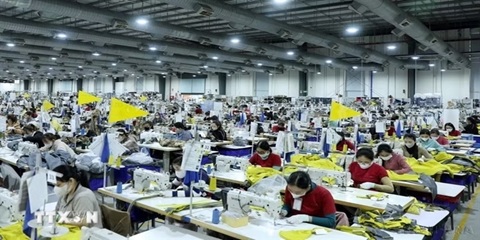
TEXTILE EXPORTS FACE DUAL CHALLENGES OF SUSTAINING ORDERS AND BOOSTING EFFICIENCY AMID GROWING COMPETITION
Data shows that the textile and garment sector maintained its growth momentum in the first nine months of this year. The industry's total export turnover reached an estimated US$35.721 billion in the first nine months of this year, up 3.3 per cent year-on-year. Despite posting encouraging export figures, Vietnamese textile and garment enterprises continue to navigate unpredictable market variables.
Events Sponsors






















