Want to be in the loop?
subscribe to
our notification
Business News
REALISING CIRCULAR ECONOMY TO ACHIEVE SUSTAINABLE DEVELOPMENT GOALS
Việt Nam considers the implementation of the circular economy an interdisciplinary task and a shared responsibility of society, requiring the involvement of all levels of government, ministries, local authorities, organisations, and individuals.
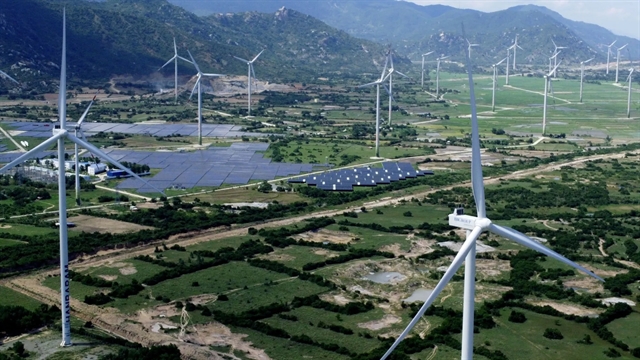
The south-central coastal province of Ninh Thuận has become Việt Nam’s leading locality in renewable energy. — VNA/VNS Photo
HÀ NỘI — In recent years, the Party and the State have focused on the development of a circular economy. The Resolution of the 13th National Party Congress identified the development of a circular economy as one of the key orientations for the country’s development toward 2045.
Technology & capital as key factors
Developing a circular economy has been recognised as one of the priority directions to achieve overarching goals such as waste management, efficient resources utilisation, environmental protection, disaster prevention, and climate change adaptation in the country's next development phase.
According to Assoc. Prof., Dr. Nguyễn Đình Thọ, General Director of the Institute of Strategy and Policy on Natural Resources and Environment under Ministry of Natural Resources and Environment (MONRE)'s , Article 142 of the 2020 Law on Environmental Protection features four key principles, namely efficient use of raw materials, fuels, and energy; extending product life cycles; reducing emissions and waste; and avoiding adverse environmental impacts.
The decrees guiding the law have detailed the criteria for a circular economy, the responsibilities for its implementation, the roadmap for execution, and incentive mechanisms. Furthermore, the circular economy has been integrated into various strategies, programmes, projects, development plans of sectors and localities.
Experts at the 2024 Việt Nam Circular Economy Forum highlighted that technology and capital are significant bottlenecks affecting development.
Đặng Huy Đông, director of the Institute for Planning and Development Research, emphasised that science and technology in the environment and carbon emission reduction will be the key to Việt Nam’s transition to a circular economy. He stressed that new technologies must ensure economic sustainability.
According to Đông, high-quality technologies must be commercially viable in the market. It is essential to have a fair evaluation and selection process for technologies that support the green transition. Proven technologies that demonstrate environmental and economic benefits should be scaled up rather than limited to small-scale pilot projects.
Agreeing with this viewpoint, Vương Thị Minh Hiếu, deputy director of the Department of Economic Zone Management under Ministry of Planning and Investment, stated they eagerly anticipate domestically developed technologies that can be widely commercialised, bringing benefits to businesses so that they themselves recognise the advantages and proactively implement them.
During the transition to a circular economy, businesses, especially small and medium-sized enterprises (SMEs), face challenges in accessing capital. While banks and financial institutions have introduced funding programmes for green transition and sustainable development, there are still procedural and accessibility issues.
Lê Thanh Tùng, a member of the Board of Directors of the Việt Nam Joint Stock Commercial Bank for Industry and Trade (VietinBank), noted that the legal framework for businesses to access capital has been established. However, gaps remain between regulations and practical needs. VietinBank has identified three key factors for effective capital access and disbursement based on its experience.
The first factor is awareness. Only when businesses recognise that the circular economy is a crucial factor in development, will they proactively develop appropriate business strategies and convince capital providers.
The second factor involves governance, technology, and human resources. Alongside supporting packages to facilitate businesses' access to the circular economy, VietinBank also offers preferential interest rates and fees.
Finally, social attention and synchronised policy implementation by regulatory agencies will help Việt Nam make positive strides in realising the circular economy.
Transitioning from plans to action
Việt Nam considers the implementation of the circular economy an interdisciplinary task and a shared responsibility of society, requiring the involvement of all levels of government, ministries, local authorities, organisations, and individuals. The MONRE has coordinated with relevant agencies to draft a national action plan for circular economy development to submit to the Prime Minister for approval.
Speaking at the 2024 Việt Nam Circular Economy Forum, Deputy Minister of Natural Resources and Environment Trần Quý Kiên emphasised that realising the national action plan for circular economy will contribute to driving innovation, improving labour productivity, promoting good practices and green lifestyles, creating green jobs and developing new value chains.
Dr. Thọ noted that the action plan identifies priority sectors, industries, and products for circular economy implementation in the near future, with a focus on key areas, including transportation, agriculture, construction, waste management, industry, and chemicals.
To bring the action plan to life, the draft outlines core tasks, with measurable targets and evaluation indicators for phases up to 2030 and 2035. The draft assigns 38 specific tasks and activities to ministries, agencies and local authorities with clear implementation timelines.
As a supporting entity in drafting the national action plan for the circular economy, Resident Representative of the United Nations Development Programme (UNDP) in Việt Nam Ramla Khalidi stated that Việt Nam’s commitment to a circular economy is not just a response to environmental challenges but also a solution for achieving climate goals and sustainable development.
“The circular economy offers a powerful opportunity to address these challenges. But we must act fast, transitioning rapidly from planning to action," she said.
Khalidi emphasised that to accelerate the transition to a circular economy, Việt Nam should focus on four main priorities, including integrating eco-design and circular design into policies, incorporating measurable targets into the circular economy roadmap, fostering innovation, and improving competitiveness.
Priority should be given to key sectors such as agriculture, electronics, plastics, textiles, and construction materials to help Việt Nam meet international standards and create opportunities for sustainable growth, she said.
It is necessary to ensure effective institutions and governance structures to remove barriers and foster innovation; and making the transition a collective societal effort that places people and social equity at its core, Khalidi added. — VNS
Source: VNS
Related News

CHARITY / EXHIBITION / OTHER EVENTS
INVESTMENT OPPORTUNITIES IN CA MAU PROVINCE: 96 PROJECTS AND 20 STRATEGIC PROJECTS
We are pleased to share with you information on investment projects currently seeking investors in Ca Mau Province. Should your esteemed company or association be interested, we kindly invite you to review the project information and complete the registration form via the links provided. The Ho Chi Minh City Investment and Trade Promotion Centre (ITPC) will consolidate the expressions of interest and facilitate connections with the leadership of Ca Mau Province at a meeting tentatively scheduled for 13 November 2026 in Ho Chi Minh City.
MEMBER CORNER / PROMOTIONS
BẰNG KIỀU LIVESHOW - A SYMPHONY OF LOVE UNDER THE GOLDEN GLOW
A masterclass in live music that takes the audience on a soulful journey through immortal love songs, guided by the peerless artistry and emotive storytelling of renowned singer Bằng Kiều. The highlight of the night is his seamless musical chemistry with special guest Triệu Hồng Ngọc, promising passionate and deeply resonant duets inside the magnificent Grand Ballroom.
INFRASTRUCTURE / CONSTRUCTION / LOGISTIC / PORT
ĐÀ NẴNG GREEN-LIGHTS US$105 MILLION THAI DEVELOPMENT DEAL
The central city has approved an investment proposal by Thailand’s WHA Group to develop infrastructure for the 400ha WHA Đà Nẵng Industrial Park project on two communes of Thăng Bình and Đồng Dương, with an investment of more than VNĐ2.7 trillion (US$105 million). The city said it approved WHA Industrial Development International's status as an investor in the project, which is expected to take place between 2027 and 2034.
VIETNAM ECONOMY INVESTMENT
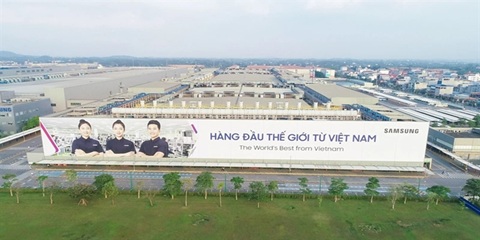
MOBILE PHONE EXPORTS RISE 20% TO $51.8 BILLION IN FIRST NINE MONTHS
Exports of mobile phones and components rose 20 per cent year-on-year to nearly US$51.8 billion in the first nine months of 2026, with China, the US and Republic of Korea accounting for more than half of the total. Shipments to the three markets reached a combined $26.18 billion, or 50.6 per cent of total exports of the product group during the period, according to data from the Vietnam Department of Customs under the Ministry of Finance.
INFRASTRUCTURE / CONSTRUCTION / LOGISTIC / PORT
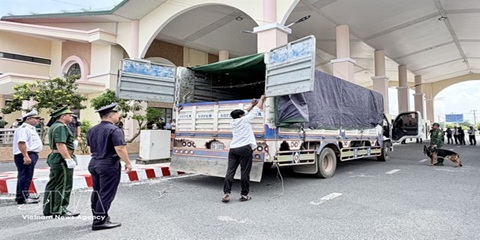
VIỆT NAM-CAMBODIA TRADE GATHERS PACE TOWARDS $20 BILLION TARGET
Trade between Việt Nam and Cambodia continues to grow, remaining a bright spot and a key pillar of bilateral cooperation as the two countries aim to raise two-way trade to US$20 billion in the coming years. After setting a record of more than $11.3 billion last year, bilateral trade reached about $8.7 billion in the first eight months of this year, up 8.3 per cent year on year.
VIETNAM ECONOMY INVESTMENT
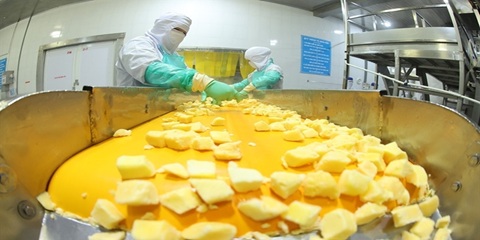
FRUIT AND VEGETABLE EXPORTS POISED TO HIT $10 BILLION IN 2026
Fruit and vegetable exports are on track to reach nearly US$10 billion in 2026, after rising 19.9 per cent year on year to nearly US$7.4 billion in the first nine months, driven by strong seasonal demand and abundant tropical fruit supplies. The Ministry of Agriculture and Environment said the growth reflected stronger international demand for fresh produce and processed agricultural products.
Events Sponsors






















