Want to be in the loop?
subscribe to
our notification
Business News
REFINING POLICIES TO FOSTER CIRCULAR ECONOMY IN INDUSTRIAL PARKS
As Vietnam advances toward sustainable industrial development, the focus is shifting beyond merely boosting output to embracing greater environmental and social responsibility. While the legal framework for environmental protection in industrial parks (IPs) has been established, enforcement remains inconsistent. The key challenge now is to refine policies and accelerate the adoption of circular economy models, laying the groundwork for forming a new generation of greener, smarter and more sustainable IPs.
Improving the legal framework
In the course of national industrialization and modernization, IPs play a crucial role in driving economic growth, attracting investment and creating jobs. Nonetheless, alongside their positive contributions, the operations of IPs also generate many environmental issues, which require strict and sustainable management.
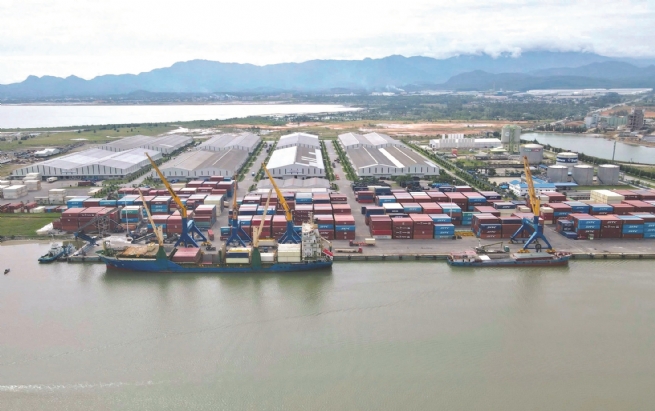
IPs play a crucial role in driving economic growth, attracting investment and creating jobs
In recent years, the legal system on environmental protection has been supplemented and improved to provide a clear legal foundation for pollution control and the launch of circular development models. The Law on Environmental Protection of 2020 clearly stipulates that IPs must invest in and operate centralized wastewater treatment systems that meet technical standards, and must conduct automatic, continuous environmental monitoring with data transmitted to regulatory agencies for supervision.
Decree 35/2022/ND-CP of the Government dated May 28, 2022 on management of industrial parks and economic zones specifies the responsibility of infrastructure investors in building and operating shared environmental protection facilities. Circular 02/2022/TT-BTNMT dated January 10, 2022 provides technical guidelines on monitoring and periodic environmental reporting and requires businesses in IPs to fulfill their environmental responsibility reporting and disclosure obligations.
Notably, the Law on Environmental Protection of 2020 (Clause 5, Article 149) encourages the development of the eco-industrial park model where tenants cooperate in resource reuse, share by-products, and minimize waste in a circular manner. The Ministry of Industry and Trade also picked three pilot IPs for transformation: Tra Noc 1 (Can Tho), Hoa Khanh (Da Nang), and Khanh Phu (Ninh Binh). Initial results show these models help reduce production costs by 15-25% and emissions by 10-20% compared to traditional methods. Currently, over 400 IPs are operational nationwide. However, according to the Ministry of Agriculture and Environment, only about 70% of them have centralized wastewater treatment systems, and not all of them meet standards or operate stably. This is a noteworthy issue arising from implementing legal regulations in practice.
Promoting green transition in IPs
Although the legal system has been relatively well established, enforcement in many localities still faces many shortcomings and obstacles. In some localities, discharges in excess of environmental technical standards still occur. Many tenants in IPs have not connected to automatic monitoring systems or only prepared environmental reports superficially.
Regarding the circular economy model, many businesses have confronted hardships in sharing infrastructure, linking the use of by-products, and investing in recycling technologies. Particularly in small and medium-sized IPs in provinces like Phu Tho, Hung Yen and Thanh Hoa, circular models remain very limited due to a lack of resources and technical guidance.
Furthermore, current incentive policies are not strong enough to encourage businesses to invest in clean technologies, renewable energy and waste treatment. Regulations on tax incentives and green credit are scattered across multiple documents, making them difficult for businesses to access and implement them comprehensively.
Luckily, there are still noteworthy exemplary models. At VSIP Hai Phong Industrial Park, many tenants have invested in rooftop solar power systems which help reduce grid electricity use by 40% and cut approximately 3,000 tons of CO₂ emissions a year. This demonstrates that, with suitable mechanisms, businesses can indeed transition toward a green and efficient direction.
To further facilitate the green transition in IPs, according to many experts, Vietnam should soon issue a set of technical criteria for eco-industrial parks and a mechanism for evaluating and recognizing circular models. At the same time, it is necessary to promote digital transformation in environmental monitoring, enhance monitoring data transparency, and connect IPs to a centralized monitoring system from central to local levels. Developing new-generation IPs will help improve environmental quality, create competitive advantages, attract high-quality investment, and effectively realize the goals of a green economy and green growth as outlined by the Party and the State in the National Strategy to 2050.
Source: VCCI
Related News

INFRASTRUCTURE / CONSTRUCTION / LOGISTIC / PORT
VIỆT NAM-CAMBODIA TRADE GATHERS PACE TOWARDS $20 BILLION TARGET
Trade between Việt Nam and Cambodia continues to grow, remaining a bright spot and a key pillar of bilateral cooperation as the two countries aim to raise two-way trade to US$20 billion in the coming years. After setting a record of more than $11.3 billion last year, bilateral trade reached about $8.7 billion in the first eight months of this year, up 8.3 per cent year on year.
TECHNOLOGY
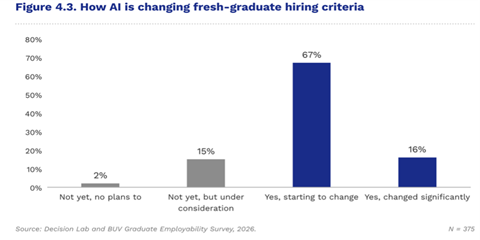
AI BEGINNING TO RESHAPE RECRUITMENT CRITERIA
Digital literacy is the only capability area in which fresh graduates meet employers’ expectations, according to a new report. Yet, it is also the standard rising fastest, as businesses increasingly expect new hires to use AI effectively in the workplace. Some 83 per cent of employers say AI has changed, or is beginning to change, their hiring criteria, while 94 per cent report higher expectations for digital and AI capabilities than they had two to three years ago.

INFRASTRUCTURE / CONSTRUCTION / LOGISTIC / PORT
ĐÀ NẴNG GREEN-LIGHTS US$105 MILLION THAI DEVELOPMENT DEAL
The central city has approved an investment proposal by Thailand’s WHA Group to develop infrastructure for the 400ha WHA Đà Nẵng Industrial Park project on two communes of Thăng Bình and Đồng Dương, with an investment of more than VNĐ2.7 trillion (US$105 million). The city said it approved WHA Industrial Development International's status as an investor in the project, which is expected to take place between 2027 and 2034.

VIETNAM ECONOMY INVESTMENT
MOBILE PHONE EXPORTS RISE 20% TO $51.8 BILLION IN FIRST NINE MONTHS
Exports of mobile phones and components rose 20 per cent year-on-year to nearly US$51.8 billion in the first nine months of 2026, with China, the US and Republic of Korea accounting for more than half of the total. Shipments to the three markets reached a combined $26.18 billion, or 50.6 per cent of total exports of the product group during the period, according to data from the Vietnam Department of Customs under the Ministry of Finance.

VIETNAM ECONOMY INVESTMENT
FRUIT AND VEGETABLE EXPORTS POISED TO HIT $10 BILLION IN 2026
Fruit and vegetable exports are on track to reach nearly US$10 billion in 2026, after rising 19.9 per cent year on year to nearly US$7.4 billion in the first nine months, driven by strong seasonal demand and abundant tropical fruit supplies. The Ministry of Agriculture and Environment said the growth reflected stronger international demand for fresh produce and processed agricultural products.
GARMENT / TEXTILE
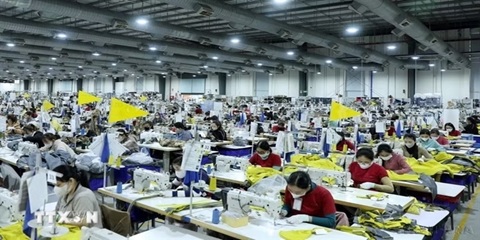
TEXTILE EXPORTS FACE DUAL CHALLENGES OF SUSTAINING ORDERS AND BOOSTING EFFICIENCY AMID GROWING COMPETITION
Data shows that the textile and garment sector maintained its growth momentum in the first nine months of this year. The industry's total export turnover reached an estimated US$35.721 billion in the first nine months of this year, up 3.3 per cent year-on-year. Despite posting encouraging export figures, Vietnamese textile and garment enterprises continue to navigate unpredictable market variables.
Events Sponsors






















