Want to be in the loop?
subscribe to
our notification
Business News
REGIONAL LOGISTICS ADVANCES PROCESSING INDUSTRY DEVELOPMENT
As competition intensifies and supply chains become more demanding, logistics is no longer just a transportation function but a key factor in economic competitiveness. For Dak Lak, home to the largest agricultural and forestry raw material base in the Central Highlands, developing regional logistics is creating new opportunities to expand deep-processing industries, increase product value, and attract high-quality investment.
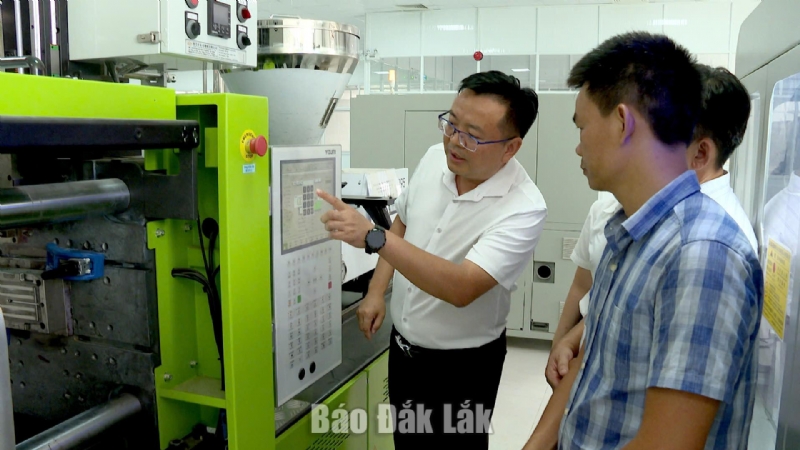
Dak Lak is building a modern industrial ecosystem to meet the needs of domestic and international investors
Dak Lak is well positioned to become the processing industry hub of the Central Highlands. Along with its abundant raw material base for coffee, pepper, rubber, fruit, and forest products, the province is benefiting from an expanding regional transportation network with direct links to the South Central Coast and the eastern seaport system.
According to the Dak Lak Department of Industry and Trade, this provides a strong foundation for building integrated value chains that connect raw materials, production, processing, logistics, and exports. As strategic transport routes are developed in a coordinated manner, shipping times will be shortened and logistics costs reduced, improving business competitiveness and increasing the value of the province's key products. This also aligns with the trend in modern industrial development, where businesses focus not only on access to raw materials but also on supply chain connectivity, delivery speed, and market access.
According to industry experts, to fully capitalize on these advantages, Dak Lak should gradually develop a modern logistics ecosystem with large-scale logistics centers, inland container depots (ICDs), cold storage facilities, bonded warehouses, distribution centers, and smart warehousing systems. The province should accelerate digital transformation in supply chain management, develop a digital logistics map, and expand green logistics services. Stronger links with coastal provinces will also help create a seamless logistics corridor connecting the Central Highlands with international seaports, allowing agricultural products and processed goods to reach export markets more quickly.
For the Department of Industry and Trade, this is not only a way to reduce logistics costs but also a foundation for attracting investment in deep processing and gradually shifting from raw material exports to higher value-added products.
Planning industrial parks with integrated digital infrastructure, green energy, smart logistics, and business support services will help create a modern industrial ecosystem that meets the needs of both domestic and international investors. Strengthening collaboration among businesses, universities, and research institutes is seen as an important way to improve workforce quality, advance innovation, and promote technology transfer in the processing industry.
To achieve the goal of making Dak Lak the processing industry center of the Central Highlands, the Department of Industry and Trade will continue to lead industrial and logistics planning, advise on investment attraction policies and mechanisms, and advance administrative reform to create an open and transparent investment environment.
At the same time, the Department will strengthen trade promotion, connect businesses with domestic and international partners, support digital transformation and technology adoption in production and supply chain management, and promote e-commerce, green logistics, and the circular economy. These are key measures to enhance the competitiveness of local businesses as global economic integration continues to deepen.
In the next stage of development, as transportation infrastructure, logistics networks, and industrial parks are developed in a coordinated manner, Dak Lak will not only strengthen its role as the agricultural production center of the Central Highlands but also gradually become a regional hub for processing industries and logistics, contributing to the sustainable economic development of both the region and the country.
Source: VCCI
Related News

INFRASTRUCTURE / CONSTRUCTION / LOGISTIC / PORT
VIỆT NAM-CAMBODIA TRADE GATHERS PACE TOWARDS $20 BILLION TARGET
Trade between Việt Nam and Cambodia continues to grow, remaining a bright spot and a key pillar of bilateral cooperation as the two countries aim to raise two-way trade to US$20 billion in the coming years. After setting a record of more than $11.3 billion last year, bilateral trade reached about $8.7 billion in the first eight months of this year, up 8.3 per cent year on year.
TECHNOLOGY
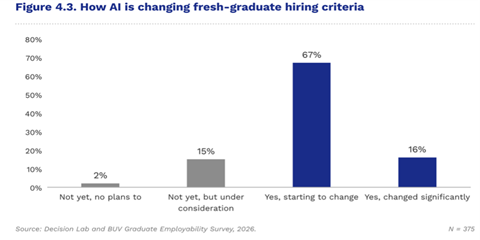
AI BEGINNING TO RESHAPE RECRUITMENT CRITERIA
Digital literacy is the only capability area in which fresh graduates meet employers’ expectations, according to a new report. Yet, it is also the standard rising fastest, as businesses increasingly expect new hires to use AI effectively in the workplace. Some 83 per cent of employers say AI has changed, or is beginning to change, their hiring criteria, while 94 per cent report higher expectations for digital and AI capabilities than they had two to three years ago.

INFRASTRUCTURE / CONSTRUCTION / LOGISTIC / PORT
ĐÀ NẴNG GREEN-LIGHTS US$105 MILLION THAI DEVELOPMENT DEAL
The central city has approved an investment proposal by Thailand’s WHA Group to develop infrastructure for the 400ha WHA Đà Nẵng Industrial Park project on two communes of Thăng Bình and Đồng Dương, with an investment of more than VNĐ2.7 trillion (US$105 million). The city said it approved WHA Industrial Development International's status as an investor in the project, which is expected to take place between 2027 and 2034.

VIETNAM ECONOMY INVESTMENT
MOBILE PHONE EXPORTS RISE 20% TO $51.8 BILLION IN FIRST NINE MONTHS
Exports of mobile phones and components rose 20 per cent year-on-year to nearly US$51.8 billion in the first nine months of 2026, with China, the US and Republic of Korea accounting for more than half of the total. Shipments to the three markets reached a combined $26.18 billion, or 50.6 per cent of total exports of the product group during the period, according to data from the Vietnam Department of Customs under the Ministry of Finance.

VIETNAM ECONOMY INVESTMENT
FRUIT AND VEGETABLE EXPORTS POISED TO HIT $10 BILLION IN 2026
Fruit and vegetable exports are on track to reach nearly US$10 billion in 2026, after rising 19.9 per cent year on year to nearly US$7.4 billion in the first nine months, driven by strong seasonal demand and abundant tropical fruit supplies. The Ministry of Agriculture and Environment said the growth reflected stronger international demand for fresh produce and processed agricultural products.
GARMENT / TEXTILE
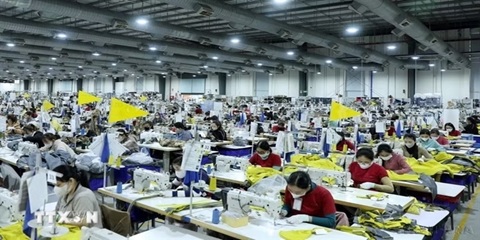
TEXTILE EXPORTS FACE DUAL CHALLENGES OF SUSTAINING ORDERS AND BOOSTING EFFICIENCY AMID GROWING COMPETITION
Data shows that the textile and garment sector maintained its growth momentum in the first nine months of this year. The industry's total export turnover reached an estimated US$35.721 billion in the first nine months of this year, up 3.3 per cent year-on-year. Despite posting encouraging export figures, Vietnamese textile and garment enterprises continue to navigate unpredictable market variables.
Events Sponsors






















