Want to be in the loop?
subscribe to
our notification
Business News
SECOND HOME REAL ESTATE ON THE SLOW PATH TO RECOVERY
The second home and resort real estate market is dragging through a slow recovery, with very few transactions in the first four months, although tourism numbers and new legislation are pointing in a healthy direction.
According to a report by DKRA Vietnam, the supply of villas and town houses across the country continued to decrease from the end of the second quarter of 2022. Specifically, in April only two projects were opened for sale, providing 12 apartments to the market, down 69 per cent from the previous month and down 98 per cent compared to the same period last year.
Particularly, the Central region recorded the fourth consecutive month that no new projects were introduced to the market.
“It is expected that in the next few months, supply and demand may increase slightly. However, the market will not have obvious fluctuations with key transactions, except from expected transactions on Phu Quoc island,” according to DKRA’s report.
The primary selling price did not alter greatly compared to the previous month. Instead, investors have aggressively launched discounts up to 30-40 per cent to stimulate market demand.
Contrary to the aforementioned segments, DKRA assesses that the condotel segment is recording a recovery in demand, although this recovery has not yet been clear.
In April, fewer than 40 condotels nationwide were sold, down 36 per cent compared to the same period last year. Only six condotel apartments were purchased during the first three months of the year. Projects with full legality and operated by top international brands are still preferred by customers.
On May 15, the Ministry of Natural Resources and Environment requested all localities to strengthen resources and conditions to proceed with admin procedures online to save time for businesses.
At the same time, localities need to step up the issuance of certificates of land use rights, ownership of houses, and other land-attached assets to land users, including condotel units.
According to Colliers Vietnam, hotel supply in Vietnam has tripled in the past 10 years. In which, the number of room types from mid-range to luxury has increased by 6-7 times since 2009.
The number of hotels operated by international brands is expected to double in the next three years, from around 125 in 2022 to more than 260 projects in 2025.
In 2019, the occupancy rate of tourist accommodation establishments such as hotels, resorts, and resort villas reached 52 per cent. Thanks to the return of domestic visitors in 2022, this index has improved most clearly in beach tourist destinations such as Ho Tram, Danang, Nha Trang, and Phu Quoc.
Meanwhile, the number of new resort villas and shophouses in 2022 has increased by 20 and 34 per cent respectively over the previous year.
According to Morgan Ulaganathan, head of Asset Services and Hospitality Advisory at Colliers Vietnam, the resort and second real estate industry in Vietnam possesses many key factors, but still faces many challenges.
“Now is the time for investors to focus on improving earnings before tax, internal rate of return, cap rate with a reasonable investment, and focus on promoting marketing, business management, and luring in new visitors,” Ulaganathan said.
Merger and acquisition activity, although slowed down last year, is expected to have an active season over the next few quarters.
“Holding a large amount of capital waiting for opportunities and a favourable pricing evaluation, foreign investment funds may make bold moves to expand market share before hotel revenue returns to pre-pandemic levels,” he added.
According to the Vietnam National Administration of Tourism, in April more than 984,000 international visitors entered Vietnam, the highest since the beginning of the year, and an increase of nearly 10 per cent compared to the previous month.
Generally, for the first four months of the year, more than 3.7 million international visitors came to Vietnam. An average of 9.5 million domestic arrivals nationwide, reaching 38 million in the past four months. Total revenue from tourists was estimated at VND196.6 trillion ($8.3 billion).
As a result, revenue from accommodation and catering services was estimated at VND214.8 trillion ($933 million), up nearly 26 per cent over the same period last year. Tourism revenues in the past four months are estimated at VND9.1 trillion (395.6 million), more than double compared to the same period last year.
The number of international visitors also increased thanks to more than one million tourists coming from South Korea in the first four months. There were also 263,000 American arrivals and 252,000 Chinese arrivals.
Souce: VIR
Related News

INFRASTRUCTURE / CONSTRUCTION / LOGISTIC / PORT
VIỆT NAM-CAMBODIA TRADE GATHERS PACE TOWARDS $20 BILLION TARGET
Trade between Việt Nam and Cambodia continues to grow, remaining a bright spot and a key pillar of bilateral cooperation as the two countries aim to raise two-way trade to US$20 billion in the coming years. After setting a record of more than $11.3 billion last year, bilateral trade reached about $8.7 billion in the first eight months of this year, up 8.3 per cent year on year.
TECHNOLOGY
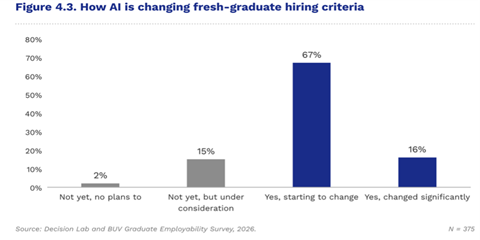
AI BEGINNING TO RESHAPE RECRUITMENT CRITERIA
Digital literacy is the only capability area in which fresh graduates meet employers’ expectations, according to a new report. Yet, it is also the standard rising fastest, as businesses increasingly expect new hires to use AI effectively in the workplace. Some 83 per cent of employers say AI has changed, or is beginning to change, their hiring criteria, while 94 per cent report higher expectations for digital and AI capabilities than they had two to three years ago.
INFRASTRUCTURE / CONSTRUCTION / LOGISTIC / PORT
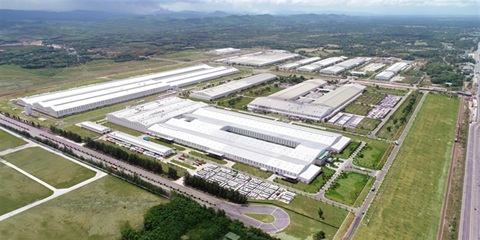
ĐÀ NẴNG GREEN-LIGHTS US$105 MILLION THAI DEVELOPMENT DEAL
The central city has approved an investment proposal by Thailand’s WHA Group to develop infrastructure for the 400ha WHA Đà Nẵng Industrial Park project on two communes of Thăng Bình and Đồng Dương, with an investment of more than VNĐ2.7 trillion (US$105 million). The city said it approved WHA Industrial Development International's status as an investor in the project, which is expected to take place between 2027 and 2034.
VIETNAM ECONOMY INVESTMENT
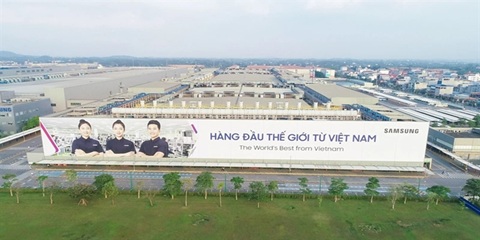
MOBILE PHONE EXPORTS RISE 20% TO $51.8 BILLION IN FIRST NINE MONTHS
Exports of mobile phones and components rose 20 per cent year-on-year to nearly US$51.8 billion in the first nine months of 2026, with China, the US and Republic of Korea accounting for more than half of the total. Shipments to the three markets reached a combined $26.18 billion, or 50.6 per cent of total exports of the product group during the period, according to data from the Vietnam Department of Customs under the Ministry of Finance.
VIETNAM ECONOMY INVESTMENT
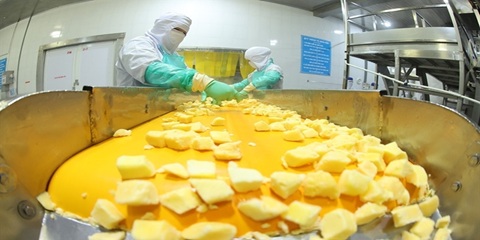
FRUIT AND VEGETABLE EXPORTS POISED TO HIT $10 BILLION IN 2026
Fruit and vegetable exports are on track to reach nearly US$10 billion in 2026, after rising 19.9 per cent year on year to nearly US$7.4 billion in the first nine months, driven by strong seasonal demand and abundant tropical fruit supplies. The Ministry of Agriculture and Environment said the growth reflected stronger international demand for fresh produce and processed agricultural products.
GARMENT / TEXTILE
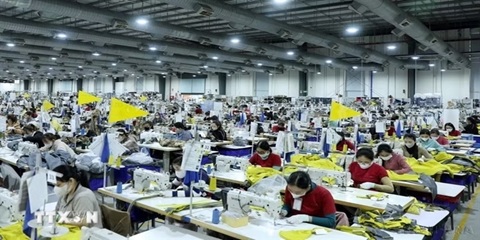
TEXTILE EXPORTS FACE DUAL CHALLENGES OF SUSTAINING ORDERS AND BOOSTING EFFICIENCY AMID GROWING COMPETITION
Data shows that the textile and garment sector maintained its growth momentum in the first nine months of this year. The industry's total export turnover reached an estimated US$35.721 billion in the first nine months of this year, up 3.3 per cent year-on-year. Despite posting encouraging export figures, Vietnamese textile and garment enterprises continue to navigate unpredictable market variables.
Events Sponsors






















