Want to be in the loop?
subscribe to
our notification
Business News
SERVICE SEGMENT BECOMES KEY SUSTAINABLE PROFIT SOURCE FOR BANKS
Focusing on payment services, digital banking, bancassurance and wealth management is key for banks to maintain their competitive edge.

Vietcombank staff guides a customer using its app. — VNA/VNS Photo Trần Việt
HÀ NỘI — Instead of just racing for expansion, banks have been focusing more on service ecosystems to make them a key pillar for more sustainable profitability, according to recently released data.
Financial statements from the first half of 2026 released by 28 banks revealed impressive results, with total net fee and commission income of the banks surging by 50 per cent year-on-year to nearly VNĐ52.63 trillion (US$1.99 billion) in the first half of this year.
The value showed that the services segment has evolved from a supplementary revenue source into a primary driver of growth for banks.
This breakthrough comes at a time when the scope for expanding net interest margins (NIM) of banks is narrowing, compelling banks to unlock new value through their service ecosystems.
However, there was a stark divergence in growth rates among banks during the first half of 2026, with many recording triple-digit increases.
VIB made the strongest impression across the banking system by achieving record growth of 294 per cent, with net service fee income jumping from VNĐ779 billion in the same period of 2025 to VNĐ3.06 trillion.
SHB also demonstrated significant progress with a 277 per cent increase, generating VNĐ3.83 trillion from this segment, while Sacombank achieved a breakthrough with a 140 per cent rise to VNĐ3.95 trillion.
Other banks, such as VPBank and Techcombank, also contributed to the dynamic landscape of non-interest income of the banking system with a surge of 121 per cent and 73 per cent to VNĐ5.56 trillion and VNĐ6.81 trillion, respectively.
Even smaller banks like ABBank and PGBank also joined the ranks of those achieving triple-digit growth, signaling that strategies to diversify revenue streams are being implemented consistently across the entire banking system.
In contrast to the strong performance of the leading group, the market saw six banks recording a decline in net service fee income. Notable examples included Eximbank, which saw a sharp drop of 80 per cent; MSB, which fell by 40 per cent; and Vietbank and Bac A Bank, both of which recorded a 28 per cent decrease.
According to experts from FiinRatings, 2026 will mark a period of more selective credit growth, driven by high credit-to-GDP ratios and mounting pressure regarding risk management.
A projected NIM below 3 per cent of the banking industry signals that generating profit from lending is no longer as easy as it once was.
Focusing on payment services, digital banking, bancassurance and wealth management is key for banks to maintain their competitive edge.
Trần Thị Khánh Hiền, head of the MBS Securities Company’s research division, notes that while the outlook for non-interest income in 2026 remains highly positive, the composition of that income will shift.
Specifically, instead of relying on volatile sources like securities investments or debt recovery as last year, banks will focus on highly sustainable revenue sources, such as fees from card services and digital banking. These revenue sources are closely linked to customer ecosystems and are less susceptible to credit cycles or interest rate fluctuations, Hiền said.
According to banking expert Nguyễn Quang Huy from Nguyễn Trãi University, while credit remains the primary driver of current profits, banks are actively working to develop new revenue engines within the services sector. The surge in net service income during the first half of the year demonstrates that this shift is moving in the right direction.
Experts observe that the banking sector's profit landscape is becoming increasingly balanced and sustainable. The robust growth of net service income not only helps banks offset shortfalls from more volatile business segments but also establishes a healthy financial foundation.
As non-interest income solidifies its role as a reliable pillar of support, banks will gain the resources needed to improve asset quality, accelerate digital transformation and serve the economy more effectively in this new age. — BIZHUB/VNS
Source: VNS
Related News

BANKING / FINANCE / INSURANCE / TAX
REMITTANCES TO HCM CITY RISE NEARLY 40% IN Q3
Remittances to HCM City reached more than US$2.83 billion in the third quarter of this year, up 39.5 per cent from the previous quarter and 3.6 per cent year-on-year. This was the first quarter showing positive annual growth this year, helping narrow the decline in remittance inflows over the first nine months. According to the State Bank of Vietnam (SBV)’s Regional Branch 2, remittances transferred to HCM City through credit institutions and economic organisations totalled $2.835 billion in Q3, an increase of more than $802 million from the previous quarter.

TECHNOLOGY
TECH SECTOR GROWTH OPENS UP OPPORTUNITIES FOR VIỆT NAM TO GO GLOBAL
The growth of the electronics, semiconductor and high-tech sectors worldwide is opening up a variety of opportunities for Vietnamese enterprises to integrate more deeply into the global supply chain. However, to become suppliers for these corporations, domestic enterprises must meet rigorous standards regarding quality, technology, productivity and order fulfilment capabilities.
VIETNAM ECONOMY INVESTMENT
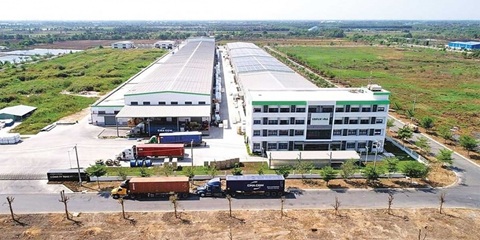
FOREIGN INVESTORS SEEKING A SYNCHRONISED MANUFACTURING ECOSYSTEM
Instead of focusing only on land costs and incentives as usual, foreign investors are seeking a synchronised manufacturing ecosystem, from stable power supply and logistics to shared infrastructure and the convenience of completing residence procedures for experts to serve their long-term investment in the country.

MEMBER CORNER / PROMOTIONS
SENTRYSAFE FHW40200 – PROTECT YOUR VALUABLES, ENJOY PEACE OF MIND!
Looking for a reliable solution to protect your important documents, cash, and valuables from fire and water damage? Genuine SENTRYSAFE - Reliable protection for your valuables and peace of mind! Contact Sen Wai Vietnam for more information and personalized product recommendations.
PROPERTY / INDUSTRIAL ZONE
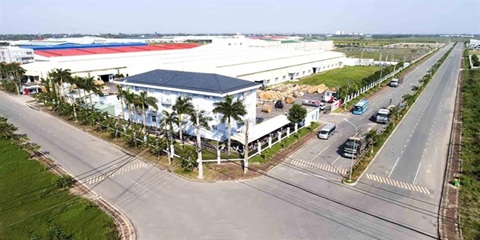
HCM CITY ATTRACTS US$5.7 BILLION INTO EXPORT PROCESSING AND INDUSTRIAL ZONES
HCM City attracted US$5.7 billion in domestic and foreign investment into its export processing and industrial zones during the first nine months of 2026. The figure exceeded the city's full-year target by 31 per cent, highlighting strong momentum in high-quality industrial investment under Resolution No.10-NQ/TW. Total investment reached 131 per cent of the 2026 target of $4.25 billion and represented a 29 per cent increase compared with the same period in 2025, according to the city's Export Processing and Industrial Zones Authority (HEPZA).
INFRASTRUCTURE / CONSTRUCTION / LOGISTIC / PORT
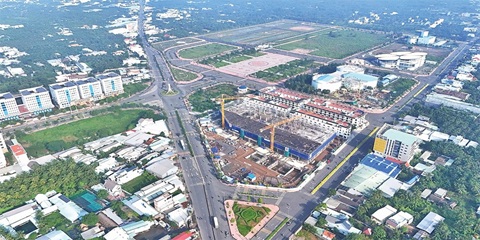
DONG THAP PROVINCE STEPS UP INDUSTRIAL EXPANSION AND INFRASTRUCTURE CONNECTIVITY
Accelerating public investment, strengthening inter-regional connectivity, and expanding industrial land are helping Dong Thap efficiently bolster competitiveness and drive economic growth. Following the 2025 merger of the former Dong Thap and Tien Giang provinces, the expanded Dong Thap province in the Mekong Delta faces mounting pressure to accelerate infrastructure development and strengthen connectivity among local economic zones, urban areas, industrial parks (IPs), and production centres.
Events Sponsors






















