Want to be in the loop?
subscribe to
our notification
Business News
SEVERAL NEW ECONOMIC POLICIES TO TAKE EFFECT NEXT MONTH
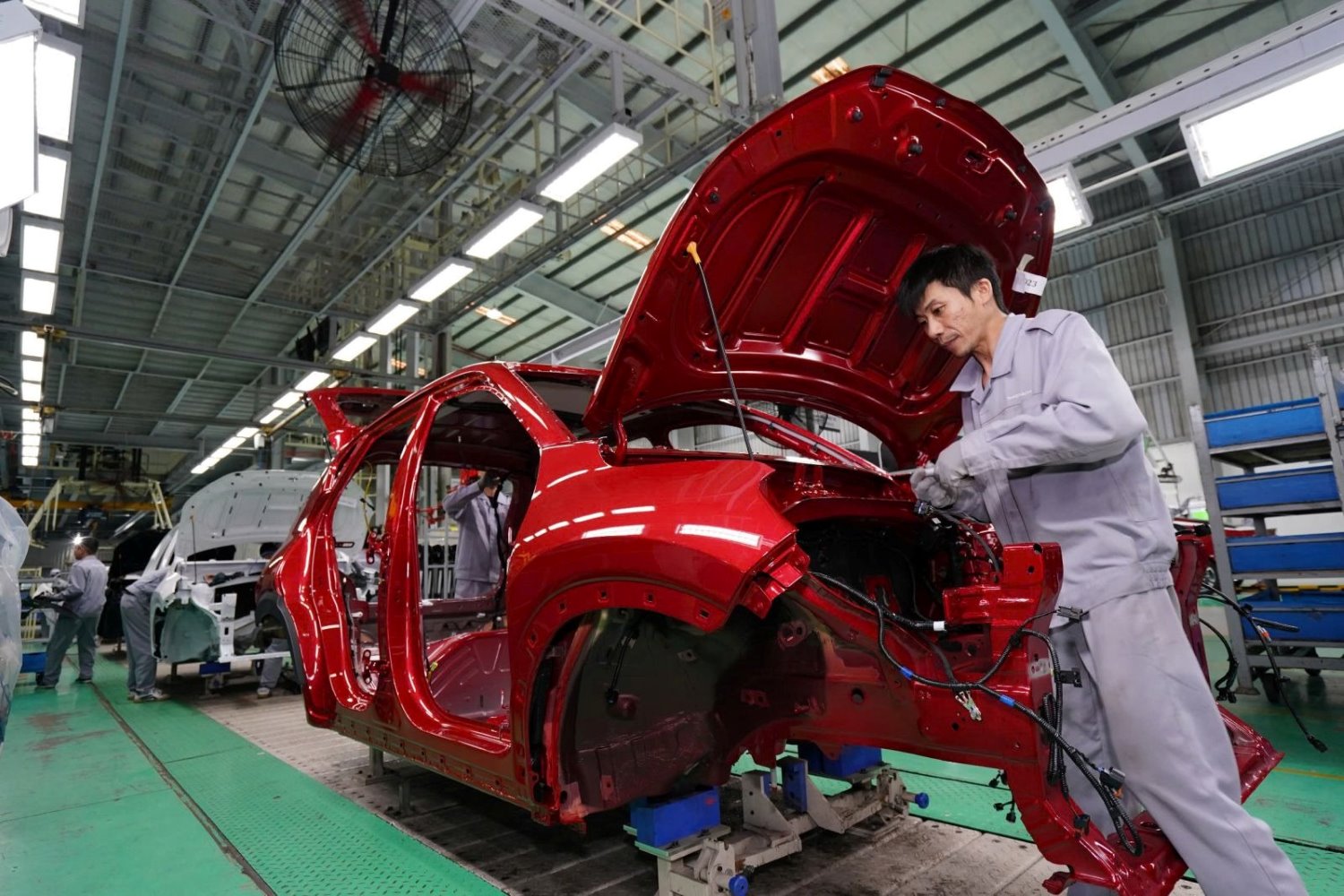
Enterprises producing components, spare parts, and materials will enjoy new incentives from September - PHOTO: MINISTRY OF INDUSTRY AND TRADE
HCMC – A series of new economic policies will take effect on September 1, 2025, covering supporting industries, innovative startups, higher education, finance and banking, and border trade, the Vietnam News Agency reported.
These are major adjustments aimed at encouraging innovation, expanding capital sources, while strengthening financial system safety and transparency in management.
The Government’s Decree No. 205/2025/ND-CP, amending Decree No. 111/2015, expands incentives in supporting industries to cover enterprises producing components, spare parts, and materials.
R&D projects will be eligible for land rent exemptions and reductions, investment support for equipment, along with 50-70% cost coverage for research, training, technology transfer, testing, and market promotion.
In addition, the decree introduces support in legal and environmental matters, merger and acquisition consulting, and encourages the establishment of technical centers, helping enterprises enhance their capacity and integrate more deeply into global supply chains.
Starting next month, Decree No. 210 will broaden the framework for innovative startups, allowing venture capital funds for innovative startups to raise capital from 2-30 investors through contributions in cash, land, intellectual property, technology, or other lawful assets.
In addition to direct capital contributions, the funds may invest through share purchase rights and convertible instruments, while also being allowed to place idle capital in savings accounts or purchase deposit certificates. The new regulation enables startups to access funding earlier and through more diverse channels.
In higher education, national universities and their member institutions will be granted financial autonomy. They will have the authority to manage revenues and expenditures, mobilize social resources, sponsorships, and aid for training, research, and infrastructure development.
Decree No. 211 will tighten control over the trade and import-export of cryptographic products and services.
Violating enterprises could face fines of up to VND180 million, license revocation, or mandatory re-export of products, as part of efforts to safeguard national security and curb the misuse of cryptographic technologies.
The State Bank of Vietnam will also introduce several new regulations in September. Circular No. 14/2025 requires commercial banks to maintain a minimum Tier 1 core capital ratio of 4.5%, a Tier 1 capital ratio of 6%, and a capital adequacy ratio (CAR) of 8%.
In addition, banks must establish a conservation buffer and a countercyclical buffer, which will raise the CAR to 10.5% after four years. Profit distribution will only be permitted once these ratios are fully met.
In border trade, starting September 15, Circular No. 17/2025 will allow payments in freely convertible foreign currencies, the Chinese yuan, or the Vietnamese dong through border banks, while tightening requirements for periodic reporting.
Source: The Saigon Times
Related News

BANKING / FINANCE / INSURANCE / TAX
REMITTANCES TO HCM CITY RISE NEARLY 40% IN Q3
Remittances to HCM City reached more than US$2.83 billion in the third quarter of this year, up 39.5 per cent from the previous quarter and 3.6 per cent year-on-year. This was the first quarter showing positive annual growth this year, helping narrow the decline in remittance inflows over the first nine months. According to the State Bank of Vietnam (SBV)’s Regional Branch 2, remittances transferred to HCM City through credit institutions and economic organisations totalled $2.835 billion in Q3, an increase of more than $802 million from the previous quarter.

TECHNOLOGY
TECH SECTOR GROWTH OPENS UP OPPORTUNITIES FOR VIỆT NAM TO GO GLOBAL
The growth of the electronics, semiconductor and high-tech sectors worldwide is opening up a variety of opportunities for Vietnamese enterprises to integrate more deeply into the global supply chain. However, to become suppliers for these corporations, domestic enterprises must meet rigorous standards regarding quality, technology, productivity and order fulfilment capabilities.
VIETNAM ECONOMY INVESTMENT
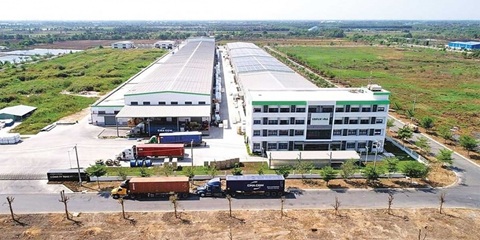
FOREIGN INVESTORS SEEKING A SYNCHRONISED MANUFACTURING ECOSYSTEM
Instead of focusing only on land costs and incentives as usual, foreign investors are seeking a synchronised manufacturing ecosystem, from stable power supply and logistics to shared infrastructure and the convenience of completing residence procedures for experts to serve their long-term investment in the country.
MEMBER CORNER / PROMOTIONS
SENTRYSAFE FHW40200 – PROTECT YOUR VALUABLES, ENJOY PEACE OF MIND!
Looking for a reliable solution to protect your important documents, cash, and valuables from fire and water damage? Genuine SENTRYSAFE - Reliable protection for your valuables and peace of mind! Contact Sen Wai Vietnam for more information and personalized product recommendations.
PROPERTY / INDUSTRIAL ZONE
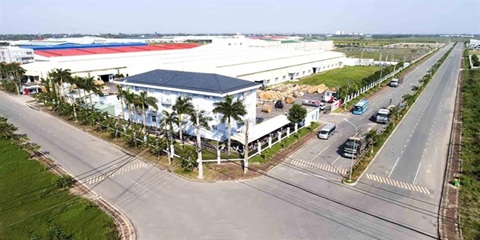
HCM CITY ATTRACTS US$5.7 BILLION INTO EXPORT PROCESSING AND INDUSTRIAL ZONES
HCM City attracted US$5.7 billion in domestic and foreign investment into its export processing and industrial zones during the first nine months of 2026. The figure exceeded the city's full-year target by 31 per cent, highlighting strong momentum in high-quality industrial investment under Resolution No.10-NQ/TW. Total investment reached 131 per cent of the 2026 target of $4.25 billion and represented a 29 per cent increase compared with the same period in 2025, according to the city's Export Processing and Industrial Zones Authority (HEPZA).
INFRASTRUCTURE / CONSTRUCTION / LOGISTIC / PORT
DONG THAP PROVINCE STEPS UP INDUSTRIAL EXPANSION AND INFRASTRUCTURE CONNECTIVITY
Accelerating public investment, strengthening inter-regional connectivity, and expanding industrial land are helping Dong Thap efficiently bolster competitiveness and drive economic growth. Following the 2025 merger of the former Dong Thap and Tien Giang provinces, the expanded Dong Thap province in the Mekong Delta faces mounting pressure to accelerate infrastructure development and strengthen connectivity among local economic zones, urban areas, industrial parks (IPs), and production centres.
Events Sponsors






















