Want to be in the loop?
subscribe to
our notification
Business News
SINGAPOREAN DEVELOPERS RETAIN THRONE IN REAL ESTATE
Top Singaporean groups are continuing to make their mark in Vietnam’s real estate arena, from luxury apartments to industrial complexes. Vietnam is one of the top five destinations chosen by Singapore’s ultra-high-net-worth individuals to invest in real estate, behind Australia, India, Hong Kong, and the Chinese mainland, according to the Foreign Investment Agency.
The agency, under the Ministry of Planning and Investment, said that as of June, the real estate sector has accumulated more than 1,100 foreign-invested projects with a total capital of $66.4 billion, accounting for 15 per cent of total overseas funding and ranked second in terms of investment attraction, after the manufacturing and processing industry.
Some 48 countries and territories have invested in the real estate business, led by Singapore and followed by South Korea, the British Virgin Islands, and Japan.
Knight Frank’s Wealth Report 2023, published in April, shows that one of the factors that make Vietnam’s real estate attractive to foreign investors is the suitable price of luxury apartments compared to other international cities. The report ranks Ho Chi Minh City third in terms of suitable prices for luxury apartments, after Sao Paulo and Cape Town.
Knight Frank Vietnam managing director Alex Crane said that the great interest from Singaporean investors in Vietnamese commercial real estate will continue in the near future, most of which comes from private capital.
“This is because the private investors can also exploit and utilise opportunities from other developing economies, or in developed markets where there are advantages in safety and high profitability,” Crane said.
Jeff Foo, past president, the Institute of Estate Agents Singapore, told VIR that the long-term prospects for Vietnam’s real estate market remain strong. “High economic growth is driving robust demand for new housing by the country’s growing cohort of emerging middle-class consumers and investors’ confidence,” Foo said.
“With Vietnam driving its economic growth, the favourable business environment, economic growth, better infrastructure, and policy changes have contributed to its position as a top country for attracting foreign investment,” he added.
A series of big names in the Singaporean real estate market are present in Vietnam such as CapitaLand, Keppel Land, Frasers Property, Kusto Home, Sembcorp, City Development, GuocoLand, Mapletree, Ascendas and many more.
Keppel’s Real Estate Division has been in Vietnam since the early 1990s. Today, Keppel is one of the largest foreign investors in urban development, with more than 20 projects and total registered investment capital of about $3.5 billion.
Another giant developer continuously expanding its portfolio in Vietnam is CapitaLand Development (CLD). For over 29 years in Vietnam, its portfolio comprises one retail malls, one SOHO development, three integrated developments and more than 13,000 quality homes across 17 residential developments.
Meanwhile, Frasers Property has been investing in Vietnam for more than 25 years. Its Melinh Point, a Grade A office in the central business district of Ho Chi Minh City, was its first investment in 1995. In 2018, it broke ground for the Q2 Thao Dien, a mixed-use residential development in District 2 of the city. Both projects are prime office and complex buildings that feature green building criteria.
Not only present in commercial real estate, Singapore developers are actively expanding their portfolios into industrial real estate.
An MoU was signed between Becamex IDC Industrial Development and Investment Corporation and Sembcorp Development in February to co-develop five green, smart, and sustainable Vietnam-Singapore Industrial Parks (VSIP) in Vietnam within the next three years, costing roughly $1 billion.
Today, the VSIP system nationwide serves around 900 tenants from 30 countries and territories, with a total investment of more than $18.4 billion.
CLD is also processing procedures for implementing an MoU signed with Bac Giang People’s Committee last year, valued at $1 billion, to develop its first industrial, logistics park, and township in Vietnam.
Meanwhile, industrial property is also the long-term target of Frasers Property Vietnam. In 2019, it started construction of Binh Duong IP. Its ready-built-factory phase 1 has seen more than 90 per cent of factories leased out, while phase 2 held its groundbreaking event in July.
It also boasts the Eco Logistics Centre, providing warehousing space to sustainability-minded tenants and honour to be the first LEED-certified ready-built warehouse in Vietnam.
Furthermore, more than 180 hectares of industrial land area, within strategic locations in both north and south Vietnam, has been acquired. The Singaporean company expects that over the next 3-5 years, close to a million square metres of international grade and green certified industrial facilities will be developed to support the country’s growing economy.
Source: VIR
Related News

INFRASTRUCTURE / CONSTRUCTION / LOGISTIC / PORT
VIỆT NAM-CAMBODIA TRADE GATHERS PACE TOWARDS $20 BILLION TARGET
Trade between Việt Nam and Cambodia continues to grow, remaining a bright spot and a key pillar of bilateral cooperation as the two countries aim to raise two-way trade to US$20 billion in the coming years. After setting a record of more than $11.3 billion last year, bilateral trade reached about $8.7 billion in the first eight months of this year, up 8.3 per cent year on year.
TECHNOLOGY
AI BEGINNING TO RESHAPE RECRUITMENT CRITERIA
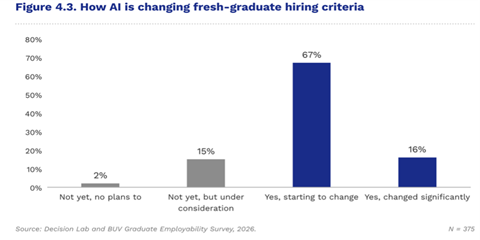
Digital literacy is the only capability area in which fresh graduates meet employers’ expectations, according to a new report. Yet, it is also the standard rising fastest, as businesses increasingly expect new hires to use AI effectively in the workplace. Some 83 per cent of employers say AI has changed, or is beginning to change, their hiring criteria, while 94 per cent report higher expectations for digital and AI capabilities than they had two to three years ago.
INFRASTRUCTURE / CONSTRUCTION / LOGISTIC / PORT
ĐÀ NẴNG GREEN-LIGHTS US$105 MILLION THAI DEVELOPMENT DEAL
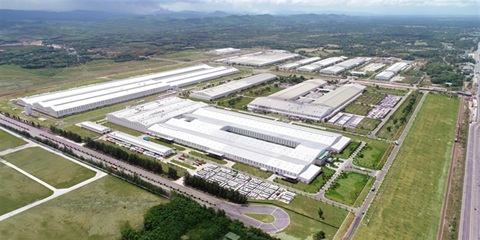
The central city has approved an investment proposal by Thailand’s WHA Group to develop infrastructure for the 400ha WHA Đà Nẵng Industrial Park project on two communes of Thăng Bình and Đồng Dương, with an investment of more than VNĐ2.7 trillion (US$105 million). The city said it approved WHA Industrial Development International's status as an investor in the project, which is expected to take place between 2027 and 2034.
VIETNAM ECONOMY INVESTMENT
MOBILE PHONE EXPORTS RISE 20% TO $51.8 BILLION IN FIRST NINE MONTHS
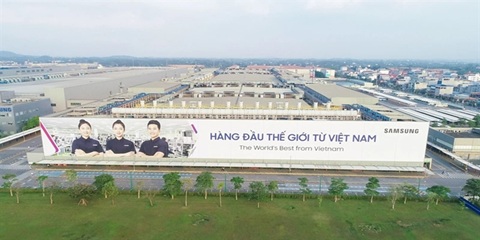
Exports of mobile phones and components rose 20 per cent year-on-year to nearly US$51.8 billion in the first nine months of 2026, with China, the US and Republic of Korea accounting for more than half of the total. Shipments to the three markets reached a combined $26.18 billion, or 50.6 per cent of total exports of the product group during the period, according to data from the Vietnam Department of Customs under the Ministry of Finance.

VIETNAM ECONOMY INVESTMENT
FRUIT AND VEGETABLE EXPORTS POISED TO HIT $10 BILLION IN 2026
Fruit and vegetable exports are on track to reach nearly US$10 billion in 2026, after rising 19.9 per cent year on year to nearly US$7.4 billion in the first nine months, driven by strong seasonal demand and abundant tropical fruit supplies. The Ministry of Agriculture and Environment said the growth reflected stronger international demand for fresh produce and processed agricultural products.
GARMENT / TEXTILE
TEXTILE EXPORTS FACE DUAL CHALLENGES OF SUSTAINING ORDERS AND BOOSTING EFFICIENCY AMID GROWING COMPETITION
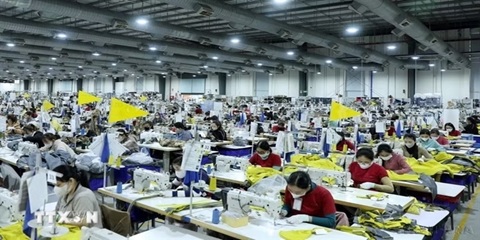
Data shows that the textile and garment sector maintained its growth momentum in the first nine months of this year. The industry's total export turnover reached an estimated US$35.721 billion in the first nine months of this year, up 3.3 per cent year-on-year. Despite posting encouraging export figures, Vietnamese textile and garment enterprises continue to navigate unpredictable market variables.
Events Sponsors






















