Want to be in the loop?
subscribe to
our notification
Business News
STOCK MARKET: WAITING FOR CASH FLOWS
In mid-January, investors anticipated a downward spiral in the first month of the year, opposite to the growth trend in previous years. According to statistics, in the period from 2010 to 2015, VN-Index climbed in five Januaries, except for 2010. In 2013, the measure leaped 16 per cent.
Optimistic economic data, highly expected business plans of listed companies, and net buying of foreign investors at the back of New Year holidays boosted VN-Index gains in January. Vietnam’s economy is forecast to expand 6.7 per cent in 2015 after climbing 6.68 per cent in 2015 – the highest in five years. The investor sentiment was restored after foreign investors stopped net selling. The market also received other catalyst information like Purchasing Managers' Index (PMI) exceeding 50-point threshold, another drop in gasoline prices by near VND400 per litter, and the shortening of payment terms for securities trading to T+2.
But after only the first six trading days of 2016, VND46,169 billion (US$2.05 billion) evaporated from the Vietnamese stock market. The domestic market was dragged by global slumps caused by crude oil price plunges and China’s yuan devaluation. China’s stock market had to halt trading in the rest of the day on January 4 and 7, and this premature closing negatively affected the Vietnamese stock market due to concerns over yuan devaluation impacts. It is noted that Chinese yuan devaluation exerted strong effects on the Vietnamese stock market. In August 2015, VN-Index dropped from 640 points to 510 points on China’s currency devaluation.
On January 11, VN-Index shed 2 points to 557 points, taking away a total of 21 points since the start of 2016. Similarly, HNX-Index also lost nearly 4 points to 76 points. The market capitalisation on the Hochiminh Stock Exchange (HOSE) fell to VND1,107,262 billion, a drop of VND39,663 billion from the end of 2015. On the Hanoi Stock Exchange (HNX), the market capitalisation also declined by VND6,506 billion.
Given developments in China and crude oil prices, the Vietnamese stock market is seen to carry unpredictable system risks. Worsened political instability across the world spoiled efforts to raise crude oil prices. The volatility on the Chinese stock market, caused by its economic issues, shrank global stock markets and sparked off broad sell-offs. Chinese stocks are forecast to fall 30 per cent this year and the yuan value is projected to lose further than in 2015.
This will impinge on global currency markets and drag commodity prices. As China is the largest oil importer in the world, if its economy declines, oil prices are unlikely to recover in the short term.
Vietcombank Securities Company (VCBS) noted that such indicators like market liquidity and foreign trading showed heavy selling pressures which may weigh on market gauges. VCBS recommended investors not buying in this context, especially when exchange rate risks are still not fully realised.
According to some experts, the exchange rate of Vietnamese dong against US dollar may rise over 5 per cent if China devalues its currency more strongly. The hike in exchange rates will kindle foreign investors to leave emerging markets. In fact, foreign investors sold net to withdraw their capital before and after the US Federal Reserve (Fed) raised interest rates.
Another risk is margin loans. According to BIDV Securities Company (BSC), margin loans at some big securities companies might reach VND12,380 billion at the end of 2015, 71 per cent higher than that in March 2015 when the market experienced a sharp slump. If stocks lose further, stock brokers will carry out margin calls.
Good news for the market comes from domestic factors like continued macroeconomic stability, high GDP growth, and improved stock market. The Vietnamese stock market is still attractive to investors, particularly compared with China. Money fled from China will be redirected to emerging markets, particularly neighbouring nations. With a shorter payment term for securities trading, Vietnam is expected to catch this capital flow.
According to Circular 203, the Ministry of Finance will allow intra-day securities trading from July 1, 2016. Investors will be allowed to buy and sell the same kind of stock within the same trading day on the same account, as well as sell stocks which are pending settlement. This will be a breakthrough step in securities trading in Vietnam. Coupled with new regulations on stock trading, the Vietnamese market is expected to exert a stronger pull on investors and boost liquidity.
Source: VCCI
Related News
VIETNAM ECONOMY INVESTMENT
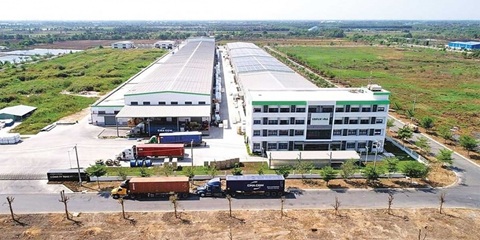
FOREIGN INVESTORS SEEKING A SYNCHRONISED MANUFACTURING ECOSYSTEM
Instead of focusing only on land costs and incentives as usual, foreign investors are seeking a synchronised manufacturing ecosystem, from stable power supply and logistics to shared infrastructure and the convenience of completing residence procedures for experts to serve their long-term investment in the country.
INFRASTRUCTURE / CONSTRUCTION / LOGISTIC / PORT
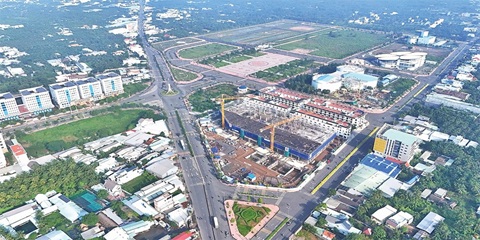
DONG THAP PROVINCE STEPS UP INDUSTRIAL EXPANSION AND INFRASTRUCTURE CONNECTIVITY
Accelerating public investment, strengthening inter-regional connectivity, and expanding industrial land are helping Dong Thap efficiently bolster competitiveness and drive economic growth. Following the 2025 merger of the former Dong Thap and Tien Giang provinces, the expanded Dong Thap province in the Mekong Delta faces mounting pressure to accelerate infrastructure development and strengthen connectivity among local economic zones, urban areas, industrial parks (IPs), and production centres.
PROPERTY / INDUSTRIAL ZONE
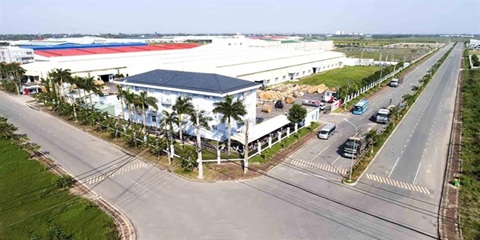
HCM CITY ATTRACTS US$5.7 BILLION INTO EXPORT PROCESSING AND INDUSTRIAL ZONES
HCM City attracted US$5.7 billion in domestic and foreign investment into its export processing and industrial zones during the first nine months of 2026. The figure exceeded the city's full-year target by 31 per cent, highlighting strong momentum in high-quality industrial investment under Resolution No.10-NQ/TW. Total investment reached 131 per cent of the 2026 target of $4.25 billion and represented a 29 per cent increase compared with the same period in 2025, according to the city's Export Processing and Industrial Zones Authority (HEPZA).

BANKING / FINANCE / INSURANCE / TAX
REMITTANCES TO HCM CITY RISE NEARLY 40% IN Q3
Remittances to HCM City reached more than US$2.83 billion in the third quarter of this year, up 39.5 per cent from the previous quarter and 3.6 per cent year-on-year. This was the first quarter showing positive annual growth this year, helping narrow the decline in remittance inflows over the first nine months. According to the State Bank of Vietnam (SBV)’s Regional Branch 2, remittances transferred to HCM City through credit institutions and economic organisations totalled $2.835 billion in Q3, an increase of more than $802 million from the previous quarter.

VIETNAM ECONOMY INVESTMENT
LOCALITIES REPORT BREAKTHROUGH RESULTS IN FDI IN FIRST NINE MONTHS
In Ho Chi Minh City, total registered capital reached $17.2 billion in the first nine months, up 4.2 times from the same period last year. The figure included more than $9.35 billion in newly registered capital and over $4.9 billion in additional capital for existing projects. Foreign investors also registered more than $2.9 billion through capital contributions and share purchases.

TECHNOLOGY
TECH SECTOR GROWTH OPENS UP OPPORTUNITIES FOR VIỆT NAM TO GO GLOBAL
The growth of the electronics, semiconductor and high-tech sectors worldwide is opening up a variety of opportunities for Vietnamese enterprises to integrate more deeply into the global supply chain. However, to become suppliers for these corporations, domestic enterprises must meet rigorous standards regarding quality, technology, productivity and order fulfilment capabilities.
Events Sponsors






















