Want to be in the loop?
subscribe to
our notification
Business News
STOCK MARKET 2021: POSITIVES AND RISKS
The stock market ended 2020 with diverse notes, from the selloff in Q1 which sent the VN-Index down to 660 points, the lowest in four years, to the recovery and strong rally, especially in Q4 despite the strong impact of Covid-19 on the global economy. What is the driver for the market confidence in 2021?
The market confidence is a major driver for the money flow into the stock market in 2020. The record increase in stock accounts of investors last year may signify a change in the habit from savings deposit, the traditional investment channel, to stock investment. Therefore, remarks about interest rates in the upcoming time will be important for assessing the attractiveness of investment channels.
There are two main reasons for the current low interest rate level. The first is the surplus liquidity in the banking system, which has dragged down the interest rate in the inter-bank market to a record low, with the one-month tenor at many times hovering around 0.15% per annum. The slow credit growth is the main reason for the low rate. The second reason is the monetary easing policy manifested through the reduction in policy rates. In addition, the State Bank of Vietnam (SBV) has continued to increase money supply through purchasing foreign currencies and selling the Vietnam dong in the foreign exchange market.
Credits increased again in late 2020. According to the SBV, as of December 21, outstanding loans had grown 10.14% against end-2019, a strong increase versus the growth of 5.12% by end-Q3. Credit growth in the entire 2020 was expected to reach 10.5-11%, not much lower compared with the growth of 12.1% in 2019. This is an impressive figure which shows more demand for lending.
The question is with the increase in the capital demand, does the interest rate rise enough to reverse the money flow from securities to bank deposits?
The increase in deposit rates will be inevitable if credits grow strongly and banks are short of funds. Then, the policy rates, including the ceiling rates for deposits and lending, will play an important role in the regulation of deposit rates in 2021. In other words, the target of the monetary policy in 2021 will dominate the commercial interest rates.
In reality, the United States has a great influence on not only macro-policies of Vietnam but also many other countries in the world. The moves of the Federal Reserve (Fed) are always watched globally and have a certain impact on the SBV’s action. Under the impact of the pandemic, the Fed has always shown its stance on keeping low target rates over a long time, along with maintaining quantitative easing packages to support economic growth. That said, the pressure for the SBV to increase the interest rate this year will ease and the bank can continue to maintain the policy rates at the current low levels to support economic recovery and growth.
Another factor is foreign capital flow is expected to increase strongly this year on the argument that Vietnam is a highlight in investment. The increased foreign currency supply will enable the SBV to buy more foreign currencies to beef up the foreign reserves as in 2020, which will come along with pumping more dong into the market. This will be the liquidity to reduce the capital pressure for commercial banks in case of strong credit growth.
To sum up, with the above logic, if the Fed continues monetary easing and keeps the target rates unchanged, foreign capital flow into the local market maintains stable growth and no financial shock as strong as that induced by Covid-19 occurs, the policy rates, including the ceiling rates for deposits and lending, this year may continue to be maintained at the current levels and will be the necessary caps to keep the deposit and lending rates low in case of strong credit growth. The low interest rates together with the expectation that the Covid-19 vaccine will speed up economic recovery early is the driver for money flow into the stock market in 2021.
Strong rally but hard to collapse
To clarify this viewpoint, it may need a comparison between the current market growth and the market in 2006-2007, the period before the global economic crisis. The common feature is the vertical market growth, which was expressive of a strong rally in a short time.
Both are the periods of gains from securities. However, they have different backgrounds. In the present time, the global economy seems to step out of a recession and Covid-19 fallout is only short term as assessed by many experts. The pandemic will gradually fade out when vaccines are available, and business activities and the global trade will be resumed. Meanwhile, the pre-2008 crisis was associated with the formation and development of the property bubble. With the expectation that business activities in Vietnam will continue to improve in 2021 along with the global economic recovery, Vietnam’s stock market can hardly collapse as in 2008, and will experience only a downward correction and still maintain a bull trend over the medium term.
Concerns still remain
Nevertheless, there remain many concerns over the market, not only in 2021 but possibly in the medium term. One of the concerns is the consequence of the Fed’s prolonged monetary easing. Massive money supplies have inflated the Fed’s balance sheet from over US$4.1 trillion in early 2020 to more than US$7.3 trillion on December 14, 2020, which is synonymous with the pumping of trillions of U.S. dollars into the market in 2020. Low interest rates and increased money supplies can weaken the dollar.
In recent times, many businesses have changed their strategies towards investment in Asia in place of the United States and the Eurozone as the interest rates there are too low. Japan’s biggest financial group MUFG has spent US$15 billion buying shares of credit institutions in Thailand, Vietnam, Indonesia and the Philippines. The group is also a major shareholder of VietinBank in Vietnam.
The capital withdrawal from low interest rate environments like the United States will weaken the U.S. dollar more, while massive money supplies will breed the expectation for hyperinflation of the dollar. This may kickstart a selloff of assets paid interest in U.S. dollar, which could send the dollar into hyperinflation though a flight from this global reserve currency is not likely. However, should such an event occur, it would be a crisis in the United States and its impact on Vietnam’s stock market would be visible.
Another risk is that low interest rates may start a property bubble in the United States, which already occurred after the dotcom crisis and led to the sub-prime loan crisis in 2008. The lending rate for home purchase in the United States is currently very low. According to statistics of Freddie Mac, the average lending rate for a 30-year loan with a fixed interest rate is down to only 2.6% per annum, the lowest in 50 years. The Fed’s stance on maintaining low interest rates can push property prices higher when home ownership is easy. The bubble can develop in a low interest rate environment and explode when the Fed raises interest rates again. The consequence of the financial crisis in 2008 remains a big lesson, as it impacted the global financial system and Vietnam’s stock market as well.
In the short term, however, Vietnam’s stock market still receives positive news. The rally in 2020 may continue well into 2021 with the hope for strong recovery of Vietnamese businesses.
Source: The Saigon Times
Related News

CHARITY / EXHIBITION / OTHER EVENTS
INVESTMENT OPPORTUNITIES IN CA MAU PROVINCE: 96 PROJECTS AND 20 STRATEGIC PROJECTS
We are pleased to share with you information on investment projects currently seeking investors in Ca Mau Province. Should your esteemed company or association be interested, we kindly invite you to review the project information and complete the registration form via the links provided. The Ho Chi Minh City Investment and Trade Promotion Centre (ITPC) will consolidate the expressions of interest and facilitate connections with the leadership of Ca Mau Province at a meeting tentatively scheduled for 13 November 2026 in Ho Chi Minh City.
MEMBER CORNER / PROMOTIONS
BẰNG KIỀU LIVESHOW - A SYMPHONY OF LOVE UNDER THE GOLDEN GLOW
A masterclass in live music that takes the audience on a soulful journey through immortal love songs, guided by the peerless artistry and emotive storytelling of renowned singer Bằng Kiều. The highlight of the night is his seamless musical chemistry with special guest Triệu Hồng Ngọc, promising passionate and deeply resonant duets inside the magnificent Grand Ballroom.
INFRASTRUCTURE / CONSTRUCTION / LOGISTIC / PORT
ĐÀ NẴNG GREEN-LIGHTS US$105 MILLION THAI DEVELOPMENT DEAL
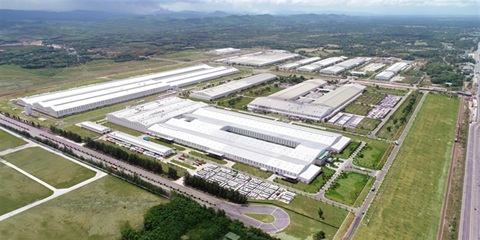
The central city has approved an investment proposal by Thailand’s WHA Group to develop infrastructure for the 400ha WHA Đà Nẵng Industrial Park project on two communes of Thăng Bình and Đồng Dương, with an investment of more than VNĐ2.7 trillion (US$105 million). The city said it approved WHA Industrial Development International's status as an investor in the project, which is expected to take place between 2027 and 2034.
VIETNAM ECONOMY INVESTMENT
MOBILE PHONE EXPORTS RISE 20% TO $51.8 BILLION IN FIRST NINE MONTHS
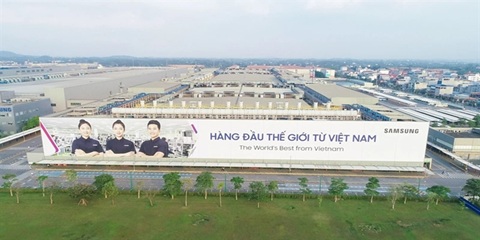
Exports of mobile phones and components rose 20 per cent year-on-year to nearly US$51.8 billion in the first nine months of 2026, with China, the US and Republic of Korea accounting for more than half of the total. Shipments to the three markets reached a combined $26.18 billion, or 50.6 per cent of total exports of the product group during the period, according to data from the Vietnam Department of Customs under the Ministry of Finance.

INFRASTRUCTURE / CONSTRUCTION / LOGISTIC / PORT
VIỆT NAM-CAMBODIA TRADE GATHERS PACE TOWARDS $20 BILLION TARGET
Trade between Việt Nam and Cambodia continues to grow, remaining a bright spot and a key pillar of bilateral cooperation as the two countries aim to raise two-way trade to US$20 billion in the coming years. After setting a record of more than $11.3 billion last year, bilateral trade reached about $8.7 billion in the first eight months of this year, up 8.3 per cent year on year.
VIETNAM ECONOMY INVESTMENT
FRUIT AND VEGETABLE EXPORTS POISED TO HIT $10 BILLION IN 2026
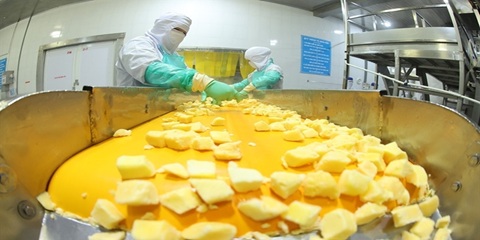
Fruit and vegetable exports are on track to reach nearly US$10 billion in 2026, after rising 19.9 per cent year on year to nearly US$7.4 billion in the first nine months, driven by strong seasonal demand and abundant tropical fruit supplies. The Ministry of Agriculture and Environment said the growth reflected stronger international demand for fresh produce and processed agricultural products.
Events Sponsors






















