Want to be in the loop?
subscribe to
our notification
Business News
SUPPORT NEEDS TO GO TO RIGHT BUSINESSES
Vietnamese businesses will weaken over time if the COVID-19 pandemic persists. Therefore, it is necessary to have an immediate solution to support businesses to restore production and business.
According to surveys, business performance in Vietnam was still very worrying in the first months of 2021. Many companies had to suspend or stop operations. The number of companies that withdrew from the market increased from 22,000 in the first four months of 2019 to 41,000 and 51,500 in the corresponding periods of 2020 and 2021. In addition, the number of temporarily suspended enterprises jumped to 28,000 from just 16,000 in the four-month period of 2019.
Experts at the recent Workshop on "Businesses Well Overcome COVID-19 Troubles", attributed this reality to COVID-19 pandemic outbreak. Even the fourth wave of COVID-19 contagion is still very dangerous with its impact on two economic bases - medical facilities and industrial parks - that the Government has tried to maintain over the past time.
More efforts needed
Businesses will weaken over time if the COVID-19 pandemic continues. Therefore, it is necessary to have an immediate solution to support enterprises to restore business operations.
Mr. Than Duc Viet, General Director of Garment 10 Corporation, expressed his concern that the corporation has a total of 12,000 employees working at 18 factories in many provinces and cities. This is a difficult issue when it has to fulfil the dual goal of preventing the pandemic and bolstering business operations.
The fourth outbreak of the plague is likely to cause enormous impacts on the corporation’s business performance and its employee health. What is happening in 2021 is very different from 2020. In 2020, when affected by COVID-19, Garment 10 Company had its supply and demand disrupted because 90% of its products were exported to the U.S., Europe and Japan.
On the contrary, this year, Garment 10 has a lot of orders and cannot receive all. Regulations on pandemic prevention are very harsh, but the corporation does not know how to maintain manufacturing and prevent the pandemic at the same time.
“Currently, we have 200 employees categorized as F2 and F3 contacts and they have to stay at home. But if it takes a long time, it will be very difficult for us to maintain production," he said with concern. Mr. Viet thus expected to have more specific regulations on physical distancing.
Sharing the same view, Mr. Nguyen Xuan Phu, President of Sunhouse Group Joint Stock Company, said that when the pandemic broke out, Sunhouse leadership had to figure out specific action scenarios for narrow lockdowns, city lockdowns and regional lockdowns.
He emphasized, “If lockdowns are partial, we will divide our warehouses to avoid supply disruptions. Factories are also split to cover each other in case one is locked for disease disinfection. Having different channels and markets will help the company work well. In addition, we pay attention to balancing loans and hedge funds. In particular, savings are only allowed to be used during extremely difficult or risky periods. With these strategies, at the end of the financial year, Sunhouse still made revenue and profit growth of 15% after covering all risks.”
He confidently said that “The pandemic broke out all over the world and we thus need to be ready to take risks wisely. Pandemic prevention does not mean we can avoid it, but we must learn how to live with it wisely.”
Financial support
To support businesses to overcome the COVID-19 crisis, Mr. Viet said that the most important support package is the VND60 trillion package initiated in 2020. However, Garment 10 has not been able to access this package to date because its access conditions include a 30% drop in revenue and a 50% reduction in staff. Indeed, if these criteria were met, the company would have already gone bankrupt.
Therefore, he hoped that this financial policy would be divided into support packages and beneficiaries. In addition, support packages should focus on resilient businesses that need worthy support for recovery which will in turn bolster economic growth. For companies already closed for a long time, different support packages are taken into account.
“Countries support enterprises based on tax contributions and insured employees. This encourages them to do business transparently and pay enough taxes. Meanwhile, Vietnam currently only focuses on assisting troubled ones. This incites them to deliberately fall into difficulty or give wrong evidence to seek support, while good taxpayers have to close their business. Many small and medium-sized businesses are very depressed because they only work in one field and have one business location. So, when the pandemic breaks out, they close their operations immediately," Mr. Phu said.
For this reason, he proposed to divide the support fund into two groups. First, companies in locked-down areas need immediate assistance according to their contribution to the State budget. Second, the support goes to companies in difficulty. We should group businesses to build support packages. Large enterprises, which account for 80% of state budget revenue, need other types of support like opening the market and assisting companies to receive foreign experts amid pandemic outbreaks.
"If the Top 500 businesses in the country receive effective support policies, they will create a spillover effect for satellite companies. Medium enterprises, most of which are satellite vendors for large enterprises, need other policies. The last group includes micro and small companies that need immediate assistance, based on their contributions, in case of lockdowns. Meanwhile, unlucky companies need to call for social help,” Phu proposed.
Source: VCCI
Related News

CHARITY / EXHIBITION / OTHER EVENTS
INVESTMENT OPPORTUNITIES IN CA MAU PROVINCE: 96 PROJECTS AND 20 STRATEGIC PROJECTS
We are pleased to share with you information on investment projects currently seeking investors in Ca Mau Province. Should your esteemed company or association be interested, we kindly invite you to review the project information and complete the registration form via the links provided. The Ho Chi Minh City Investment and Trade Promotion Centre (ITPC) will consolidate the expressions of interest and facilitate connections with the leadership of Ca Mau Province at a meeting tentatively scheduled for 13 November 2026 in Ho Chi Minh City.
MEMBER CORNER / PROMOTIONS
BẰNG KIỀU LIVESHOW - A SYMPHONY OF LOVE UNDER THE GOLDEN GLOW
A masterclass in live music that takes the audience on a soulful journey through immortal love songs, guided by the peerless artistry and emotive storytelling of renowned singer Bằng Kiều. The highlight of the night is his seamless musical chemistry with special guest Triệu Hồng Ngọc, promising passionate and deeply resonant duets inside the magnificent Grand Ballroom.
INFRASTRUCTURE / CONSTRUCTION / LOGISTIC / PORT
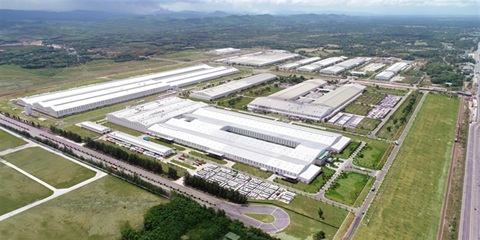
ĐÀ NẴNG GREEN-LIGHTS US$105 MILLION THAI DEVELOPMENT DEAL
The central city has approved an investment proposal by Thailand’s WHA Group to develop infrastructure for the 400ha WHA Đà Nẵng Industrial Park project on two communes of Thăng Bình and Đồng Dương, with an investment of more than VNĐ2.7 trillion (US$105 million). The city said it approved WHA Industrial Development International's status as an investor in the project, which is expected to take place between 2027 and 2034.
VIETNAM ECONOMY INVESTMENT
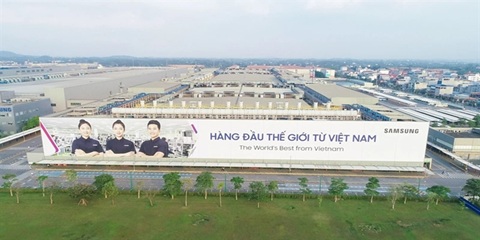
MOBILE PHONE EXPORTS RISE 20% TO $51.8 BILLION IN FIRST NINE MONTHS
Exports of mobile phones and components rose 20 per cent year-on-year to nearly US$51.8 billion in the first nine months of 2026, with China, the US and Republic of Korea accounting for more than half of the total. Shipments to the three markets reached a combined $26.18 billion, or 50.6 per cent of total exports of the product group during the period, according to data from the Vietnam Department of Customs under the Ministry of Finance.
INFRASTRUCTURE / CONSTRUCTION / LOGISTIC / PORT
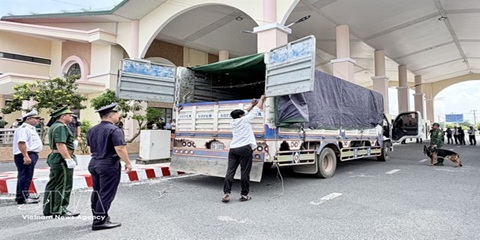
VIỆT NAM-CAMBODIA TRADE GATHERS PACE TOWARDS $20 BILLION TARGET
Trade between Việt Nam and Cambodia continues to grow, remaining a bright spot and a key pillar of bilateral cooperation as the two countries aim to raise two-way trade to US$20 billion in the coming years. After setting a record of more than $11.3 billion last year, bilateral trade reached about $8.7 billion in the first eight months of this year, up 8.3 per cent year on year.
VIETNAM ECONOMY INVESTMENT
FRUIT AND VEGETABLE EXPORTS POISED TO HIT $10 BILLION IN 2026
Fruit and vegetable exports are on track to reach nearly US$10 billion in 2026, after rising 19.9 per cent year on year to nearly US$7.4 billion in the first nine months, driven by strong seasonal demand and abundant tropical fruit supplies. The Ministry of Agriculture and Environment said the growth reflected stronger international demand for fresh produce and processed agricultural products.
Events Sponsors






















