Want to be in the loop?
subscribe to
our notification
Business News
SUPPORTING INDUSTRIES: KEY FOR STRONGER TEXTILE-GARMENT DEVELOPMENT
Vietnam’s textile and garment sector is one of the economy’s key export industries, with about 7,000 enterprises and nearly 3 million workers. The country now ranks among the world’s top three textile and garment exporters, behind only China and Bangladesh. However, the industry faces a major challenge: heavy reliance on imported raw materials and accessories. This is why supporting industries for textiles have become a decisive factor in driving sustainable growth and increasing domestic value-added.
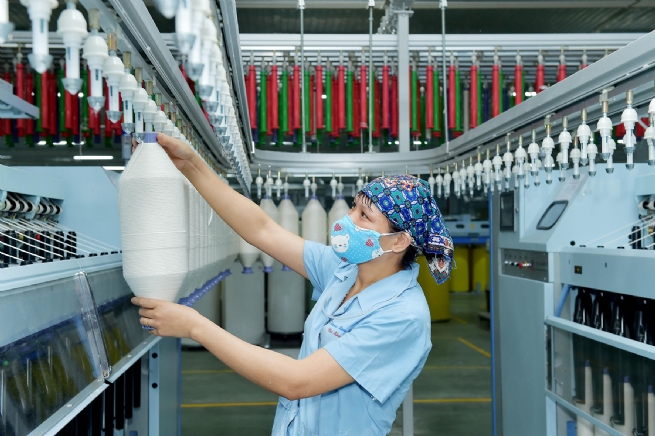
Textile supporting industries, including the production of input materials, have become a key driver of sustainable growth and higher domestic value-added
Challenges for textile supporting enterprises
In 2024, Vietnam’s textile and garment exports reached about US$43.5 billion, up 11% year-on-year. In the first eight months of 2025, exports hit US$30.76 billion, reflecting a strong rebound after a difficult period.
Textile supporting industries include the production of input materials (yarn, fabric, dyeing-finishing), accessories (thread, zippers, fasteners, garment components), processing chemicals, as well as quality treatment, packaging, and domestic logistics. According to the Ministry of Industry and Trade, more than 7,000 enterprises operate in supporting industries overall, with 1,461 dedicated to textiles. Most are small and medium-sized businesses.
In reality, small scale, limited capital, lack of advanced technology, and weak linkages are the main weaknesses holding back development. Many supporting industry enterprises lack the capacity to produce high-tech products or face competitive pressure from lower-cost imports.
A survey of textile enterprises in recent years highlights recurring burdens: access to working capital, input material costs, and market risks such as foreign exchange and logistics. Resolution 43/2022/QH15 on fiscal and monetary support for businesses also emphasized measures for textiles, including tax reductions, subsidized short-term loans, and working capital assistance. Yet, practical implementation still faces barriers to access.
For this reason, strong and comprehensive development of textile supporting industries is vital to reduce import dependence, stabilize domestic supply chains, and enhance value-added and competitiveness of Vietnam’s textile enterprises.

Banks, including ABBANK, have launched specialized financial packages for garment and yarn producers
Strengthening capacity requires integrated solutions
One of the biggest hurdles for supporting industries is high capital requirements and financial costs. Many businesses in this field have thin cash flow and face high non-performing loan risks if orders or production conditions fluctuate. Traditional banks are also cautious about providing large loans without strong collateral or a solid credit record.
Recognizing this, An Binh Commercial Joint Stock Bank (ABBANK) recently launched a specialized financial package for garment and yarn producers, with textile supporting industries as major beneficiaries. The package offers loans with diversified collateral, or even unsecured loans up to 80% of the credit limit; preferential L/C issuance deposit rates from 0%; export document discounting of up to 100% of receivables; and preferential VND loan interest rates starting from 2.35% per year for enterprises with USD export revenue, among the lowest in the market. ABBANK is also waiving 100% of international payment fees for eligible transactions, reducing cross-border trade costs. For supporting industry enterprises, unsecured loans of up to 80% create new opportunities without large asset pledges, while export document discounting and reduced transaction fees ease the financial burden of trade, a particularly heavy pressure for smaller enterprises.
However, financial support alone is not enough for sustainable growth. Stronger linkages between supporting industry enterprises and major textile manufacturers are essential. Building domestic supply chains can expand order scale, improve quality control, and reduce trading costs.
Supporting industry firms also need to modernize production lines, comply with green standards and international technical requirements, and position themselves as reliable suppliers for both domestic and export markets. At the same time, they must develop skilled technical human resources with expertise in materials, chemical processing, and automated machinery operation. This is currently a weak point that requires closer cooperation between schools, businesses, and industry associations.
According to Nguyen Thi Tuyet Mai, Deputy Secretary-General of the Vietnam Textile and Apparel Association (VITAS), alongside opportunities to expand domestic consumer demand, textile enterprises must be more proactive in developing local supply. A raw materials development center has been established to address the challenge of input self-sufficiency for the textile and footwear sector, an important factor for sustainable growth.
The Ministry of Industry and Trade is also continuing to implement policies to promote domestic supporting industries, including localization of raw materials and support for domestic product distribution.
Supporting industries for textiles are not just a matter for small businesses but a strategic lever to enhance competitiveness across the sector. If they are strengthened, Vietnam can increase value-added in the textile supply chain, reduce dependence on foreign inputs, and build a sustainable Vietnamese textile brand on the global stage.
Source: VCCI
Related News

INFRASTRUCTURE / CONSTRUCTION / LOGISTIC / PORT
VIỆT NAM-CAMBODIA TRADE GATHERS PACE TOWARDS $20 BILLION TARGET
Trade between Việt Nam and Cambodia continues to grow, remaining a bright spot and a key pillar of bilateral cooperation as the two countries aim to raise two-way trade to US$20 billion in the coming years. After setting a record of more than $11.3 billion last year, bilateral trade reached about $8.7 billion in the first eight months of this year, up 8.3 per cent year on year.
TECHNOLOGY
AI BEGINNING TO RESHAPE RECRUITMENT CRITERIA
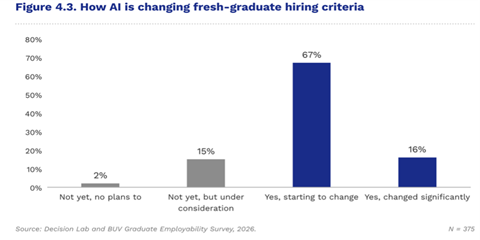
Digital literacy is the only capability area in which fresh graduates meet employers’ expectations, according to a new report. Yet, it is also the standard rising fastest, as businesses increasingly expect new hires to use AI effectively in the workplace. Some 83 per cent of employers say AI has changed, or is beginning to change, their hiring criteria, while 94 per cent report higher expectations for digital and AI capabilities than they had two to three years ago.

INFRASTRUCTURE / CONSTRUCTION / LOGISTIC / PORT
ĐÀ NẴNG GREEN-LIGHTS US$105 MILLION THAI DEVELOPMENT DEAL
The central city has approved an investment proposal by Thailand’s WHA Group to develop infrastructure for the 400ha WHA Đà Nẵng Industrial Park project on two communes of Thăng Bình and Đồng Dương, with an investment of more than VNĐ2.7 trillion (US$105 million). The city said it approved WHA Industrial Development International's status as an investor in the project, which is expected to take place between 2027 and 2034.

VIETNAM ECONOMY INVESTMENT
MOBILE PHONE EXPORTS RISE 20% TO $51.8 BILLION IN FIRST NINE MONTHS
Exports of mobile phones and components rose 20 per cent year-on-year to nearly US$51.8 billion in the first nine months of 2026, with China, the US and Republic of Korea accounting for more than half of the total. Shipments to the three markets reached a combined $26.18 billion, or 50.6 per cent of total exports of the product group during the period, according to data from the Vietnam Department of Customs under the Ministry of Finance.

VIETNAM ECONOMY INVESTMENT
FRUIT AND VEGETABLE EXPORTS POISED TO HIT $10 BILLION IN 2026
Fruit and vegetable exports are on track to reach nearly US$10 billion in 2026, after rising 19.9 per cent year on year to nearly US$7.4 billion in the first nine months, driven by strong seasonal demand and abundant tropical fruit supplies. The Ministry of Agriculture and Environment said the growth reflected stronger international demand for fresh produce and processed agricultural products.
GARMENT / TEXTILE
TEXTILE EXPORTS FACE DUAL CHALLENGES OF SUSTAINING ORDERS AND BOOSTING EFFICIENCY AMID GROWING COMPETITION
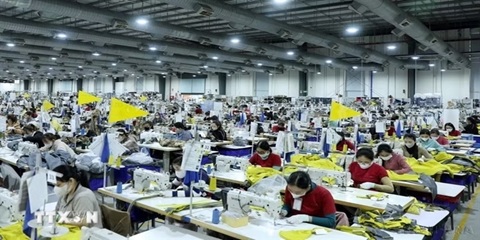
Data shows that the textile and garment sector maintained its growth momentum in the first nine months of this year. The industry's total export turnover reached an estimated US$35.721 billion in the first nine months of this year, up 3.3 per cent year-on-year. Despite posting encouraging export figures, Vietnamese textile and garment enterprises continue to navigate unpredictable market variables.
Events Sponsors






















