Want to be in the loop?
subscribe to
our notification
Business News
SUPPORTING INDUSTRIES NEED TO CHANGE TO CATCH UP WITH FDI WAVE
Supporting industry enterprises are seeing great opportunities when Vietnam joins many free trade agreements (FTAs) and investment capital shifts to Vietnam. However, given the current complicated epidemic development, many challenges are still lying ahead for supporting industries.
Vendor race
The stronger wave of foreign direct investment (FDI) inflows to Vietnam has resulted in a more robust demand for supporting industries. According to data from the Foreign Investment Agency under the Ministry of Planning and Investment, as of June 20, foreign investors registered to invest US$15.27 billion in Vietnam, equal to 97.4% of the value in the same period of 2020.
The prolonged Covid-19 pandemic caused some companies to change their strategic approaches from restricting business operations to prevent the epidemic contagion to “living with it”, stabilizing operations and making reinvestments. Every year, Vietnamese companies have to spend a lot of money to import components, causing domestic production costs to be 10-20% higher than in the region, manufacturing to be passive and localization rate to be low. Therefore, many businesses tend to look for strong suppliers to actively source components and increase domestic production according to governmental policies.
Supporting industry companies are struggling to improve their capabilities in the race to become suppliers for large corporations and seize opportunities from the global redirection of investment capital flows. Many companies have performed big product supply contracts for multinational corporations and FDI firms in Vietnam such as Foxconn, Canon, Samsung, Toyota and Honda and exported their products to partners around the world.
Mr. Vu Ba Phu, Director of the Vietnam Trade Promotion Agency (Vietrade) under the Ministry of Industry and Trade, said that Vietnam's supporting industry enterprises have developed both in number and quality over the years, improved production capacity and become increasingly involved in global production chains. Supporting industry companies account for nearly 4.5% of total processing and manufacturing companies, employ more than 600,000 workers, equal to 8% of the total labor force in the processing and manufacturing industry. Their combined revenue reached more than VND900 trillion, accounting for nearly 11% of the total revenue of the processing and manufacturing industry.
Some Vietnamese parts manufacturers are capably making molds, bicycle and motorcycle parts, standard mechanical parts, electric cables and wires, plastic components, technical rubber, and tires. These products have met domestic demand and are exported to countries around the world, including Japan.
For example, Thaco Auto Company is currently successfully going headwinds when it exports cars while many others have shifted to imports. A lot of its products and accessories have been exported to South Korea, Japan, Malaysia, Italy, Russia, Cambodia, Turkey and Kazakhstan. Thaco has built a supporting industry development strategy, invested in Vietnam’s largest automotive parts manufacturing facility in Vietnam in Quang Nam province to meet domestic and export needs and attract vendors to invest in manufacturing auto parts and other products.
Innovation and localization
The low localization rate has increased pressures on supporting industries. For example, textile - garment and leather - footwear industries import up to 70% of inputs from foreign countries. When the COVID-19 epidemic broke out, many companies fell into difficulty when they could not control input supplies. Similar lessons are also seen in other key industries such as electronics, manufacturing, and automobile assembling.
Mr. Takeo Nakajima, Chief Representative of the Japan External Trade Organization (JETRO) in Hanoi, said that, according to a survey conducted by JETRO, nearly 50% of Japanese companies in Vietnam planned business expansion in 1-2 years. However, the biggest difficulty is the low localization of inputs and components in Vietnam, about 37%. Japanese companies want to further improve the localization rate.
Ms. Do Thi Thuy Huong, Vice President of the Vietnam Association of Supporting Industries (VASI), Member of the Executive Committee of the Vietnam Electronic Industries Association (VEIA), electronic parts manufacturers are currently facing the risk of falling further behind due to the rapid evolution of Industry 4.0, forcing them to grow innovation and creativity.
She also pointed out difficulties faced by supporting industries such as insufficient skilled workers; insufficient financial capacity and technological capacity to adopt advanced technology from FDI inflows; risk of low and medium technologies transferred into Vietnam; temporary shortages of inputs and parts.
Currently, cheap labor and available natural resources are no longer advantages to FDI flows in Vietnam. Huong recommended the Government focus on investing in leading companies to push up small and medium enterprises, develop and form supply chains for Vietnamese enterprises. Especially, Vietnam necessarily prioritizes investment in mid-range and high-end technology and avoids obsolete technologies and machines in the manufacturing sector.
Policy support
Mr. Nguyen Dinh Phong, Director of Tax Consulting Services, Deloitte Vietnam Company, said, the Government currently advocates investment attraction and sustainable development goals to encourage the further development of supporting industries. Typical incentives include full support for consulting costs, land rent within 70 years and 20-year land rent exemption.
Previously, in August 2020, the Government issued Resolution 115/NQ-CP on solutions to accelerated development of supporting industries. Specifically, by 2025, Vietnamese enterprises will capably manufacture highly competitive supporting industrial products to meet 45% of domestic demand. Supporting industries will account for about 11% of the total industrial value. About 1,000 companies are capable of supplying parts to assembling firms and multinational corporations in Vietnam, of which Vietnamese-owned companies account for about 30%.
Resolution 115 sets a target: By 2030, supporting industrial products will meet 70% of the domestic demand for production and consumption and accounting for 14% of industrial value and about 2,000 companies will capably supply components to assembling enterprises and multinational corporations in Vietnam.
Mr. Nguyen Dinh Phong added that, according to feedback from businesses, the current support policy on development of supporting industries is better than previous incentives and beneficiaries will be entitled to new business incentives. In particular, Decree 57/2021 on corporate income tax incentives for projects that make industrial components (promulgated on June 4, 2021) is featured many more favorable incentives than previous regulations. Therefore, supporting industry enterprises will have better investment and development opportunities and reduce financial pressures, thereby boldly investing and developing on a larger and more modern scale.
Source: VCCI
Related News

CHARITY / EXHIBITION / OTHER EVENTS
INVESTMENT OPPORTUNITIES IN CA MAU PROVINCE: 96 PROJECTS AND 20 STRATEGIC PROJECTS
We are pleased to share with you information on investment projects currently seeking investors in Ca Mau Province. Should your esteemed company or association be interested, we kindly invite you to review the project information and complete the registration form via the links provided. The Ho Chi Minh City Investment and Trade Promotion Centre (ITPC) will consolidate the expressions of interest and facilitate connections with the leadership of Ca Mau Province at a meeting tentatively scheduled for 13 November 2026 in Ho Chi Minh City.

MEMBER CORNER / PROMOTIONS
BẰNG KIỀU LIVESHOW - A SYMPHONY OF LOVE UNDER THE GOLDEN GLOW
A masterclass in live music that takes the audience on a soulful journey through immortal love songs, guided by the peerless artistry and emotive storytelling of renowned singer Bằng Kiều. The highlight of the night is his seamless musical chemistry with special guest Triệu Hồng Ngọc, promising passionate and deeply resonant duets inside the magnificent Grand Ballroom.
INFRASTRUCTURE / CONSTRUCTION / LOGISTIC / PORT
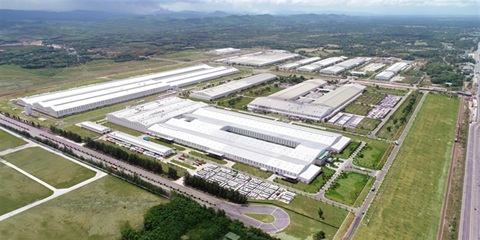
ĐÀ NẴNG GREEN-LIGHTS US$105 MILLION THAI DEVELOPMENT DEAL
The central city has approved an investment proposal by Thailand’s WHA Group to develop infrastructure for the 400ha WHA Đà Nẵng Industrial Park project on two communes of Thăng Bình and Đồng Dương, with an investment of more than VNĐ2.7 trillion (US$105 million). The city said it approved WHA Industrial Development International's status as an investor in the project, which is expected to take place between 2027 and 2034.
VIETNAM ECONOMY INVESTMENT
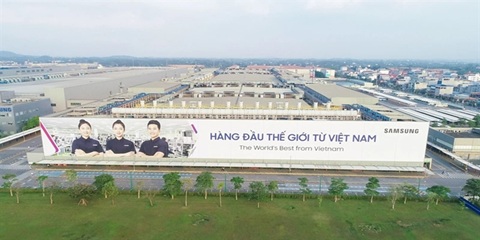
MOBILE PHONE EXPORTS RISE 20% TO $51.8 BILLION IN FIRST NINE MONTHS
Exports of mobile phones and components rose 20 per cent year-on-year to nearly US$51.8 billion in the first nine months of 2026, with China, the US and Republic of Korea accounting for more than half of the total. Shipments to the three markets reached a combined $26.18 billion, or 50.6 per cent of total exports of the product group during the period, according to data from the Vietnam Department of Customs under the Ministry of Finance.
INFRASTRUCTURE / CONSTRUCTION / LOGISTIC / PORT
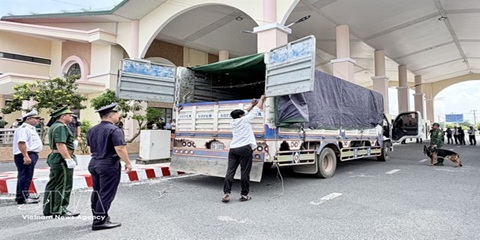
VIỆT NAM-CAMBODIA TRADE GATHERS PACE TOWARDS $20 BILLION TARGET
Trade between Việt Nam and Cambodia continues to grow, remaining a bright spot and a key pillar of bilateral cooperation as the two countries aim to raise two-way trade to US$20 billion in the coming years. After setting a record of more than $11.3 billion last year, bilateral trade reached about $8.7 billion in the first eight months of this year, up 8.3 per cent year on year.
VIETNAM ECONOMY INVESTMENT
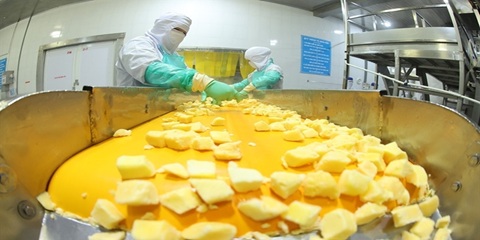
FRUIT AND VEGETABLE EXPORTS POISED TO HIT $10 BILLION IN 2026
Fruit and vegetable exports are on track to reach nearly US$10 billion in 2026, after rising 19.9 per cent year on year to nearly US$7.4 billion in the first nine months, driven by strong seasonal demand and abundant tropical fruit supplies. The Ministry of Agriculture and Environment said the growth reflected stronger international demand for fresh produce and processed agricultural products.
Events Sponsors






















