Want to be in the loop?
subscribe to
our notification
Business News
SUSTAINABLE FASHION PRESENTS PROMISING NICHE MARKET FOR TEXTILE MANUFACTURERS
The combination of sustainability and culture will open up more opportunities for Vietnamese textile enterprises to strengthen their position in the global market and capture the promising Nordic fashion market.
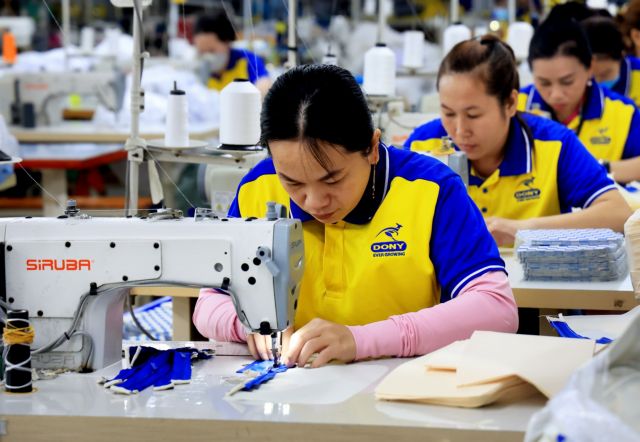
Workers at Dony Garment Company in HCM City's Bình Chánh District. — VNA/VNS Photo
Compiled by Hải Anh
HÀ NỘI — Việt Nam has set an ambitious target of earning $48 billion in export revenue for the textile and garment industry this year, according to the Việt Nam Textile and Apparel Association (VITAS) -- and industry insiders hope that sustainable fashion will help the sector achieve its goal.
The industry is one of Việt Nam’s key sectors, providing employment for about three million workers.
Despite being heavily affected by the global economic downturn the previous year, textile and garment exports still reached US$44 billion.
This year's ambitious goal is particularly challenging given the increasing importance of sustainability and social responsibility in international markets. For instance, in Northern Europe, including Sweden, Denmark, Norway and Finland, consumers consistently prioritise environmentally friendly and socially responsible products.
Sustainable textile and garment products, made from organic or recycled materials and manufactured under strict environmental and labour protection standards, have increasingly dominated this market.
Chairman of VITAS Vũ Đức Giang said that ‘greening’ production in the textile and garment industry can help businesses meet the requirements of European importers while promoting sustainable development.
This is no longer just a future-oriented strategy. Vietnamese textile enterprises have been aware of these demands, and have been gradually adapting to meet them, for years.
Tapping into strengths
Nguyễn Thị Hoàng Thúy, Trade Counsellor at the Việt Nam Trade Office in Sweden and Northern Europe, said that entering the sustainable fashion market requires making high-quality products and adhering to new sustainability standards.
This is reinforced by the EU’s new Strategy for Sustainable and Circular Textiles, announced in March 2022, to minimise the environmental impact of the textile industry, improve resource efficiency and promote product circularity.
The strategy’s key objectives include reducing waste and environmental pollution from the textile sector, such as microplastic waste and harmful chemicals. It also aims to increase the use of sustainable materials, including recycled or organic raw materials, and encourage the production of durable and reusable products.
Sustainable production and consumption will also help promote a circular economy. The strategy focuses on implementing strict regulations on textile products sold in the EU market, including durability, recyclability and eco-friendly production processes.
Thúy said that as one of the world’s leading textile exporters, Việt Nam is well positioned to tap into this niche market.
"We have many advantages to leverage in this market, including abundant natural raw materials. Việt Nam possesses a rich supply of organic materials such as organic cotton, bamboo, rattan and natural silk, highly favoured by Nordic consumers. These materials are biodegradable, free from harmful chemicals and align with the EU’s environmental protection strategy," she explained.
Additionally, Việt Nam’s traditional craftsmanship meets sustainability and cultural heritage demands. The country’s silk weaving, hand embroidery and traditional garment production techniques enable the creation of unique and sustainable fashion products. These items are not only environmentally friendly but also carry cultural value, attracting Nordic consumers who seek authenticity and exclusivity.
Shifting models
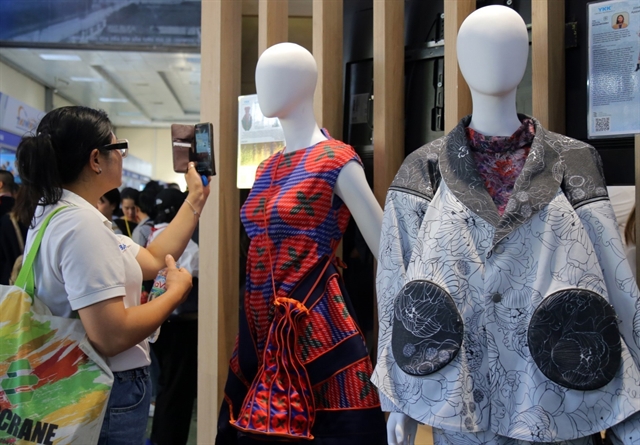
A guest visits the 2024 International Textile & Garment Industry Exhibition in Hà Nội. — VNA/VNS Photo
Despite the opportunities, complying with the EU’s stringent sustainability standards remains a significant challenge for businesses. It requires the use of eco-friendly raw materials and strict control over production processes to minimise pollution and ensure high recyclability.
Meeting EU standards also necessitates investment in cleaner production technologies and more efficient waste management systems. At the same time, obtaining international certifications, including the Global Organic Textile Standard (GOTS) or Fair Trade stamp, imposes an initial financial burden on enterprises.
Thúy said that Vietnamese businesses must adapt quickly to benefit from the EU’s sustainable textile strategy. They can collaborate with international organisations to obtain sustainability certifications, thereby gaining a competitive edge in the market.
"Businesses should invest in recycled material production technologies or develop highly reusable products. Optimising production processes to reduce waste is also a crucial factor," she recommended.
A prime example of sustainable innovation is Century Synthetic Fiber Corporation, which uses recycled materials, particularly fibres made from recycled PET (Polyethylene Terephthalate) plastic.
Việt Nam can also increase the number of green factories by promoting policies that encourage businesses to invest in eco-friendly production while providing financial support to ease the cost burden. Adopting energy-efficient technologies including LED lighting, solar panels and improved wastewater treatment systems will help lower operational costs and mitigate environmental impacts.
Phong Phú Textile Garment Corporation is a standout example of a company implementing advanced green production technologies. The company has introduced waterless dyeing techniques and installed solar energy systems in several of its factories.
The trade counsellor pointed out that Vietnamese businesses should focus on enhancing product value through creative designs that align with the growing trend of sustainable fashion. They can combine traditional materials, like silk, with modern designs and advanced techniques to create high-end and sustainable fashion products.
E-commerce is also a key channel through which businesses can access the Nordic market. Thúy stated that using online retail platforms, including Zalando and ASOS, is an effective strategy to introduce Vietnamese products. Nordic consumers are particularly interested in the origin and story behind a product. Therefore, businesses should build their brand identity by showcasing eco-friendly production processes and integrating Vietnamese culture and traditional craftsmanship into their storytelling.
Meanwhile, Director of the Institute of Industrial Strategy and Policy Research Nguyễn Văn Hội said that the Government must work alongside businesses.
"Government agencies need to negotiate and engage with international partners to establish relevant criteria, standards or regulations that help guide businesses toward closer integration with global markets," he said.
Hội shared that the authorities play a crucial role in providing essential information and support to help enterprises align with green production standards and successfully adapt to the evolving global trade landscape. — VNS
Source: VNS
Related News

INFRASTRUCTURE / CONSTRUCTION / LOGISTIC / PORT
VIỆT NAM-CAMBODIA TRADE GATHERS PACE TOWARDS $20 BILLION TARGET
Trade between Việt Nam and Cambodia continues to grow, remaining a bright spot and a key pillar of bilateral cooperation as the two countries aim to raise two-way trade to US$20 billion in the coming years. After setting a record of more than $11.3 billion last year, bilateral trade reached about $8.7 billion in the first eight months of this year, up 8.3 per cent year on year.
TECHNOLOGY
AI BEGINNING TO RESHAPE RECRUITMENT CRITERIA
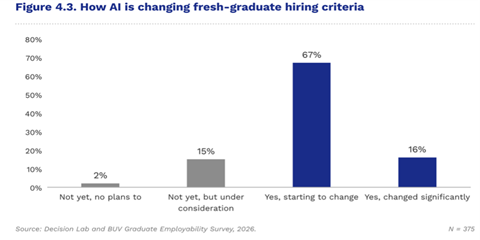
Digital literacy is the only capability area in which fresh graduates meet employers’ expectations, according to a new report. Yet, it is also the standard rising fastest, as businesses increasingly expect new hires to use AI effectively in the workplace. Some 83 per cent of employers say AI has changed, or is beginning to change, their hiring criteria, while 94 per cent report higher expectations for digital and AI capabilities than they had two to three years ago.

INFRASTRUCTURE / CONSTRUCTION / LOGISTIC / PORT
ĐÀ NẴNG GREEN-LIGHTS US$105 MILLION THAI DEVELOPMENT DEAL
The central city has approved an investment proposal by Thailand’s WHA Group to develop infrastructure for the 400ha WHA Đà Nẵng Industrial Park project on two communes of Thăng Bình and Đồng Dương, with an investment of more than VNĐ2.7 trillion (US$105 million). The city said it approved WHA Industrial Development International's status as an investor in the project, which is expected to take place between 2027 and 2034.

VIETNAM ECONOMY INVESTMENT
MOBILE PHONE EXPORTS RISE 20% TO $51.8 BILLION IN FIRST NINE MONTHS
Exports of mobile phones and components rose 20 per cent year-on-year to nearly US$51.8 billion in the first nine months of 2026, with China, the US and Republic of Korea accounting for more than half of the total. Shipments to the three markets reached a combined $26.18 billion, or 50.6 per cent of total exports of the product group during the period, according to data from the Vietnam Department of Customs under the Ministry of Finance.

VIETNAM ECONOMY INVESTMENT
FRUIT AND VEGETABLE EXPORTS POISED TO HIT $10 BILLION IN 2026
Fruit and vegetable exports are on track to reach nearly US$10 billion in 2026, after rising 19.9 per cent year on year to nearly US$7.4 billion in the first nine months, driven by strong seasonal demand and abundant tropical fruit supplies. The Ministry of Agriculture and Environment said the growth reflected stronger international demand for fresh produce and processed agricultural products.
GARMENT / TEXTILE
TEXTILE EXPORTS FACE DUAL CHALLENGES OF SUSTAINING ORDERS AND BOOSTING EFFICIENCY AMID GROWING COMPETITION
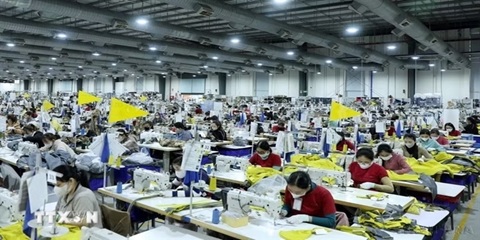
Data shows that the textile and garment sector maintained its growth momentum in the first nine months of this year. The industry's total export turnover reached an estimated US$35.721 billion in the first nine months of this year, up 3.3 per cent year-on-year. Despite posting encouraging export figures, Vietnamese textile and garment enterprises continue to navigate unpredictable market variables.
Events Sponsors






















