Want to be in the loop?
subscribe to
our notification
Business News
TAX INCENTIVES DRIVE SMALL BUSINESS INVESTMENT AND EXPANSION
The Ministry of Finance's tax relief measures are giving small businesses stronger cash flow, lower costs, and greater capacity to invest and expand.
The Ministry of Finance (MoF) has rolled out a series of tax, fee, and charge measures in 2026 to support businesses and individuals while promoting economic growth. Among the most significant measures is the extension of the 2 percentage-point reduction in VAT through the end of 2026.
In response to volatility in global energy markets, the MoF has also advised the government and the National Assembly to adopt a series of tax relief measures on petroleum products during 2026.
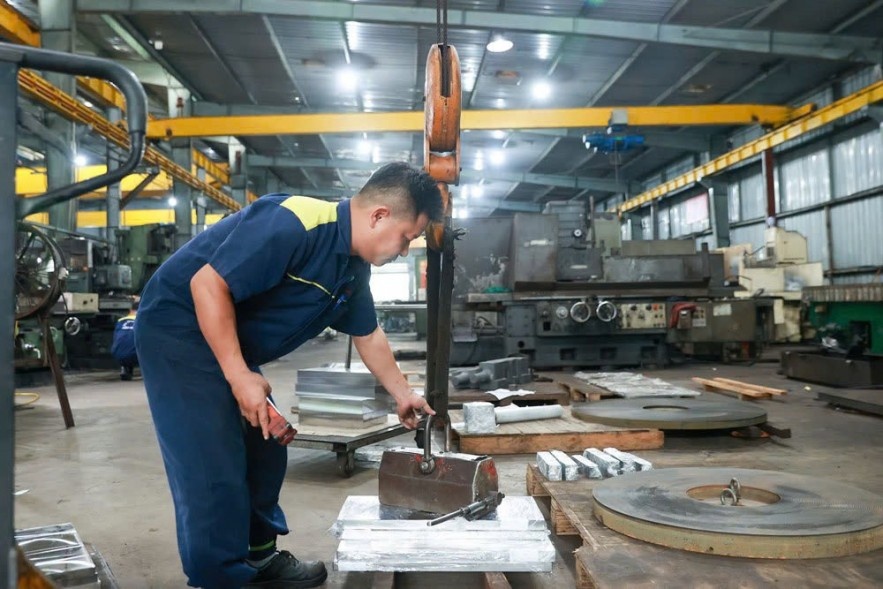
These included reductions in preferential import tariffs, environmental protection tax, VAT and special consumption tax (SCT) on petrol and oil products during appropriate periods, helping stabilise fuel supplies and curb rising energy prices.
Alongside these short-term measures, the MoF proposed amendments to several tax laws, which were adopted by the National Assembly on April 24 as Law No.09/2026/QH16.
The legislation raises the revenue threshold below which individual business operators are exempt from personal income tax, increases the VAT exemption threshold for household businesses and individual entrepreneurs, and extends the preferential SCT treatment for battery-powered vehicles carrying fewer than 24 passengers through the end of 2030.
The government has also issued regulations extending payment deadlines for VAT, corporate income tax, personal income tax and land rental fees in 2026, easing cash-flow pressures for businesses and household enterprises.
The coordinated implementation of tax and fee measures has received broad support from both the business community and the public, helping lower input costs, support production and business activities, create jobs, contain inflation and maintain macroeconomic stability.
According to data from the Tax Department under the Ministry of Finance, total tax reductions reached approximately $2.21 billion in the first six months of 2026.
Specifically, reducing the VAT rate from 10 per cent to 8 per cent allowed businesses to retain approximately $875.6 million. More importantly, operating cost pressures were substantially eased after the environmental protection tax on petrol and oil was reduced to zero per litre, providing support equivalent to approximately $1.07 billion.
In addition, the application of a zero per cent SCT on petrol reduced costs by a further $148 million, while the abolition of the business licence fee from the beginning of 2026 enabled small businesses and household enterprises to save approximately $116 million.
These figures underscore the effectiveness of the government's policy approach, which contributed to GDP growth of 8.18 per cent in the first half of 2026.
They also reflect the government's strategy of accepting lower short-term budget revenues to foster stronger long-term revenue generation.
Mac Quoc Anh, vice chairman and secretary general of the Hanoi Small and Medium-sized Enterprises (SMEs) Association, said Vietnam has introduced a series of tax measures in recent years to support SMEs, a key segment of the private sector that makes a significant contribution to economic growth and employment.
"Revised tax laws provide preferential tax rates for SMEs, particularly micro-enterprises and household businesses," said Quoc Anh, "Tax exemptions, reductions, and payment deferrals have helped businesses maintain liquidity, secure cash flow for wages and raw materials, and support a return to growth."
"They also encourage companies to invest in machinery, improve production processes, and move towards meeting environmental, social, and governance standards and advancing the green transition," he added. "These are essential conditions for SMEs to scale up rapidly, develop sustainably, and integrate into global value chains."
Bui Manh Toan, chairman and CEO of Vietnox JSC, said tax incentives are among the most important tools for helping SMEs accelerate growth while pursuing long-term sustainability.
"When tax burdens are reduced, businesses have greater resources to invest in production, technological innovation, product quality improvements, and market expansion," he said. "However, tax and fee incentives should be complemented by broader support measures, including improved access to finance and stronger corporate governance capabilities. Such a comprehensive policy framework will help SMEs achieve stable and sustainable long-term growth."
Source: VIR
Related News

BANKING / FINANCE / INSURANCE / TAX
REMITTANCES TO HCM CITY RISE NEARLY 40% IN Q3
Remittances to HCM City reached more than US$2.83 billion in the third quarter of this year, up 39.5 per cent from the previous quarter and 3.6 per cent year-on-year. This was the first quarter showing positive annual growth this year, helping narrow the decline in remittance inflows over the first nine months. According to the State Bank of Vietnam (SBV)’s Regional Branch 2, remittances transferred to HCM City through credit institutions and economic organisations totalled $2.835 billion in Q3, an increase of more than $802 million from the previous quarter.
TECHNOLOGY
TECH SECTOR GROWTH OPENS UP OPPORTUNITIES FOR VIỆT NAM TO GO GLOBAL
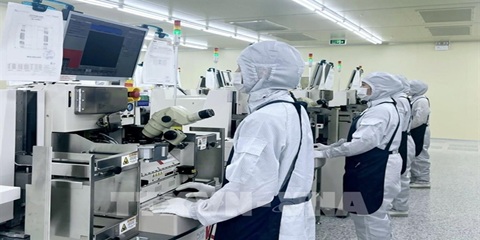
The growth of the electronics, semiconductor and high-tech sectors worldwide is opening up a variety of opportunities for Vietnamese enterprises to integrate more deeply into the global supply chain. However, to become suppliers for these corporations, domestic enterprises must meet rigorous standards regarding quality, technology, productivity and order fulfilment capabilities.
VIETNAM ECONOMY INVESTMENT
FOREIGN INVESTORS SEEKING A SYNCHRONISED MANUFACTURING ECOSYSTEM
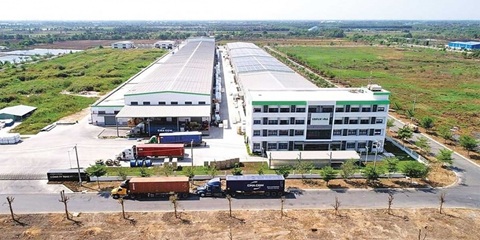
Instead of focusing only on land costs and incentives as usual, foreign investors are seeking a synchronised manufacturing ecosystem, from stable power supply and logistics to shared infrastructure and the convenience of completing residence procedures for experts to serve their long-term investment in the country.
MEMBER CORNER / PROMOTIONS
SENTRYSAFE FHW40200 – PROTECT YOUR VALUABLES, ENJOY PEACE OF MIND!
Looking for a reliable solution to protect your important documents, cash, and valuables from fire and water damage? Genuine SENTRYSAFE - Reliable protection for your valuables and peace of mind! Contact Sen Wai Vietnam for more information and personalized product recommendations.
PROPERTY / INDUSTRIAL ZONE
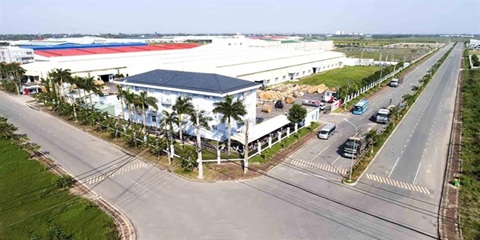
HCM CITY ATTRACTS US$5.7 BILLION INTO EXPORT PROCESSING AND INDUSTRIAL ZONES
HCM City attracted US$5.7 billion in domestic and foreign investment into its export processing and industrial zones during the first nine months of 2026. The figure exceeded the city's full-year target by 31 per cent, highlighting strong momentum in high-quality industrial investment under Resolution No.10-NQ/TW. Total investment reached 131 per cent of the 2026 target of $4.25 billion and represented a 29 per cent increase compared with the same period in 2025, according to the city's Export Processing and Industrial Zones Authority (HEPZA).
INFRASTRUCTURE / CONSTRUCTION / LOGISTIC / PORT
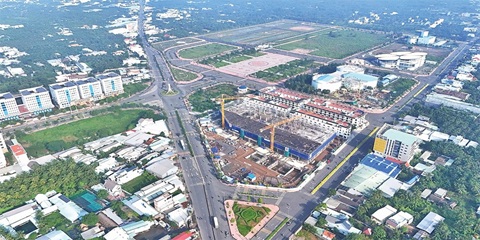
DONG THAP PROVINCE STEPS UP INDUSTRIAL EXPANSION AND INFRASTRUCTURE CONNECTIVITY
Accelerating public investment, strengthening inter-regional connectivity, and expanding industrial land are helping Dong Thap efficiently bolster competitiveness and drive economic growth. Following the 2025 merger of the former Dong Thap and Tien Giang provinces, the expanded Dong Thap province in the Mekong Delta faces mounting pressure to accelerate infrastructure development and strengthen connectivity among local economic zones, urban areas, industrial parks (IPs), and production centres.
Events Sponsors






















