Want to be in the loop?
subscribe to
our notification
Business News
TEXTILE AND APPAREL FIRMS INCREASINGLY GOING GREEN
Going green increasingly becomes an inevitable trend among firms in the textile and apparel sector, with more units bolstering investment into greening their production.
According to the Vietnam Textile and Apparel Association (Vitas), greening the textile and apparel sector has become a global trend that local firms must follow to reach sustainable development targets and scale up export into key markets like the EU and United States.
It would be particularly significant as new-generation free trade agreements with Vietnam’s engagement all feature the commitments for environmental protection and emission reduction, Vitas stated.
This would require firms to invest in cutting-edge production technology which also entails mounting challenges.
“Funding is a big issue, particularly as 90-95 per cent of units in the textile and apparel sector are of small and medium size,” said Truong Van Cam, Vitas’ deputy chairman.
Currently, most firms in the textile and apparel supply chain performing export processing for global brands have been mandated to satisfy set requirements on environmental, social, and emission reduction standards, among others.
Based on their scale, capacity, and customer requirements, each firm works on suitable plans to meet the criteria.
With export scale surpassing $3.5 billion a year, the state-owned textile and apparel conglomerate Vinatex unveiled that in the immediate future the company will be investing in novel technologies to reduce 30 per cent of wastewater after dyeing, reusing 30 per cent of this wastewater after being treated to diverse stages of washing and cleaning.
In addition, Vinatex also commits to installing solar panels for its factories with suitable natural conditions to reach the target of having 10 per cent of its power come from renewable energy sources.
Tran Nhu Tung, deputy general director at Thanh Cong Textile Garment Investment Trading JSC, and head of the Sustainable Development Department at Vitas, assumed that practising sustainable development standards might bring difficulties to businesses in the initial period, but in the long haul, it would help firms to bolster reputation and brand and sharpen competitiveness against their rivals from other countries.
A recent survey from US Cotton Trust Protocol shows that about 70 per cent of brands and retailers are paying more attention to the environmental impacts of fashion products.
Many leading fashion brands have announced just supplying products made from sustainable material sources.
For instance, Europe’s fashion brand H&M commits to promoting carbon-neutral supply chain development for its production factories through signing contracts with its sub-contractors, aiming at reaching the target of using only raw material from recycling sources by 2030.
This means more than 30 per cent of H&M suppliers in Vietnam must come on par with the standards on sustainable material usage.
To join the global game, Vietnamese firms need to become more transparent in production, ensure their products have a clear origin and meet green production standards, and increase the volume of products that can be recycled.
According to Dao Thanh Tung, director of IDFL Vietnam, an accredited certifying body for major textile standards, as consumers both locally and globally are increasingly stringent about quality standards, including the origin of raw materials and the whole production process, Vietnamese firms need to take on changes and compliance to fully meet requirements from both importers and the brands themselves.
Source: VIR
Related News

INFRASTRUCTURE / CONSTRUCTION / LOGISTIC / PORT
VIỆT NAM-CAMBODIA TRADE GATHERS PACE TOWARDS $20 BILLION TARGET
Trade between Việt Nam and Cambodia continues to grow, remaining a bright spot and a key pillar of bilateral cooperation as the two countries aim to raise two-way trade to US$20 billion in the coming years. After setting a record of more than $11.3 billion last year, bilateral trade reached about $8.7 billion in the first eight months of this year, up 8.3 per cent year on year.
TECHNOLOGY
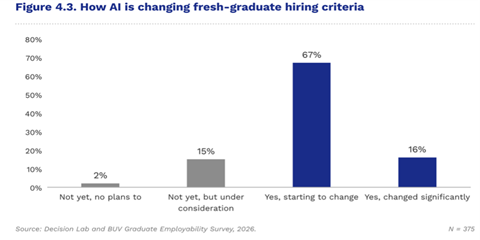
AI BEGINNING TO RESHAPE RECRUITMENT CRITERIA
Digital literacy is the only capability area in which fresh graduates meet employers’ expectations, according to a new report. Yet, it is also the standard rising fastest, as businesses increasingly expect new hires to use AI effectively in the workplace. Some 83 per cent of employers say AI has changed, or is beginning to change, their hiring criteria, while 94 per cent report higher expectations for digital and AI capabilities than they had two to three years ago.

INFRASTRUCTURE / CONSTRUCTION / LOGISTIC / PORT
ĐÀ NẴNG GREEN-LIGHTS US$105 MILLION THAI DEVELOPMENT DEAL
The central city has approved an investment proposal by Thailand’s WHA Group to develop infrastructure for the 400ha WHA Đà Nẵng Industrial Park project on two communes of Thăng Bình and Đồng Dương, with an investment of more than VNĐ2.7 trillion (US$105 million). The city said it approved WHA Industrial Development International's status as an investor in the project, which is expected to take place between 2027 and 2034.

VIETNAM ECONOMY INVESTMENT
MOBILE PHONE EXPORTS RISE 20% TO $51.8 BILLION IN FIRST NINE MONTHS
Exports of mobile phones and components rose 20 per cent year-on-year to nearly US$51.8 billion in the first nine months of 2026, with China, the US and Republic of Korea accounting for more than half of the total. Shipments to the three markets reached a combined $26.18 billion, or 50.6 per cent of total exports of the product group during the period, according to data from the Vietnam Department of Customs under the Ministry of Finance.

VIETNAM ECONOMY INVESTMENT
FRUIT AND VEGETABLE EXPORTS POISED TO HIT $10 BILLION IN 2026
Fruit and vegetable exports are on track to reach nearly US$10 billion in 2026, after rising 19.9 per cent year on year to nearly US$7.4 billion in the first nine months, driven by strong seasonal demand and abundant tropical fruit supplies. The Ministry of Agriculture and Environment said the growth reflected stronger international demand for fresh produce and processed agricultural products.
GARMENT / TEXTILE
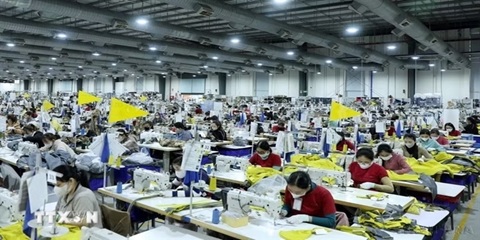
TEXTILE EXPORTS FACE DUAL CHALLENGES OF SUSTAINING ORDERS AND BOOSTING EFFICIENCY AMID GROWING COMPETITION
Data shows that the textile and garment sector maintained its growth momentum in the first nine months of this year. The industry's total export turnover reached an estimated US$35.721 billion in the first nine months of this year, up 3.3 per cent year-on-year. Despite posting encouraging export figures, Vietnamese textile and garment enterprises continue to navigate unpredictable market variables.
Events Sponsors






















