Want to be in the loop?
subscribe to
our notification
Business News
TEXTILE AND APPAREL SECTOR YEARNING FOR GOVERNMENT SUPPORT TO CURTAIL COVID-19 IMPACTS
Textile and apparel businesses in South Vietnam are facing critical levels of disruption due to severe social distancing measures to combat the COVID-19 pandemic and are requesting urgent support from the government and other industries to reboot operations.
Vu Duc Giang, chairman of the Vietnam Textile and Apparel Association (VITAS) said that the sector is facing unprecedented times as businesses accounting for 62 per cent of the textile and apparel sector’s total export value has to suspend production to prevent the spread of COVID-19.
After a while of exercising the "stay at work" scheme, many of these firms could no offset the escalating costs of maintaining business through much-reduced productivity.
“Several firms with dozens of production plants had to stop production. Only fibre and textile dyeing firms which use less workers and more machinery could maintain effective operations through the scheme, while the more labour-intensive apparel industry found itself quickly out of its depth,” said Giang.
Supply disruption in southern locations have been posing mounting challenges to the entire textile and apparel industry, particularly due to intense pressure to deliver orders on time to foreign partners.
Giang noted that in the fashion industry if products are not delivered at the right time, they can quickly lose their value. If local firms failed to deliver their products in time they could suffer significant damage as they would incur contractual fines and lose customer trust.
“Maintaining production in August is extremely hard for the textile and apparel sector as Ho Chi Minh City and 18 other southern localities continue to apply stringent measures under Directive No.16/CT-TTg to contain the pandemic. This will certainly impacts delivery timlines,” said a VITAS source.
The latest figures from the Ministry of Industry and Trade (MoIT) showed that the impact of many southern production plants suspending production due to COVID-19 were instantly seen in the July industrial production index. Accordingly, the index dropped 19.4 per cent for Ho Chi Minh City, 14.6 per cent for Long An province, and 13.7 per cent for Ca Mau.
While many production plants in southern industrial parks had to suspend production, those in Bac Giang and Bac Ninh in the north – the epicentre of the COVID-19 outbreak this late April – have resumed production but are drastically short on hands. These plants are also facing a shortage of production materials.
Luong Van Thu, chairman and general director of Dap Cau Garment JSC, a big player in the northern region, said that after resuming production at three plants in late June, they have been unable to man all production lines while expenditures have been skyrocketing due to periodical COVID-19 testing and rising logistics costs.
The textile and apparel sector raked in nearly $19 billion in total export value in the first half, roughly half of the full-year target of $39-39.5 billion outlined in the best-case scenario. However, Giang from VITAS shared that if the pandemic situation would last for several months, the sector could achieve around $32.5-33 billion in total export value for the full year.
VITAS forecast lasting damage from the pandemic, with only about 60-65 per cent of workers returning after the pandemic.
More critically, if supply chains remain disrupted and the Vietnamese market remains unstable, foreign customers would shift orders elsewhere, damaging medium-term development prospects.
Additionally, VITAS forecast lasting damage from the pandemic, with only about 60-65 per cent of workers returning after the pandemic. The ensuing labour deficiency would badly impact labour productivity.
Recently, four professional associations – VITAS, Vietnam Leather, Footwear and Handbag Association (LEFASO), Vietnam Electronic Industries Association (VEIA), and Ho Chi Minh City Handicraft and Wood Industry Association (HAWA) – said that they have found vaccine sources and requested government support in completing import procedures to vaccinate their labourers.
The American Apparel and Footwear Association (AAFA) has also called for the US administration to donate more vaccines to Vietnam, helping to preserve apparel and footwear supply chains, avoiding the devasting impacts of current complex COVID-19 situation in Vietnam’s southern locations.
However, Giang from VITAS noted that the current pace of vaccination in the textile and apparel sector is still slow. Only a few businesses based in Ho Chi Minh City reported that their workforce have got their shots while workers in the remaining 18 southern localities were still waiting.
“Textile and apparel, footwear, and seafood are making great contributions to Vietnam’s export performance and creating jobs for dozens of millions. The government, should consider giving priority in vaccination for the sectors making large contributions, helping them reboot production at the soonest,” said Giang.
Source: VIR
Related News

INFRASTRUCTURE / CONSTRUCTION / LOGISTIC / PORT
VIỆT NAM-CAMBODIA TRADE GATHERS PACE TOWARDS $20 BILLION TARGET
Trade between Việt Nam and Cambodia continues to grow, remaining a bright spot and a key pillar of bilateral cooperation as the two countries aim to raise two-way trade to US$20 billion in the coming years. After setting a record of more than $11.3 billion last year, bilateral trade reached about $8.7 billion in the first eight months of this year, up 8.3 per cent year on year.
TECHNOLOGY
AI BEGINNING TO RESHAPE RECRUITMENT CRITERIA
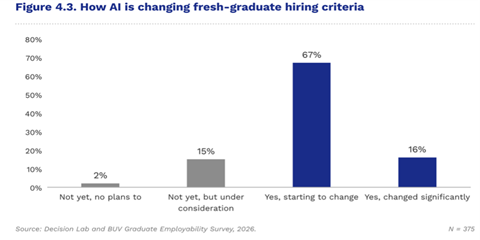
Digital literacy is the only capability area in which fresh graduates meet employers’ expectations, according to a new report. Yet, it is also the standard rising fastest, as businesses increasingly expect new hires to use AI effectively in the workplace. Some 83 per cent of employers say AI has changed, or is beginning to change, their hiring criteria, while 94 per cent report higher expectations for digital and AI capabilities than they had two to three years ago.

INFRASTRUCTURE / CONSTRUCTION / LOGISTIC / PORT
ĐÀ NẴNG GREEN-LIGHTS US$105 MILLION THAI DEVELOPMENT DEAL
The central city has approved an investment proposal by Thailand’s WHA Group to develop infrastructure for the 400ha WHA Đà Nẵng Industrial Park project on two communes of Thăng Bình and Đồng Dương, with an investment of more than VNĐ2.7 trillion (US$105 million). The city said it approved WHA Industrial Development International's status as an investor in the project, which is expected to take place between 2027 and 2034.

VIETNAM ECONOMY INVESTMENT
MOBILE PHONE EXPORTS RISE 20% TO $51.8 BILLION IN FIRST NINE MONTHS
Exports of mobile phones and components rose 20 per cent year-on-year to nearly US$51.8 billion in the first nine months of 2026, with China, the US and Republic of Korea accounting for more than half of the total. Shipments to the three markets reached a combined $26.18 billion, or 50.6 per cent of total exports of the product group during the period, according to data from the Vietnam Department of Customs under the Ministry of Finance.

VIETNAM ECONOMY INVESTMENT
FRUIT AND VEGETABLE EXPORTS POISED TO HIT $10 BILLION IN 2026
Fruit and vegetable exports are on track to reach nearly US$10 billion in 2026, after rising 19.9 per cent year on year to nearly US$7.4 billion in the first nine months, driven by strong seasonal demand and abundant tropical fruit supplies. The Ministry of Agriculture and Environment said the growth reflected stronger international demand for fresh produce and processed agricultural products.
GARMENT / TEXTILE
TEXTILE EXPORTS FACE DUAL CHALLENGES OF SUSTAINING ORDERS AND BOOSTING EFFICIENCY AMID GROWING COMPETITION
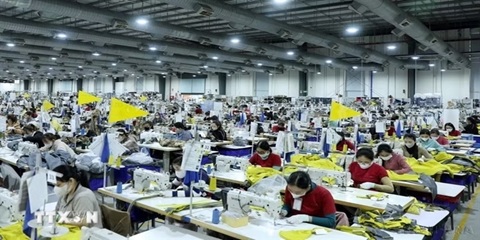
Data shows that the textile and garment sector maintained its growth momentum in the first nine months of this year. The industry's total export turnover reached an estimated US$35.721 billion in the first nine months of this year, up 3.3 per cent year-on-year. Despite posting encouraging export figures, Vietnamese textile and garment enterprises continue to navigate unpredictable market variables.
Events Sponsors






















