Want to be in the loop?
subscribe to
our notification
Business News
TEXTILE AND GARMENT SECTOR BEARS THE BRUNT OF GLOBAL UNCERTAINTIES
Textile and garment businesses are facing pressure due to weaker purchasing power caused by mounting inflation and other global uncertainties.
Sharp export declines were recorded in the US, Europe, Japan, the Republic of Korea (RoK), and China, according to the General Statistics Office.
Textile and garment exports in September dropped by nearly US$1.2 billion, or 27 per cent, from the previous month, to $3.2 billion.
According to the SSI Securities Corporation the number of orders placed for the fourth quarter of 2022 fell by 25-50 per cent from the second quarter, when orders increased strongly, because the unsold inventory in import markets is high at present.
Many companies have received orders to be delivered in the first quarter of 2023, but the order number is still much below their capacity.
SSI said the enterprises whose buyers are mainly in the US and Europe would be hit harder compared to those exporting to Japan and the RoK.
Aside from inflation, fluctuations in material prices are also a problem.
Lê Tiến Trường, Chairman of the Việt Nam National Textile and Garment Group (Vinatex), said there were uncertainties running up to the end of the year, especially the Russia-Ukraine conflict and material price fluctuations.
Enterprises were seeking ways to diversify material supply sources as well as export markets because when material sufficiency is ensured, they could boost shipments to many markets, thus helping guarantee production stability, supply chain, and sustainable exports, he said.
Another challenge is foreign exchange rates, according to analysts.
Nguyễn Đức Hào, a specialist from the VNDirect Securities Corporation, said the euro had continually depreciated as a result of recession concerns due to Russia’s threat to reduce gas supplies for many European countries, adding that businesses could suffer from lower profits and even losses.
Echoing the view, SSI held that most textile and garment companies earned revenue in the US dollar, but many of their costs such as materials, logistics and lending were also calculated in the greenback.
While the export outlook was bleak, the VNĐ/USD exchange rate was predicted to continue falling in the last half of this year, causing an adverse impact on businesses, especially those with high expenses calculated in the US dollar.
Source: VNS
Related News

INFRASTRUCTURE / CONSTRUCTION / LOGISTIC / PORT
VIỆT NAM-CAMBODIA TRADE GATHERS PACE TOWARDS $20 BILLION TARGET
Trade between Việt Nam and Cambodia continues to grow, remaining a bright spot and a key pillar of bilateral cooperation as the two countries aim to raise two-way trade to US$20 billion in the coming years. After setting a record of more than $11.3 billion last year, bilateral trade reached about $8.7 billion in the first eight months of this year, up 8.3 per cent year on year.
TECHNOLOGY
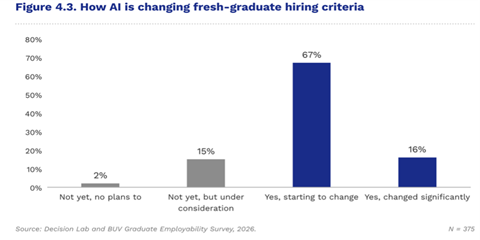
AI BEGINNING TO RESHAPE RECRUITMENT CRITERIA
Digital literacy is the only capability area in which fresh graduates meet employers’ expectations, according to a new report. Yet, it is also the standard rising fastest, as businesses increasingly expect new hires to use AI effectively in the workplace. Some 83 per cent of employers say AI has changed, or is beginning to change, their hiring criteria, while 94 per cent report higher expectations for digital and AI capabilities than they had two to three years ago.

INFRASTRUCTURE / CONSTRUCTION / LOGISTIC / PORT
ĐÀ NẴNG GREEN-LIGHTS US$105 MILLION THAI DEVELOPMENT DEAL
The central city has approved an investment proposal by Thailand’s WHA Group to develop infrastructure for the 400ha WHA Đà Nẵng Industrial Park project on two communes of Thăng Bình and Đồng Dương, with an investment of more than VNĐ2.7 trillion (US$105 million). The city said it approved WHA Industrial Development International's status as an investor in the project, which is expected to take place between 2027 and 2034.

VIETNAM ECONOMY INVESTMENT
MOBILE PHONE EXPORTS RISE 20% TO $51.8 BILLION IN FIRST NINE MONTHS
Exports of mobile phones and components rose 20 per cent year-on-year to nearly US$51.8 billion in the first nine months of 2026, with China, the US and Republic of Korea accounting for more than half of the total. Shipments to the three markets reached a combined $26.18 billion, or 50.6 per cent of total exports of the product group during the period, according to data from the Vietnam Department of Customs under the Ministry of Finance.

VIETNAM ECONOMY INVESTMENT
FRUIT AND VEGETABLE EXPORTS POISED TO HIT $10 BILLION IN 2026
Fruit and vegetable exports are on track to reach nearly US$10 billion in 2026, after rising 19.9 per cent year on year to nearly US$7.4 billion in the first nine months, driven by strong seasonal demand and abundant tropical fruit supplies. The Ministry of Agriculture and Environment said the growth reflected stronger international demand for fresh produce and processed agricultural products.
GARMENT / TEXTILE
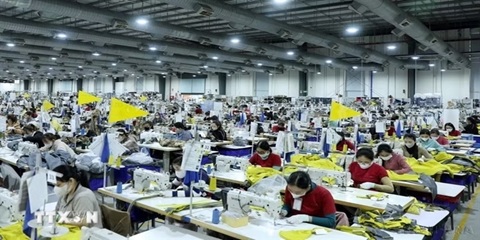
TEXTILE EXPORTS FACE DUAL CHALLENGES OF SUSTAINING ORDERS AND BOOSTING EFFICIENCY AMID GROWING COMPETITION
Data shows that the textile and garment sector maintained its growth momentum in the first nine months of this year. The industry's total export turnover reached an estimated US$35.721 billion in the first nine months of this year, up 3.3 per cent year-on-year. Despite posting encouraging export figures, Vietnamese textile and garment enterprises continue to navigate unpredictable market variables.
Events Sponsors






















