Want to be in the loop?
subscribe to
our notification
Business News
TEXTILE AND GARMENT SECTOR STANDS TO BENEFIT FROM EVFTA
The EU-Vietnam Free Trade Agreement will offer direct opportunities to Vietnam to upgrade its textile and garment sector. EU-MUTRAP team leader Claudio Dordi said that thanks to the EU-Vietnam Free Trade Agreement (EVFTA) expected to be signed next year, there will be ample opportunities to upgrade the value chain for the textile and garment sector as the EVFTA will provide tariff preferences to Vietnamese exporters to the EU.
Only “EVFTA originating” products will benefit from preferential tariffs for a maximum of seven years after entry into force.
To be “EVFTA originating,” EVFTA requires textile and garment producers to carry out two production stages in an EVFTA country: Vietnamese producers can upgrade their value chain, adding the “weaving or knitting” stage to the existing “cutting and sewing.”
At present, this operation is particularly challenging, as it requires financial resources and high-skilled workers to manage the high-technology machinery.
“However, for a maximum of seven years, the present 12 per cent duty on textile and garment imports from Vietnam will be removed and, taking into consideration the better legal environment for investment (indirect EVFTA opportunities), we may expect that the EU or other countries’ investors will provide the necessary technology (machinery) to support the upgrading of the garment value chain,” said Dordi, who is also professor of the International Trade Law of Italy’s Bocconi University.
“Investors from other countries may wish to relocate sufficient stages of textile and garment manufacturing to Vietnam to benefit from market access offered by the EVFTA,” Dordi said.
A number of domestic textile and garment firms like Thanh Cong Textile Garment Investment Trading Company and Phuong Anh JSC may benefit from the EVFTA as they have close production chains, from fibre, cloth, yarn, and buttons to finished products.
“We are expecting to benefit from the EVFTA. It is expected that our company’s garment exports to the EU markets will annually increase by 25-30 per cent, thanks to tariff slashes,” said Nguyen Duc Anh, head of Phuong Anh JSC’s Marketing Division producing garments and footwear products.
All materials are sourced from the company’s subsidiaries.
However, many textile and garment firms in Vietnam said they might not be able to enjoy the benefits of the EVFTA.
Nguyen Thanh Thuy, deputy general director of a Singaporean-Vietnamese garment and textile joint venture in Hanoi, told VIR that her company would not be able to benefit from tariff slashes under the EVFTA, though it is exporting products to several European nations.
“It is because the company imports almost all of its materials from Hong Kong, not from EVFTA members,” Thuy said.
Do Thi Nhung, representative from a South Korean garment firm in the southern province of Binh Duong, also told VIR that her firm imports materials from China, Taiwan, and Hong Kong, and products are exported to the US.
This means that this firm will not be able to enjoy tariff incentives under the EVFTA, Nhung said.
According to Dordi, the textile and garment sectors actually show huge differences between each other. Textiles are more capital-intensive, relying on technology and requiring highly skilled workers. It adds higher-value than the garment sector, which is labour-intensive and mainly reliant on low skilled workers.
Vietnam, rich in labour and limited in available capital, is deeply engaged in the low-end of garment manufacturing activities (the “cut and sew” stage of production).
EU-MUTRAP is a project aiming to support the Ministry of Industry and Trade in facilitating sustainable international trade and investment through improving policy making capacity, policy consultation, and the negotiation and implementation of related commitments, particularly vis-à-vis the EU.
Source: VIR
Related News

INFRASTRUCTURE / CONSTRUCTION / LOGISTIC / PORT
VIỆT NAM-CAMBODIA TRADE GATHERS PACE TOWARDS $20 BILLION TARGET
Trade between Việt Nam and Cambodia continues to grow, remaining a bright spot and a key pillar of bilateral cooperation as the two countries aim to raise two-way trade to US$20 billion in the coming years. After setting a record of more than $11.3 billion last year, bilateral trade reached about $8.7 billion in the first eight months of this year, up 8.3 per cent year on year.
TECHNOLOGY
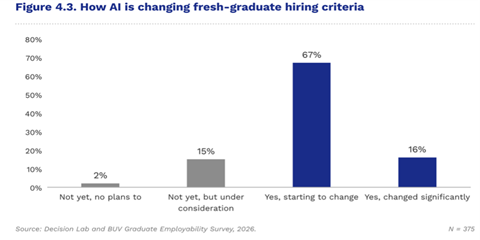
AI BEGINNING TO RESHAPE RECRUITMENT CRITERIA
Digital literacy is the only capability area in which fresh graduates meet employers’ expectations, according to a new report. Yet, it is also the standard rising fastest, as businesses increasingly expect new hires to use AI effectively in the workplace. Some 83 per cent of employers say AI has changed, or is beginning to change, their hiring criteria, while 94 per cent report higher expectations for digital and AI capabilities than they had two to three years ago.

INFRASTRUCTURE / CONSTRUCTION / LOGISTIC / PORT
ĐÀ NẴNG GREEN-LIGHTS US$105 MILLION THAI DEVELOPMENT DEAL
The central city has approved an investment proposal by Thailand’s WHA Group to develop infrastructure for the 400ha WHA Đà Nẵng Industrial Park project on two communes of Thăng Bình and Đồng Dương, with an investment of more than VNĐ2.7 trillion (US$105 million). The city said it approved WHA Industrial Development International's status as an investor in the project, which is expected to take place between 2027 and 2034.

VIETNAM ECONOMY INVESTMENT
MOBILE PHONE EXPORTS RISE 20% TO $51.8 BILLION IN FIRST NINE MONTHS
Exports of mobile phones and components rose 20 per cent year-on-year to nearly US$51.8 billion in the first nine months of 2026, with China, the US and Republic of Korea accounting for more than half of the total. Shipments to the three markets reached a combined $26.18 billion, or 50.6 per cent of total exports of the product group during the period, according to data from the Vietnam Department of Customs under the Ministry of Finance.

VIETNAM ECONOMY INVESTMENT
FRUIT AND VEGETABLE EXPORTS POISED TO HIT $10 BILLION IN 2026
Fruit and vegetable exports are on track to reach nearly US$10 billion in 2026, after rising 19.9 per cent year on year to nearly US$7.4 billion in the first nine months, driven by strong seasonal demand and abundant tropical fruit supplies. The Ministry of Agriculture and Environment said the growth reflected stronger international demand for fresh produce and processed agricultural products.
GARMENT / TEXTILE
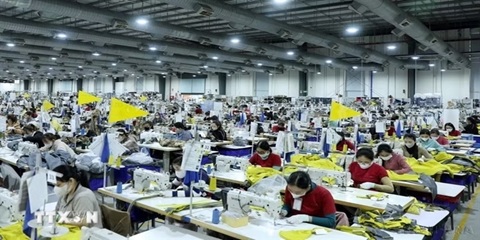
TEXTILE EXPORTS FACE DUAL CHALLENGES OF SUSTAINING ORDERS AND BOOSTING EFFICIENCY AMID GROWING COMPETITION
Data shows that the textile and garment sector maintained its growth momentum in the first nine months of this year. The industry's total export turnover reached an estimated US$35.721 billion in the first nine months of this year, up 3.3 per cent year-on-year. Despite posting encouraging export figures, Vietnamese textile and garment enterprises continue to navigate unpredictable market variables.
Events Sponsors






















