Want to be in the loop?
subscribe to
our notification
Business News
TEXTILE FIRMS CALL FOR FAVOURABLE POLICIES AMID PESSIMISTIC PROSPECTS
With a pessimistic outlook for the second half of 2022, textile firms are calling for favourable governmental policies to turn their situation around.
The Vietnam Textile and Apparel Association (VITAS) said that textile firms came out of the first seven months of the year relatively well.
Textile exports hit US$26.55 billion, up 16.5 per cent year-on-year. Textile trade surplus reached US$11.07 billion, 31 per cent higher than last year. The industry created 1.9 million jobs with an average monthly wage of VNĐ8.5 million.
However, VITAS was concerned that the situation would worsen in the next five months due to three unfavourable factors.
The first factor is the weakening demand of Việt Nam's trade partners.
Specifically, China, Japan and many other countries are tightening their preventive measures against COVID-19, causing trade disruptions.
High inflation in large importers such as the US and EU fuel the situation by eroding consumer buying power, further dragging down textile demand.
It is also worth noting that the Russia-Ukraine conflict will likely grow fiercer in the short term. With the conflict unabated, textile flows to the countries would remain low for several months.
Meanwhile, the recent depreciation of neighbouring currencies against the US dollar is putting Vietnamese exporters at a disadvantage.
The Chinese yuan has depreciated by 5.3 per cent and the Japanese yen by 16 per cent against the US dollar, whereas the Vietnamese đồng by just 1.8 per cent, eroding Vietnamese textiles' price advantages.
On top of that, the US's Uyghur Forced Labour Prevention Act (UFLP) and the EU's plan on carbon fees are expected to set the bar high on cotton. Vietnamese firms thus must overcome more administrative barriers to bring their cotton-derived products to those markets.
The second factor is labour shortages caused by shrinking urban labour forces. It is a burning issue because textiles is a labour-intensive industry.
Given many workers left cities during the pandemic and never returned, and others took early retirement, the industry is expected to remain slack for the rest of 2022.
The last factor is the faltering financial situation of many textile firms amid mounting costs. Notably, input costs have increased by around 25 per cent, and transport costs have tripled since early in the year.
As the firms were drained inside-out during the pandemic, mounting costs are expected to drive them further into economic woes, eroding profits and hampering expansion.
VITAS urged the Government to approve "The Development Strategy for Textile and Footwear Industries to 2030, with a Vision to 2035" to benefit better from free trade agreements (FTAs) as the strategy would pave the way for large industrial parks that meet FTAs standards.
VITAS also called for the abolition of several tariffs on imported goods used to manufacture exports since the tariffs are believed to discourage textile trade.
VITAS also called on tax authorities to process tax refunds faster to save textile firms from unnecessary costs. Many firms borrow money from banks to pay taxes. That means the more delays in tax refunds, the more interest the firms have to pay for their loans.
Additionally, VITAS called for amendments to the Law on Social Insurance to promote labour stability. The association said the current social insurance premium is so high that it encourages early retirement, resulting in volatile labour forces.
VITAS also urged the Government to discuss the facilitation of goods movements with its neighbouring countries to boost trade and keep firms well-informed about the UFLP Act.
Source: VNS
Related News

INFRASTRUCTURE / CONSTRUCTION / LOGISTIC / PORT
VIỆT NAM-CAMBODIA TRADE GATHERS PACE TOWARDS $20 BILLION TARGET
Trade between Việt Nam and Cambodia continues to grow, remaining a bright spot and a key pillar of bilateral cooperation as the two countries aim to raise two-way trade to US$20 billion in the coming years. After setting a record of more than $11.3 billion last year, bilateral trade reached about $8.7 billion in the first eight months of this year, up 8.3 per cent year on year.
TECHNOLOGY
AI BEGINNING TO RESHAPE RECRUITMENT CRITERIA
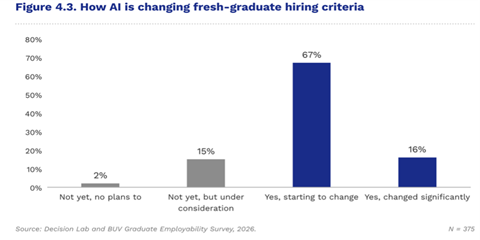
Digital literacy is the only capability area in which fresh graduates meet employers’ expectations, according to a new report. Yet, it is also the standard rising fastest, as businesses increasingly expect new hires to use AI effectively in the workplace. Some 83 per cent of employers say AI has changed, or is beginning to change, their hiring criteria, while 94 per cent report higher expectations for digital and AI capabilities than they had two to three years ago.

INFRASTRUCTURE / CONSTRUCTION / LOGISTIC / PORT
ĐÀ NẴNG GREEN-LIGHTS US$105 MILLION THAI DEVELOPMENT DEAL
The central city has approved an investment proposal by Thailand’s WHA Group to develop infrastructure for the 400ha WHA Đà Nẵng Industrial Park project on two communes of Thăng Bình and Đồng Dương, with an investment of more than VNĐ2.7 trillion (US$105 million). The city said it approved WHA Industrial Development International's status as an investor in the project, which is expected to take place between 2027 and 2034.

VIETNAM ECONOMY INVESTMENT
MOBILE PHONE EXPORTS RISE 20% TO $51.8 BILLION IN FIRST NINE MONTHS
Exports of mobile phones and components rose 20 per cent year-on-year to nearly US$51.8 billion in the first nine months of 2026, with China, the US and Republic of Korea accounting for more than half of the total. Shipments to the three markets reached a combined $26.18 billion, or 50.6 per cent of total exports of the product group during the period, according to data from the Vietnam Department of Customs under the Ministry of Finance.

VIETNAM ECONOMY INVESTMENT
FRUIT AND VEGETABLE EXPORTS POISED TO HIT $10 BILLION IN 2026
Fruit and vegetable exports are on track to reach nearly US$10 billion in 2026, after rising 19.9 per cent year on year to nearly US$7.4 billion in the first nine months, driven by strong seasonal demand and abundant tropical fruit supplies. The Ministry of Agriculture and Environment said the growth reflected stronger international demand for fresh produce and processed agricultural products.
GARMENT / TEXTILE
TEXTILE EXPORTS FACE DUAL CHALLENGES OF SUSTAINING ORDERS AND BOOSTING EFFICIENCY AMID GROWING COMPETITION
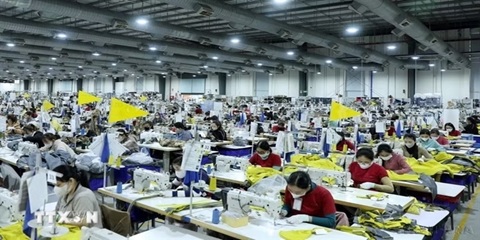
Data shows that the textile and garment sector maintained its growth momentum in the first nine months of this year. The industry's total export turnover reached an estimated US$35.721 billion in the first nine months of this year, up 3.3 per cent year-on-year. Despite posting encouraging export figures, Vietnamese textile and garment enterprises continue to navigate unpredictable market variables.
Events Sponsors






















