Want to be in the loop?
subscribe to
our notification
Business News
TEXTILE, FOOTWEAR COMPANIES CONFIDENT THEY CAN COPE WITH THIS COVID-19 WAVE TOO
Armed with experience from coping with the first wave of the COVID-19 epidemic, many textile and footwear enterprises are quietly confident they can alter their plans as required and find new markets to cope with the second.
The situation is worsening, according to most companies in the two sectors as the epidemic returns to Việt Nam and continues to rage in many countries around the world.
Lê Tiến Trường, general director of the Việt Nam National Textile and Garment Group, said that in the first six months of the year, though affected a great deal by the COVID-19 pandemic, his company sustained its operations and cash flows thanks to its decision to produce face masks and personal protective equipment (PPE).
But the situation would be very different in the second half since the demand for those products is shrinking rapidly, he said.
The fact that many manufacturers switched to producing PPE has seen supply shoot past demand, he added.
Since the global outbreak began in April, many Vietnamese garment and textile businesses have been told by their US and EU partners that they would temporarily stop taking delivery of goods.
Phạm Xuân Hồng, chairman of the HCM City Association of Garment Textile Embroidery and Knitting, said this was because governments in the US and EU have declared a state of emergency and tightened border controls due to the rapid spread of COVID-19.
“They have asked Vietnamese businesses to suspend delivery, including of those en route, until borders are reopened.”
He said the US and EU are two important textile export markets for the country, while half of all exports from HCM City go to the US and 15-18 per cent to the EU.
“Partners in these markets have announced the suspension of deliveries, meaning the market for textiles and garments has narrowed by nearly two-thirds.”
Trường said developing the domestic market is the most feasible way to survive the pandemic.
Though the domestic market accounts for only 10 per cent of the industry’s capacity and cannot fully mitigate the unemployment problem, it is still a solution, he said.
Support from the Government in the form of access to cheap credit and deferred tax payment is also imperative, he said.
Phan Thị Thanh Xuân, general secretary of the Việt Nam Leather, Footwear and Handbag Association (LEFASO), too said though the domestic market is very small, developing it would be a key solution amid the difficulties in exporting.
"The domestic market cannot replace the US and European markets, but for the moment it is good if producers can sell products somewhere.”
Nguyễn Văn Miêng, general director of the Nam Định Textile and Garment Corporation, said companies have restructured their markets to sustain jobs. In the past, his company produced 1,100 tonnes of yarn and exported 65 per cent of it, but has now cut it to 45 per cent.
It produces around 1.2 million metres of fabric per month, but this is likely to decrease to 23,000-300,000 metres in the last two quarters of the year, he said.
The company is seeking to expand its market for new products in the north and taking advantage of dyed fabrics to sell finished products and supply to garment companies, he said.
It also wants to strengthen the yarn - weaving - dyeing links so that all companies in the chain could benefit, he added.
Wait for EVFTA
The EU-Việt Nam Free Trade Agreement (EVFTA) that took effect on August 1 will reduce import taxes on Việt Nam's garment exports by more than 70 percentage points.
Vietnamese footwear and textile and apparel enterprises will benefit significantly from the EVFTA because of the tariff cuts, according to Bảo Việt Securities Joint Stock Company.
With most other countries that export textile and garments to the EU not having a trade deal with the bloc, the EVFTA would open a great opportunity for Việt Nam’s footwear, textile and garment exports if companies enterprises meet origin requirements, it added.
Source: VNS
Related News

INFRASTRUCTURE / CONSTRUCTION / LOGISTIC / PORT
VIỆT NAM-CAMBODIA TRADE GATHERS PACE TOWARDS $20 BILLION TARGET
Trade between Việt Nam and Cambodia continues to grow, remaining a bright spot and a key pillar of bilateral cooperation as the two countries aim to raise two-way trade to US$20 billion in the coming years. After setting a record of more than $11.3 billion last year, bilateral trade reached about $8.7 billion in the first eight months of this year, up 8.3 per cent year on year.
TECHNOLOGY
AI BEGINNING TO RESHAPE RECRUITMENT CRITERIA
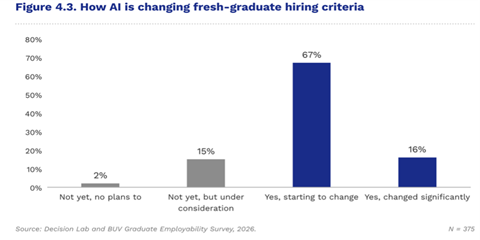
Digital literacy is the only capability area in which fresh graduates meet employers’ expectations, according to a new report. Yet, it is also the standard rising fastest, as businesses increasingly expect new hires to use AI effectively in the workplace. Some 83 per cent of employers say AI has changed, or is beginning to change, their hiring criteria, while 94 per cent report higher expectations for digital and AI capabilities than they had two to three years ago.

INFRASTRUCTURE / CONSTRUCTION / LOGISTIC / PORT
ĐÀ NẴNG GREEN-LIGHTS US$105 MILLION THAI DEVELOPMENT DEAL
The central city has approved an investment proposal by Thailand’s WHA Group to develop infrastructure for the 400ha WHA Đà Nẵng Industrial Park project on two communes of Thăng Bình and Đồng Dương, with an investment of more than VNĐ2.7 trillion (US$105 million). The city said it approved WHA Industrial Development International's status as an investor in the project, which is expected to take place between 2027 and 2034.

VIETNAM ECONOMY INVESTMENT
MOBILE PHONE EXPORTS RISE 20% TO $51.8 BILLION IN FIRST NINE MONTHS
Exports of mobile phones and components rose 20 per cent year-on-year to nearly US$51.8 billion in the first nine months of 2026, with China, the US and Republic of Korea accounting for more than half of the total. Shipments to the three markets reached a combined $26.18 billion, or 50.6 per cent of total exports of the product group during the period, according to data from the Vietnam Department of Customs under the Ministry of Finance.

VIETNAM ECONOMY INVESTMENT
FRUIT AND VEGETABLE EXPORTS POISED TO HIT $10 BILLION IN 2026
Fruit and vegetable exports are on track to reach nearly US$10 billion in 2026, after rising 19.9 per cent year on year to nearly US$7.4 billion in the first nine months, driven by strong seasonal demand and abundant tropical fruit supplies. The Ministry of Agriculture and Environment said the growth reflected stronger international demand for fresh produce and processed agricultural products.
GARMENT / TEXTILE
TEXTILE EXPORTS FACE DUAL CHALLENGES OF SUSTAINING ORDERS AND BOOSTING EFFICIENCY AMID GROWING COMPETITION
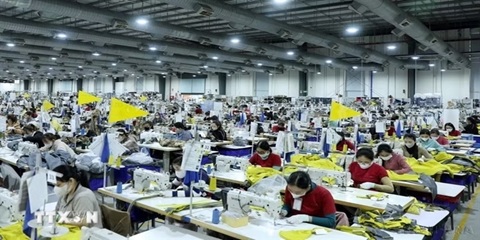
Data shows that the textile and garment sector maintained its growth momentum in the first nine months of this year. The industry's total export turnover reached an estimated US$35.721 billion in the first nine months of this year, up 3.3 per cent year-on-year. Despite posting encouraging export figures, Vietnamese textile and garment enterprises continue to navigate unpredictable market variables.
Events Sponsors






















