Want to be in the loop?
subscribe to
our notification
Business News
TEXTILE-GARMENT SECTOR URGED TO EMBRACE DIGITAL TRANSFORMATION
Garment and textile companies need to develop a strategy for digital transformation to ensure their survival and future development, a seminar heard in HCM City yesterday.
Brad Park of Global Dyeing Company said consumers were demanding more and changing quickly.
Production needs to follow consumers’ demand so that production and delivery times are reduced, according to Park.
Besides, consumers also pay closer attention to companies’ corporate social responsibility and environmental protection.
Companies must work to satisfy customers’ demand, reduce the cost, waste and lead time, and improve quality and design, he said.
“Digital transformation would help enterprises respond rapidly to the market,” he said.
"Firms need to identify which processes they need to transform and map out an optimal digital transformation process with the support of technology solution providers.
"But besides improvement in technology, firms also need to improve human resources and pay more attention to environmental protection," he said.
Sam Lee of Inteco, a company that offers consultancy for factory automation, said businesses in many countries were adopting smart manufacturing to replace human workers in a variety of operations.
According to Lee, garment and textile is one of the key industries in Việt Nam with increasing exports in recent years, but manufacturing and exports mainly based on the CMT (cut-make-trim) model, while more advanced business models like Original Equipment Manufacturer (OEM) and Original Design Manufacturer (ODM) remain modest.
Manufacturing based on the CMT model requires a large number of workers, resulting in high production costs, and automation will help reduce them.
Lee spoke about the success achieved by South Korea’s Hansae Co Ltd., an OEM manufacturer and exporter of apparel, saying automation had helped the company increase its revenues strongly between 2016 and 2019.
Park said Việt Nam’s textile industry had great potential for development.
With its experience in global operations, his company wants to join hands with the Việt Nam Textile and Apparel Association to “lead innovation for smart, green manufacturing in Việt Nam.”
“Transform digitally or die. We must join hands to develop together.”
The seminar also discussed the online exhibition trend and B2B biz-matching.
Jun Chol, director of the Coex Vietnam representative office, said COVID-19 had greatly impacted the business-to-business exhibition industry across the world.
Virtual exhibitions offered new opportunities for manufacturers, eliminating geographical barriers so that companies could reach a much larger audience, he said.
But physical exhibitions could not be replaced by online ones, and would resume after the pandemic, he said. There would be a rising trend of online-offline models, he said.
Themed Digital transformation in the textile and garment sector to overcome the COVID-19 pandemic, the two-day seminar was organised by VITAS and the Korea Institute of Industrial Technology.
Today the seminar will discuss virtual fashion and 3D design.
The event seeks to share new global technological trends and enhance co-operation between the Korean and Vietnamese garment and textile industries.
Source: VNS
Related News

INFRASTRUCTURE / CONSTRUCTION / LOGISTIC / PORT
VIỆT NAM-CAMBODIA TRADE GATHERS PACE TOWARDS $20 BILLION TARGET
Trade between Việt Nam and Cambodia continues to grow, remaining a bright spot and a key pillar of bilateral cooperation as the two countries aim to raise two-way trade to US$20 billion in the coming years. After setting a record of more than $11.3 billion last year, bilateral trade reached about $8.7 billion in the first eight months of this year, up 8.3 per cent year on year.
TECHNOLOGY
AI BEGINNING TO RESHAPE RECRUITMENT CRITERIA
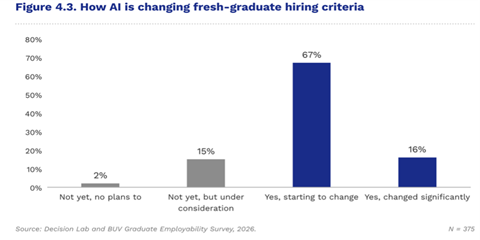
Digital literacy is the only capability area in which fresh graduates meet employers’ expectations, according to a new report. Yet, it is also the standard rising fastest, as businesses increasingly expect new hires to use AI effectively in the workplace. Some 83 per cent of employers say AI has changed, or is beginning to change, their hiring criteria, while 94 per cent report higher expectations for digital and AI capabilities than they had two to three years ago.
INFRASTRUCTURE / CONSTRUCTION / LOGISTIC / PORT
ĐÀ NẴNG GREEN-LIGHTS US$105 MILLION THAI DEVELOPMENT DEAL
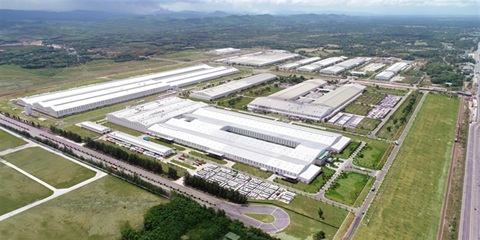
The central city has approved an investment proposal by Thailand’s WHA Group to develop infrastructure for the 400ha WHA Đà Nẵng Industrial Park project on two communes of Thăng Bình and Đồng Dương, with an investment of more than VNĐ2.7 trillion (US$105 million). The city said it approved WHA Industrial Development International's status as an investor in the project, which is expected to take place between 2027 and 2034.
VIETNAM ECONOMY INVESTMENT
MOBILE PHONE EXPORTS RISE 20% TO $51.8 BILLION IN FIRST NINE MONTHS
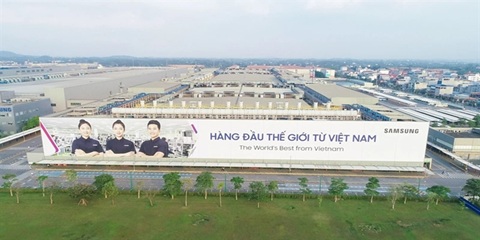
Exports of mobile phones and components rose 20 per cent year-on-year to nearly US$51.8 billion in the first nine months of 2026, with China, the US and Republic of Korea accounting for more than half of the total. Shipments to the three markets reached a combined $26.18 billion, or 50.6 per cent of total exports of the product group during the period, according to data from the Vietnam Department of Customs under the Ministry of Finance.

VIETNAM ECONOMY INVESTMENT
FRUIT AND VEGETABLE EXPORTS POISED TO HIT $10 BILLION IN 2026
Fruit and vegetable exports are on track to reach nearly US$10 billion in 2026, after rising 19.9 per cent year on year to nearly US$7.4 billion in the first nine months, driven by strong seasonal demand and abundant tropical fruit supplies. The Ministry of Agriculture and Environment said the growth reflected stronger international demand for fresh produce and processed agricultural products.
GARMENT / TEXTILE
TEXTILE EXPORTS FACE DUAL CHALLENGES OF SUSTAINING ORDERS AND BOOSTING EFFICIENCY AMID GROWING COMPETITION
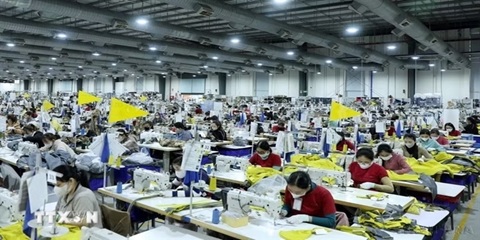
Data shows that the textile and garment sector maintained its growth momentum in the first nine months of this year. The industry's total export turnover reached an estimated US$35.721 billion in the first nine months of this year, up 3.3 per cent year-on-year. Despite posting encouraging export figures, Vietnamese textile and garment enterprises continue to navigate unpredictable market variables.
Events Sponsors






















