Want to be in the loop?
subscribe to
our notification
Business News
TEXTILE INDUSTRY ATTRACTS INVESTMENT IN RAW MATERIAL PRODUCTION
With new tariff policies, synthetic fiber products currently require proof of origin. Therefore, to boost export revenue, the only way for the Vietnamese textile industry is to enhance automation and raise the localization rate.
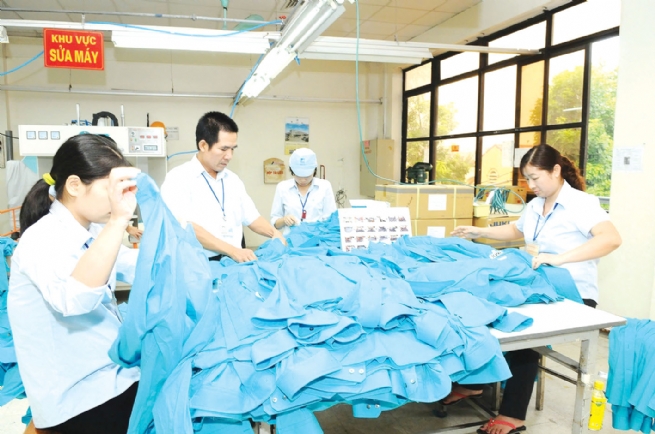
Dr. Le Tien Truong, Chairman of the Board of Directors of the Vietnam National Textile and Garment Group (Vinatex), said that in recent years, the trend of producing synthetic fiber products has been rising, with polyester staple fiber (PSF) being a key raw material for chief value cotton (CVC) and polyester (PE) products. While the demand for PSF was about 100,000 tons per year in 2020, it is expected to reach 550,000 tons by 2025.
Recently, to build sustainability in the chemical fiber textile supply chain and aim for proactive domestic sourcing, higher added value, and greater competitiveness in the global market, Vietnam National Textile and Garment Group (Vinatex) and the Vietnam National Industry–Energy Group (Petrovietnam) have cooperated based on a product consumption agreement between PetroVietnam Petrochemical and Textile Fiber Joint Stock Company (VNPoly) and Vinatex’s member units.
According to Mr. Tran Huy Thu, General Director of VNPoly, based on each party’s existing capacity and experience, they agreed to sign a principle contract for the consumption of PSF products produced by VNPoly. VNPoly cooperated with Vinatex to select 1–2 post-sewing factories to test spinning, weaving, and dyeing VNPoly products to evaluate their quality before supplying to PSF fiber customers, with a commitment to offer preferential policies to support testing in line with market prices.
Research data shows that Vietnam's demand for PSF products is about 492,000 tons per year, most of which must be imported. Meanwhile, textile products exported to the U.S. account for 20% of the country's total textile export output. Therefore, localizing raw materials for Vietnam’s textile industry has become urgent, especially in light of U.S. tariff policies on imported textile products. The cooperation between VNPoly and Vinatex’s subsidiaries aims to enhance the competitiveness of all parties in both domestic and international markets.
Mr. Le Tien Truong affirmed that 12 Vinatex enterprises attended the signing ceremony for practical benefits and long-term, substantive cooperation. He noted that the actual demand for PSF fiber in Vietnam has grown significantly, along with a rising trend in the use of PSF blended yarn. Vinatex enterprises have a strong need for VNPoly’s PSF supply to meet origin requirements in major markets such as the United States and Europe.
“Since 2022, fiber enterprises have had to shift from producing 100% cotton products to manufacturing CVC and PE products. Therefore, the demand for PSF products is a practical need for Vinatex's fiber manufacturers. In addition, under new tariff policies, synthetic fiber products must now prove their origin. Since Vietnam cannot produce cotton, it must ensure over 50% domestic content to meet technical requirements of fabric producers. As a result, the only way to increase export revenue is to boost automation and expand the domestic raw material supply,” Mr. Truong said.
Although demand is high, the implementation still faces challenges as Vinatex cannot purchase fiber at prices higher than the market, while Chinese fiber remains relatively competitive. Currently, 70% of Vinatex's yarn output must meet "dyeing guarantee" commitments, ensuring consistent yarn quality during the fabric dyeing process. Therefore, close coordination is essential between fiber suppliers and yarn manufacturers to meet strict requirements on the post-sale dyeing structure of the yarn.
Faced with strict requirements on the origin of raw materials for textile production, Vinatex leaders suggested that businesses should classify and clearly identify fabric types that can be sourced domestically to reduce reliance on imports. They emphasized the need to fully utilize local material sources to prioritize the use of imported fabrics more strategically. At the same time, enterprises are encouraged to collaborate with customers to diversify imported raw material sources and accelerate the adoption of digital solutions for product origin traceability.
Speaking at the recent conference between the Prime Minister and heads of Vietnam’s overseas diplomatic missions, Mr. Truong Van Cam, Vice President and General Secretary of the Vietnam Textile and Apparel Association (VITAS), emphasized the need to strengthen the internal capacity of the textile and garment industry, including human resource training.
In the first six months of 2025, the industry's total export turnover is estimated at US$21.8 billion, up 10.6%; import turnover is estimated at US$12.7 billion, up 9.3%, resulting in a trade surplus of US$9.1 billion. For the whole year, export turnover is forecast to reach US$46–47 billion.
Source: VCCI
Related News

INFRASTRUCTURE / CONSTRUCTION / LOGISTIC / PORT
VIỆT NAM-CAMBODIA TRADE GATHERS PACE TOWARDS $20 BILLION TARGET
Trade between Việt Nam and Cambodia continues to grow, remaining a bright spot and a key pillar of bilateral cooperation as the two countries aim to raise two-way trade to US$20 billion in the coming years. After setting a record of more than $11.3 billion last year, bilateral trade reached about $8.7 billion in the first eight months of this year, up 8.3 per cent year on year.
TECHNOLOGY
AI BEGINNING TO RESHAPE RECRUITMENT CRITERIA
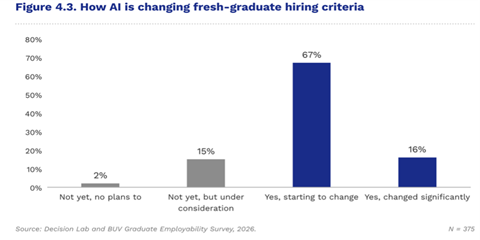
Digital literacy is the only capability area in which fresh graduates meet employers’ expectations, according to a new report. Yet, it is also the standard rising fastest, as businesses increasingly expect new hires to use AI effectively in the workplace. Some 83 per cent of employers say AI has changed, or is beginning to change, their hiring criteria, while 94 per cent report higher expectations for digital and AI capabilities than they had two to three years ago.
INFRASTRUCTURE / CONSTRUCTION / LOGISTIC / PORT
ĐÀ NẴNG GREEN-LIGHTS US$105 MILLION THAI DEVELOPMENT DEAL
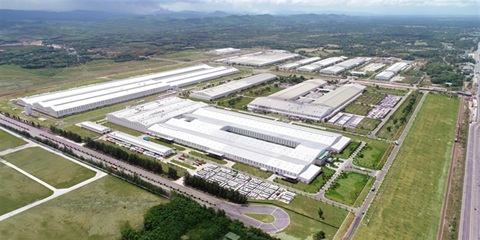
The central city has approved an investment proposal by Thailand’s WHA Group to develop infrastructure for the 400ha WHA Đà Nẵng Industrial Park project on two communes of Thăng Bình and Đồng Dương, with an investment of more than VNĐ2.7 trillion (US$105 million). The city said it approved WHA Industrial Development International's status as an investor in the project, which is expected to take place between 2027 and 2034.
VIETNAM ECONOMY INVESTMENT
MOBILE PHONE EXPORTS RISE 20% TO $51.8 BILLION IN FIRST NINE MONTHS
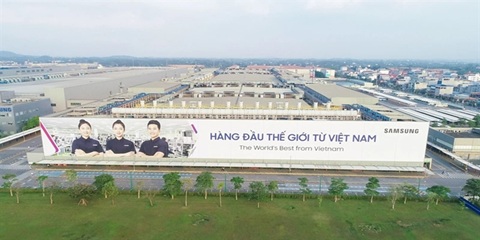
Exports of mobile phones and components rose 20 per cent year-on-year to nearly US$51.8 billion in the first nine months of 2026, with China, the US and Republic of Korea accounting for more than half of the total. Shipments to the three markets reached a combined $26.18 billion, or 50.6 per cent of total exports of the product group during the period, according to data from the Vietnam Department of Customs under the Ministry of Finance.
VIETNAM ECONOMY INVESTMENT
FRUIT AND VEGETABLE EXPORTS POISED TO HIT $10 BILLION IN 2026
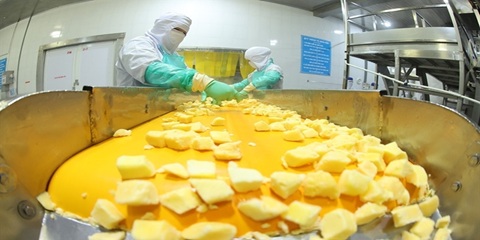
Fruit and vegetable exports are on track to reach nearly US$10 billion in 2026, after rising 19.9 per cent year on year to nearly US$7.4 billion in the first nine months, driven by strong seasonal demand and abundant tropical fruit supplies. The Ministry of Agriculture and Environment said the growth reflected stronger international demand for fresh produce and processed agricultural products.
GARMENT / TEXTILE
TEXTILE EXPORTS FACE DUAL CHALLENGES OF SUSTAINING ORDERS AND BOOSTING EFFICIENCY AMID GROWING COMPETITION
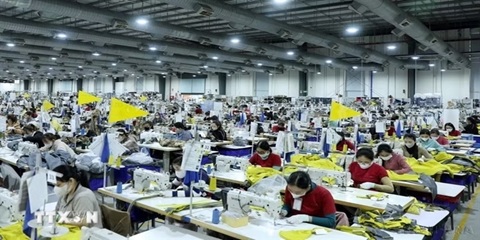
Data shows that the textile and garment sector maintained its growth momentum in the first nine months of this year. The industry's total export turnover reached an estimated US$35.721 billion in the first nine months of this year, up 3.3 per cent year-on-year. Despite posting encouraging export figures, Vietnamese textile and garment enterprises continue to navigate unpredictable market variables.
Events Sponsors






















