Want to be in the loop?
subscribe to
our notification
Business News
TEXTILE STOCKS LOOK POSITIVE AMID GLOBAL SUPPLY CHAIN SHIFTS
The US may further outsource textile production, benefiting countries like Việt Nam.
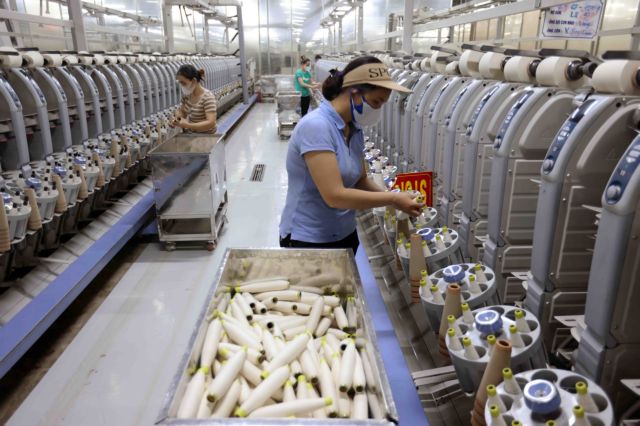
Workers at a yarn production line. — VNA/VNS Photo
HÀ NỘI — Việt Nam’s textile and garment sector is experiencing a significant upswing, driven by favourable global dynamics and robust export performance.
Recent statements from the US President Donald Trump, suggesting a shift in American industrial focus away from traditional manufacturing, have been interpreted by investors as an opportunity for Việt Nam to expand its role in global apparel supply chains.
Speaking in New Jersey, Trump emphasised that the US should concentrate on advanced industries such as artificial intelligence and military equipment, rather than traditional manufacturing like apparel.
This perspective has been perceived as an indication that the US may further outsource textile production, benefiting countries like Việt Nam.
The Vietnamese stock market responded positively to these developments.
On May 26, shares of several textile companies, including Vinatex (VGT), TNG Investment and Trading JSC (TNG), Hòa Thọ Textile & Garment JSC (HTG), Thành Công Textile Garment Investment Trading JSC (TCM), Sông Hồng Garment (MSH) and GIlimex (GIL), hit their daily biggest gains.
The momentum continued into the following day, with HTG maintaining its upper limit and other stocks like TNG, VGT and TCM posting gains exceeding 6 per cent. This surge reflects renewed investor confidence in the sector's growth prospects
Việt Nam’s position as the world's second-largest textile exporter, trailing only China, underscores its significance in the global market.
According to the General Department of Việt Nam Customs, the country's textile and garment exports reached US$8.69 billion in the first quarter of 2025, with the US accounting for 43.6 per cent of this figure.
April saw a 15 per cent year-over-year increase, totalling $3.64 billion.
Several factors contribute to this positive outlook.
Major US retailers are reportedly facing low inventory levels, particularly for fall and winter apparel, with stock sufficient for only six to eight weeks.
The decline in Chinese market share in Japan and South Korea may be attributed to increased scrutiny of tax evasion practices by Chinese companies amid ongoing trade negotiations between the US and its trading partners.
Simultaneously, competitors like Bangladesh and Pakistan are grappling with energy shortages and political instability, hindering their production capabilities.
This scenario positions Việt Nam as a reliable alternative for international buyers seeking stable supply chains.
Domestic garment production also remains robust, as evidenced by the Industrial Production Index (IIP) and labour indices consistently showing upward trends without any months of contraction since the beginning of this year.
Typically, textile production experiences one or two months of contraction in the first quarter due to seasonal low demand and holidays.
Previously, during the May seminar organised by Vinatex, Dr Lê Tiến Trường, chairman of Vinatex's Board of Directors, highlighted the significant opportunities for orders in the textile industry during the first six months of the year, suggesting that this positive trend could extend through the end of the third quarter of 2025.
Trường also said that between now and July 10, the US may introduce temporary countervailing tax policies for Việt Nam, pending the outcomes of negotiations between the Ministry of Industry and Trade and the government.
Even though orders in Q3 could remain strong due to low US inventories, Q4 may experience a decline of around 10 per cent due to reduced consumer demand in the US, he added.
Industry experts suggest that the current market conditions could herald a new growth phase for Vietnamese textile stocks.
Technical analyses indicate that these stocks have surpassed medium-term resistance levels, and any supportive international policies or increased order volumes could further propel their ascent.
However, challenges persist. A recent increase in domestic electricity prices, effective from May 10, has raised production costs, particularly affecting yarn manufacturers with narrow profit margins.
Companies must navigate these cost pressures while capitalising on emerging global opportunities. — BIZHUB/VNS
Source: VNS
Related News

INFRASTRUCTURE / CONSTRUCTION / LOGISTIC / PORT
VIỆT NAM-CAMBODIA TRADE GATHERS PACE TOWARDS $20 BILLION TARGET
Trade between Việt Nam and Cambodia continues to grow, remaining a bright spot and a key pillar of bilateral cooperation as the two countries aim to raise two-way trade to US$20 billion in the coming years. After setting a record of more than $11.3 billion last year, bilateral trade reached about $8.7 billion in the first eight months of this year, up 8.3 per cent year on year.
TECHNOLOGY
AI BEGINNING TO RESHAPE RECRUITMENT CRITERIA
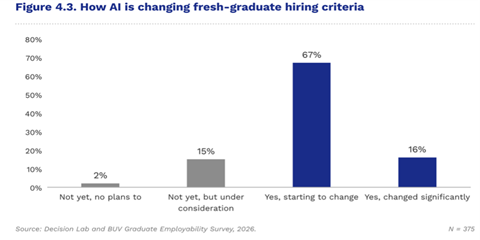
Digital literacy is the only capability area in which fresh graduates meet employers’ expectations, according to a new report. Yet, it is also the standard rising fastest, as businesses increasingly expect new hires to use AI effectively in the workplace. Some 83 per cent of employers say AI has changed, or is beginning to change, their hiring criteria, while 94 per cent report higher expectations for digital and AI capabilities than they had two to three years ago.

INFRASTRUCTURE / CONSTRUCTION / LOGISTIC / PORT
ĐÀ NẴNG GREEN-LIGHTS US$105 MILLION THAI DEVELOPMENT DEAL
The central city has approved an investment proposal by Thailand’s WHA Group to develop infrastructure for the 400ha WHA Đà Nẵng Industrial Park project on two communes of Thăng Bình and Đồng Dương, with an investment of more than VNĐ2.7 trillion (US$105 million). The city said it approved WHA Industrial Development International's status as an investor in the project, which is expected to take place between 2027 and 2034.

VIETNAM ECONOMY INVESTMENT
MOBILE PHONE EXPORTS RISE 20% TO $51.8 BILLION IN FIRST NINE MONTHS
Exports of mobile phones and components rose 20 per cent year-on-year to nearly US$51.8 billion in the first nine months of 2026, with China, the US and Republic of Korea accounting for more than half of the total. Shipments to the three markets reached a combined $26.18 billion, or 50.6 per cent of total exports of the product group during the period, according to data from the Vietnam Department of Customs under the Ministry of Finance.

VIETNAM ECONOMY INVESTMENT
FRUIT AND VEGETABLE EXPORTS POISED TO HIT $10 BILLION IN 2026
Fruit and vegetable exports are on track to reach nearly US$10 billion in 2026, after rising 19.9 per cent year on year to nearly US$7.4 billion in the first nine months, driven by strong seasonal demand and abundant tropical fruit supplies. The Ministry of Agriculture and Environment said the growth reflected stronger international demand for fresh produce and processed agricultural products.
GARMENT / TEXTILE
TEXTILE EXPORTS FACE DUAL CHALLENGES OF SUSTAINING ORDERS AND BOOSTING EFFICIENCY AMID GROWING COMPETITION
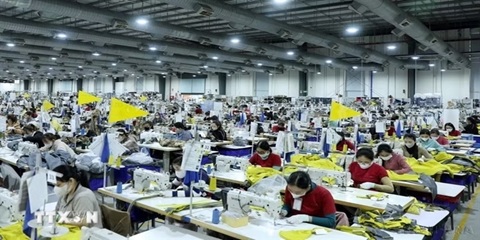
Data shows that the textile and garment sector maintained its growth momentum in the first nine months of this year. The industry's total export turnover reached an estimated US$35.721 billion in the first nine months of this year, up 3.3 per cent year-on-year. Despite posting encouraging export figures, Vietnamese textile and garment enterprises continue to navigate unpredictable market variables.
Events Sponsors






















