Want to be in the loop?
subscribe to
our notification
Business News
THE RECOVERY OF HOSPITALITY
In Asia-Pacific, international arrivals continue to grow as border restrictions ease. Most countries have opened borders and lifted quarantine requirements for vaccinated travellers. However, the reopening across the region has been segmented, achieving different results in different countries.
Markets like Vietnam and Thailand have felt the knock of China’s continued pandemic policy, given it is a key source for both countries. Before the pandemic, China was the largest outbound travel market in the world, with as many as 150 million overseas trips in 2019. Much of the recovery in Southeast Asia will depend on the reopening of China, and Vietnam is no exception.
Major international travel markets have already reached volumes similar to 2019, except for the Southeast Asian market, where occupancies are 70 per cent of the 2019 level.
Vietnam has only achieved 60 per cent of the 2019 occupancy level, and the return of international guests was underwhelming in the first 10 months of 2022, with only 2.3 million arrivals.
With the absence of the Chinese, South Korea has become Vietnam’s largest source of international arrivals. In the same period, they accounted for 620,000, or 26 per cent, of international arrivals. There have been strong upticks from new source markets like India with 82,000 arrivals between January and October, with over 20,000 arrivals in October alone, increasing 25.8 per cent compared to the same period in 2019.
The domestic demand is driving tourism recovery in Vietnam. By October, there were 91.8 million domestic arrivals, exceeding the 85 million in 2019.
Operations are still fragmented in Vietnam and certain locations perform better than others. The recovery of coastal resorts has been slower than anticipated, especially for those that rely on the international demand.
For example, Nha Trang and Cam Ranh only achieved 45 per cent of 2019 occupancy and Danang has only achieved half of the 2019 level. Several hotels in Ho Chi Minh City and Hanoi have recovered well with encouraging results from business travellers, long-term guests, and business groups.
However, room rates in Hanoi and Ho Chi Minh City are still 15-20 per cent less than 2019 levels. Upscale to luxury properties have recovered better. The luxury segment was resilient throughout the pandemic and continues to perform well, with rate recovery outperforming the overall market.
In Vietnam, there are many projects under construction, which will pressure rates and occupancies. In the next three years, 47,000 hotel and condotel keys are expected, equal to 30 per cent of the current base. This large pipeline will result in greater competition.
Large, mass-market products with great room inventories will be more challenging. These properties appeal to groups and are reliant on the return of Chinese travellers and other key source markets. They also compete merely on price.
Hotel M&A activities
As the market recovers, hotel investment volumes in Asia-Pacific have shown strong signs of activity. There were 459 deals in 2021 worth a total of $14.9 billion, surpassing the pre-pandemic five-year average. From 2022 onwards, investor appetite will remain robust as the gap between sellers and buyers appears to have narrowed. Well-located, high-quality hotel assets in key markets will remain keenly coveted.
Regionally, South Korea, China, and Australia have attracted the most capital. However, developing markets like Vietnam have been less popular because of a lack of quality assets for sale in main cities. Interestingly, Japan has continued to garner strong attention, especially after its recent reopening.
While investment confidence is returning alongside pent-up travel demand, the market outlook is still clouded by downside risks, including uncertainty surrounding border policies in China, the increasing cost of air travel and flight times, and rising inflation in most source markets, regardless of the hotel sector’s claim to adopt quickly with agile pricing to work within the inflationary climate.
Hotel mergers or acquisitions have been relatively quiet in Vietnam over the past two years due to the lack of quality products. In 2022, transaction volume slowly picked up, with three notable resort transactions. However, assets are still relatively expensive, with a large difference between owners’ expectations and the attitudes foreign investors have towards risk and reward.
What investors want
Properties in Ho Chi Minh City and Hanoi are top-of-mind investment targets for foreign and local investors because they have delivered solid occupancies and rates post-pandemic because of the lack of new inventories. There is still high demand for city hotels but is limited to the properties with the right inventories, facilities, and construction quality.
Interest comes from private equity funds, local and foreign high-net-worth individuals, and corporates, which usually opt for third-party management companies like internationally recognised brands.
Resort properties are also interesting to hotel investors. To stand out, these properties must have good beach access, decent design, and the correct mix of facilities. These are considered ‘trophy assets’ and encourage purchasing under recent market uncertainties.
Looking forward, environmental, social, and governance compliance is increasingly important in the hotel sector. Rising energy costs, a shift in preferences towards sustainable tourism and green accommodation, and the growing demand for commitments towards the environment and climate are accelerating the sector’s focus on sustainability. Properties that properly embrace sustainability have an advantage over other market players to attract foreign investments.
The recent market adjustments will delay the completion of several projects. In the upcoming months, there may be increased opportunities to acquire assets which have not been available previously, and will be attractive to foreign and local investors.
There is increased interest from opportunistic foreign investors who want to capitalise on Vietnam’s current credit crunch and current downturn. They are sitting on large pools of capital and are waiting for the right opportunities in which to invest.
Source: VIR
Related News

CHARITY / EXHIBITION / OTHER EVENTS
INVESTMENT OPPORTUNITIES IN CA MAU PROVINCE: 96 PROJECTS AND 20 STRATEGIC PROJECTS
We are pleased to share with you information on investment projects currently seeking investors in Ca Mau Province. Should your esteemed company or association be interested, we kindly invite you to review the project information and complete the registration form via the links provided. The Ho Chi Minh City Investment and Trade Promotion Centre (ITPC) will consolidate the expressions of interest and facilitate connections with the leadership of Ca Mau Province at a meeting tentatively scheduled for 13 November 2026 in Ho Chi Minh City.
MEMBER CORNER / PROMOTIONS
BẰNG KIỀU LIVESHOW - A SYMPHONY OF LOVE UNDER THE GOLDEN GLOW
A masterclass in live music that takes the audience on a soulful journey through immortal love songs, guided by the peerless artistry and emotive storytelling of renowned singer Bằng Kiều. The highlight of the night is his seamless musical chemistry with special guest Triệu Hồng Ngọc, promising passionate and deeply resonant duets inside the magnificent Grand Ballroom.
INFRASTRUCTURE / CONSTRUCTION / LOGISTIC / PORT
ĐÀ NẴNG GREEN-LIGHTS US$105 MILLION THAI DEVELOPMENT DEAL
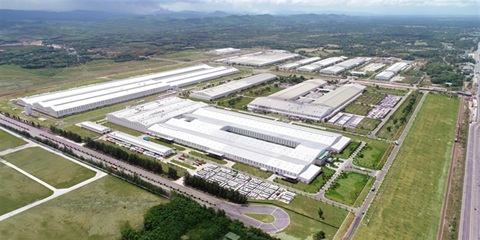
The central city has approved an investment proposal by Thailand’s WHA Group to develop infrastructure for the 400ha WHA Đà Nẵng Industrial Park project on two communes of Thăng Bình and Đồng Dương, with an investment of more than VNĐ2.7 trillion (US$105 million). The city said it approved WHA Industrial Development International's status as an investor in the project, which is expected to take place between 2027 and 2034.
VIETNAM ECONOMY INVESTMENT
MOBILE PHONE EXPORTS RISE 20% TO $51.8 BILLION IN FIRST NINE MONTHS
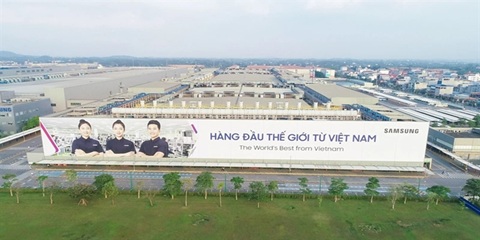
Exports of mobile phones and components rose 20 per cent year-on-year to nearly US$51.8 billion in the first nine months of 2026, with China, the US and Republic of Korea accounting for more than half of the total. Shipments to the three markets reached a combined $26.18 billion, or 50.6 per cent of total exports of the product group during the period, according to data from the Vietnam Department of Customs under the Ministry of Finance.
INFRASTRUCTURE / CONSTRUCTION / LOGISTIC / PORT
VIỆT NAM-CAMBODIA TRADE GATHERS PACE TOWARDS $20 BILLION TARGET
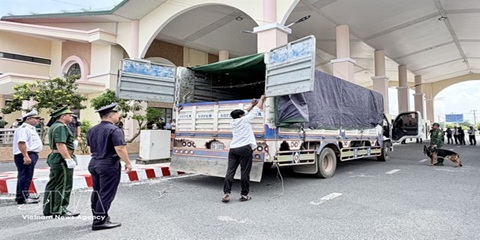
Trade between Việt Nam and Cambodia continues to grow, remaining a bright spot and a key pillar of bilateral cooperation as the two countries aim to raise two-way trade to US$20 billion in the coming years. After setting a record of more than $11.3 billion last year, bilateral trade reached about $8.7 billion in the first eight months of this year, up 8.3 per cent year on year.
VIETNAM ECONOMY INVESTMENT
FRUIT AND VEGETABLE EXPORTS POISED TO HIT $10 BILLION IN 2026
Fruit and vegetable exports are on track to reach nearly US$10 billion in 2026, after rising 19.9 per cent year on year to nearly US$7.4 billion in the first nine months, driven by strong seasonal demand and abundant tropical fruit supplies. The Ministry of Agriculture and Environment said the growth reflected stronger international demand for fresh produce and processed agricultural products.
Events Sponsors






















