Want to be in the loop?
subscribe to
our notification
Business News
TILAPIA EXPORTS TO BRAZIL SURGE 222 TIMES IN EIGHT MONTHS
This dramatic spike primarily reflected a massive expansion in export volume from a very low baseline in the same period last year.
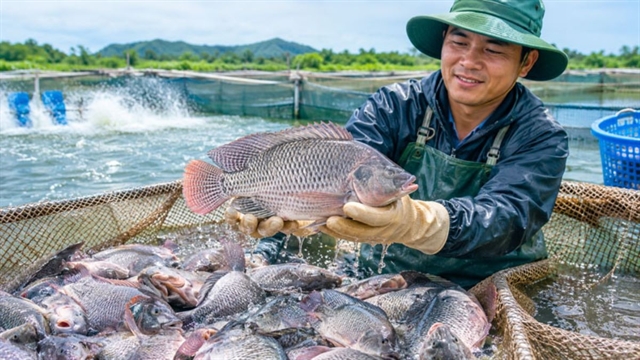
Việt Nam's tilapia exports reached $90 million in the first eight months of the year, a 43 per cent increase compared to the same period last year. — VNA/VNS Photo
HÀ NỘI — Brazil is emerging as a key market for Vietnamese tilapia with import value surging sharply by more than 222 times to US$44 million in the first eight months of the year.
According to the Vietnam Association of Seafood Exporters and Producers (VASEP), in August, exports totaled $4 million. The cumulative figure for the eight-month period reached $44 million, a surge of more than 222 times the level recorded a year earlier.
This dramatic spike primarily reflected a massive expansion in export volume from a very low baseline in the same period last year.
With $44 million in sales, Brazil currently accounts for nearly 49 per cent of Việt Nam's total tilapia export value for the eight-month period, establishing itself as a vital market for the industry.
Across all export markets, tilapia exports reached $90 million in the first eight months of the year, a 43 per cent increase compared to the same period last year. In August alone, export turnover for this fish reached $11 million.
Japan recorded a 77 per cent increase, with export value reaching $2 million. Notably, brackish-water tilapia has begun to make inroads into the sushi and sashimi segments of this market.
Exports to CPTPP countries reached $6 million, a 50 per cent increase, with significant contributions from Japan and Mexico.
In the Middle East, exports to Saudi Arabia reached $7 million, up 23 per cent, while the EU market accounted for $4 million, up 7 per cent, with Belgium serving as a key driver of this growth.
Exports to the US totaled $21 million, a decline of 48 per cent. Purchasing power in this market has yet to show a clear recovery, while relatively high inventory levels have made importers more cautious regarding new orders.
The global tilapia market is projected to grow from $15.5 billion in 2025 to approximately $21 billion by 2035, an increase of 35.5 per cent. The compound annual growth rate (CAGR) for the 2025-35 period is expected to reach 3.1 per cent.
Tilapia has the potential to serve as an alternative raw material in specific market segments, provided it meets requirements regarding quality, product specifications, traceability and sustainability certifications. Enterprises can focus on deep processing, product diversification and meeting the specific demands of individual markets. — BIZHUB/VNS
Source: VNS
Related News
GARMENT / TEXTILE
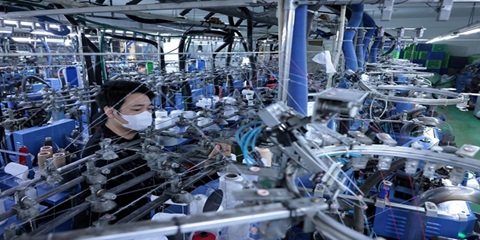
TEXTILE, GARMENT FIRMS REFORM TO MEET CPTPP ORIGIN RULES
Vietnamese textile and garment manufacturers are aggressively restructuring their supply chains and diversifying material sources to unlock untapped tariff benefits. To capitalise on the Comprehensive and Progressive Agreement for Trans-Pacific Partnership (CPTPP), companies are racing to align with the pact's strict "yarn-forward" rules — a task made difficult by a shortage of raw materials within the trade bloc.

MEMBER CORNER / PROMOTIONS
COSMOPARK ECO INDUSTRIAL ZONE – LONG-TERM ADVANTAGES FOR INDUSTRIAL INVESTORS IN VIETNAM
Spanning 322.3 hectares, with a project operational term extending to 2095 and plans for large-scale power infrastructure, COSMOPARK Eco Industrial Zone offers a strong foundation for manufacturing, high-tech industries, and international supply chain development. As global supply chains continue to evolve, Vietnam is strengthening its position as a strategic destination for international businesses seeking to diversify their manufacturing operations.
INFRASTRUCTURE / CONSTRUCTION / LOGISTIC / PORT
HCM CITY ACCELERATES POWER INFRASTRUCTURE INVESTMENT TO ATTRACT HIGH-TECH CAPITAL
High-tech projects, particularly data centres, are not confined to SHTP but are also expanding into export processing zones and industrial parks across HCM City, driving up electricity demand. Proactively developing power infrastructure, diversifying energy supplies and expanding access to green energy are becoming essential for HCM City to maintain its competitive edge in attracting high-tech foreign direct investment (FDI).
VIETNAM ECONOMY INVESTMENT
VIETNAMESE COMPANIES OPTIMISTIC ON INTERNATIONAL GROWTH
Vietnamese businesses are among the most confident about the outlook for international trade, according to HSBC’s Global Trade Pulse Survey 2026, released on November 16. The survey captures the views of 10,000 senior business leaders across 26 markets on trade, tariffs, supply chains, and technology. Findings show that 94 per cent of Vietnamese businesses expect their international trade to grow over the next two years. Vietnam ranks joint top in the survey with the Philippines, compared with 86 per cent globally.
TECHNOLOGY
ĐÀ NẴNG SEEKS TO BUILD HIGH-TECH AGRICULTURE, INTEGRATED VALUE CHAINS
Đà Nẵng is seeking to transform its agricultural sector from a supplier of raw materials into a technology-driven, market-oriented economy, with investment opportunities spanning concentrated production areas, deep processing, logistics and agricultural product distribution. The city aims to shift from traditional agricultural production towards agricultural economic development, organising value chains and increasing the technological content and added value of products through closer links between production and processing.
TECHNOLOGY
VIỆT NAM'S DIGITAL TECHNOLOGY INDUSTRY REVENUE SURGES 53% TO $254.6B
Việt Nam's digital technology industry generated an estimated US$254.6 billion in revenue in the first 10 months of 2026, up 53 per cent from a year earlier, while exports rose 46.2 per cent to $212 billion, the Ministry of Science and Technology said in its latest report. According to the report, hardware and electronics exports reached an estimated $30.681 billion in October, up 108 per cent from the same month last year.
Events Sponsors