Want to be in the loop?
subscribe to
our notification
Business News
TIME TO DIGITISE LAND MANAGEMENT
The Ministry of Natural Resources and Environment (MONRE) has been working on a strategy for the development of land management for the 2020-30 period. It is hoped it will meet the demand of e-government project as well as enhance the land use efficiency, said Mai Van Phan, deputy head of the MONRE’s General Department of Land Administration (GDLA).
Speaking yesterday at a workshop organised by GDLA and MONRE, he said e-government and the Fourth Industrial Revolution played an important role in land management.
A project on completing land information infrastructure at central and local level based on the involvement of relevant agencies was also being finalised, Phấn said.
The workshop, entitled E-government and the Fourth Industrial Revolution: Opportunities and challenges to land management sector, aimed at sharing information on the implementation of the GDLA’s tasks.
According to Nguyen Tuan Anh, from Agency of Administrative Procedure Control, the accomplishment of e-government foundation would help enhance the efficiency of administrative bodies’ operation and improve the service’s quality for local residents and enterprises.
In order to develop e-Government in Vietnam, he said, the MONRE should meet the objective of developing and completing an integrated national land database, sharing data with other ministries and localities.
“Regarding the adoption of the Fourth Industrial Revolution in land management, special attention should be paid to the application of blockchain in transactions between the systems, application of large data technology in data collection and analysis and decision support in the field of land,” Anh said.
He also stressed the need to research on creating open source for enterprise community in development technologies serving residents and enterprises.
Participants at the workshop also clarified the impact of the Fourth Industrial Revolution, the building of e-government and its structure that the MONRE was developing.
Nguyen Bao Chung, deputy head of Department of Information Technology and Natural Resources Data said the Fourth Industrial Revolution would increase the chance of providing information, sharing data and improving labour productivity in natural resources management in general and land management in particular.
The creation of a transparent land database would better serve people, businesses and the development of the country by limiting shortcomings related to land planning, he said.
But he said the Fourth Industrial Revolution also posed challenges to the country as many agencies and enterprises weren’t active enough; the risk of losing information in the connected environment and the worry about backward technology in the revolution.
He suggested that drastic solutions should be found to promote the application of information and digital technology in the management of natural resources in general and land in particular.
Source: VIR
Related News

INFRASTRUCTURE / CONSTRUCTION / LOGISTIC / PORT
VIỆT NAM-CAMBODIA TRADE GATHERS PACE TOWARDS $20 BILLION TARGET
Trade between Việt Nam and Cambodia continues to grow, remaining a bright spot and a key pillar of bilateral cooperation as the two countries aim to raise two-way trade to US$20 billion in the coming years. After setting a record of more than $11.3 billion last year, bilateral trade reached about $8.7 billion in the first eight months of this year, up 8.3 per cent year on year.
TECHNOLOGY
AI BEGINNING TO RESHAPE RECRUITMENT CRITERIA
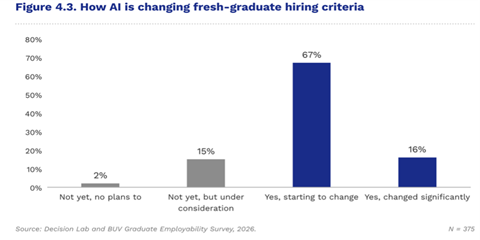
Digital literacy is the only capability area in which fresh graduates meet employers’ expectations, according to a new report. Yet, it is also the standard rising fastest, as businesses increasingly expect new hires to use AI effectively in the workplace. Some 83 per cent of employers say AI has changed, or is beginning to change, their hiring criteria, while 94 per cent report higher expectations for digital and AI capabilities than they had two to three years ago.
INFRASTRUCTURE / CONSTRUCTION / LOGISTIC / PORT
ĐÀ NẴNG GREEN-LIGHTS US$105 MILLION THAI DEVELOPMENT DEAL
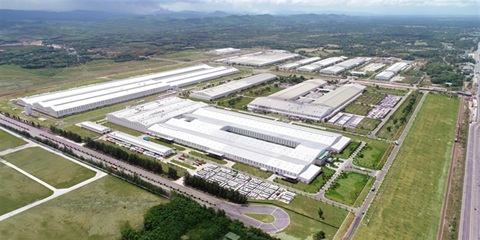
The central city has approved an investment proposal by Thailand’s WHA Group to develop infrastructure for the 400ha WHA Đà Nẵng Industrial Park project on two communes of Thăng Bình and Đồng Dương, with an investment of more than VNĐ2.7 trillion (US$105 million). The city said it approved WHA Industrial Development International's status as an investor in the project, which is expected to take place between 2027 and 2034.
VIETNAM ECONOMY INVESTMENT
MOBILE PHONE EXPORTS RISE 20% TO $51.8 BILLION IN FIRST NINE MONTHS
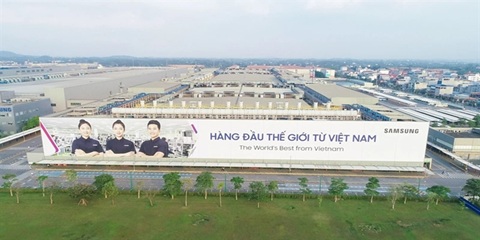
Exports of mobile phones and components rose 20 per cent year-on-year to nearly US$51.8 billion in the first nine months of 2026, with China, the US and Republic of Korea accounting for more than half of the total. Shipments to the three markets reached a combined $26.18 billion, or 50.6 per cent of total exports of the product group during the period, according to data from the Vietnam Department of Customs under the Ministry of Finance.
VIETNAM ECONOMY INVESTMENT
FRUIT AND VEGETABLE EXPORTS POISED TO HIT $10 BILLION IN 2026
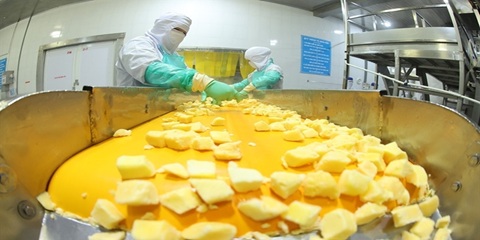
Fruit and vegetable exports are on track to reach nearly US$10 billion in 2026, after rising 19.9 per cent year on year to nearly US$7.4 billion in the first nine months, driven by strong seasonal demand and abundant tropical fruit supplies. The Ministry of Agriculture and Environment said the growth reflected stronger international demand for fresh produce and processed agricultural products.
GARMENT / TEXTILE
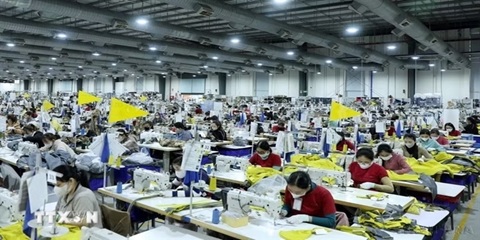
TEXTILE EXPORTS FACE DUAL CHALLENGES OF SUSTAINING ORDERS AND BOOSTING EFFICIENCY AMID GROWING COMPETITION
Data shows that the textile and garment sector maintained its growth momentum in the first nine months of this year. The industry's total export turnover reached an estimated US$35.721 billion in the first nine months of this year, up 3.3 per cent year-on-year. Despite posting encouraging export figures, Vietnamese textile and garment enterprises continue to navigate unpredictable market variables.
Events Sponsors






















