Want to be in the loop?
subscribe to
our notification
Business News
TRAFFIC CONGESTION CAUSES IMPORT-EXPORT TAX REVENUE TO DROP
The tax revenue from import-export activities of HCMC in the first half of the year dipped by 4.8% year-on-year to VND50.02 trillion (US$2.2 billion), which is partially attributed to the severe traffic congestion at seaports that causes cargo throughput to fall.
According to a report delivered at a conference today, July 3, on HCMC’s economic performance in the first six months of the year, the city obtained nearly VND183.5 trillion in tax revenue in the period, reaching 48.7% of the annual estimates and rising by 8% over the same period last year. Of this, revenues from domestic production and business activities as well as crude oil sales increased by 11.7% and 39%, respectively.
At the conference, Phan Thi Thang, director of the municipal Department of Finance, said in addition to a fall in import-export tax, revenues from land use fees had decreased by 13%.
Regarding the fall in HCMC’s trade revenue, Thang explained that the import tax on autos had been cut to zero from January 1, while the import tax revenue from fuels has also gone down and may continue to plunge in the coming time as importers are likely to carry out customs clearance procedures for fuel imports at Van Phong Port in Khanh Hoa Province.
It is noteworthy that traffic congestion on roads leading to ports have hindered the transport and handling of cargo. Enterprises also tend to complete customs clearance procedures at the Cai Mep-Thi Vai port complex in Ba Ria-Vung Tau Province, thus paying taxes there and reducing the city’s revenue from import-export activities.
Therefore, it is necessary for the city government to find solutions to maintain the high growth of logistics services in HCMC.
The report also highlighted other problems of urban management. Floods and traffic congestion remain major concerns in the city despite major investments in many medium- and long-term antiflooding projects.
Su Ngoc Anh, director of the HCMC Department of Planning and Investment, reported that the city’s gross regional domestic product in the first half of the year reached some VND585.64 trillion, up by 7.86% over the same period last year. In addition, the proportion of high-quality and high-value-added services in the economic structure has grown, including trade; finance, banking and insurance; tourism; information and communications; transport and logistics; science and technology; real estate; education; and healthcare.
Meanwhile, the city continues to face obstacles, such as the slow development of some manufacturing industries, small investments in several sectors, floods, traffic congestion and violations of food safety regulations.
In the remaining months of the year, the city should promote investment, restructure State-owned enterprises, develop waterborne tourism, execute the smart city project, develop an innovative urban area to the east of the city, issue preferential policies to boost industrial development, prepare land for hi-tech projects, develop the hi-tech agricultural sector, enhance the monitoring of the environment and simplify administrative procedures for land use right certification.
Meanwhile, the HCMC government plans to invest more in manpower, offering training for some 7,200 entrepreneurs in the city.
The municipal Department of Planning and Investment is drafting a detailed action plan for the training program and will submit it to the HCMC Department of Finance. It will be the foundation for the city government to allocate capital and choose a suitable training service provider.
Source: The Saigon Times
Related News
TECHNOLOGY
TECH SECTOR GROWTH OPENS UP OPPORTUNITIES FOR VIỆT NAM TO GO GLOBAL
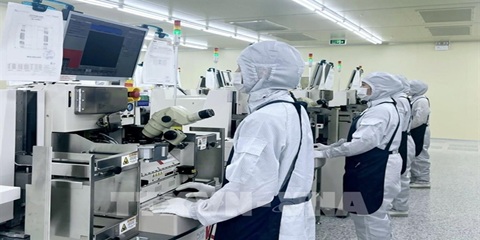
The growth of the electronics, semiconductor and high-tech sectors worldwide is opening up a variety of opportunities for Vietnamese enterprises to integrate more deeply into the global supply chain. However, to become suppliers for these corporations, domestic enterprises must meet rigorous standards regarding quality, technology, productivity and order fulfilment capabilities.
INFRASTRUCTURE / CONSTRUCTION / LOGISTIC / PORT
DONG THAP PROVINCE STEPS UP INDUSTRIAL EXPANSION AND INFRASTRUCTURE CONNECTIVITY
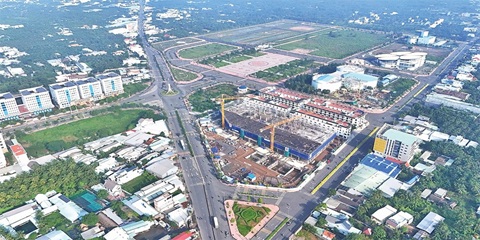
Accelerating public investment, strengthening inter-regional connectivity, and expanding industrial land are helping Dong Thap efficiently bolster competitiveness and drive economic growth. Following the 2025 merger of the former Dong Thap and Tien Giang provinces, the expanded Dong Thap province in the Mekong Delta faces mounting pressure to accelerate infrastructure development and strengthen connectivity among local economic zones, urban areas, industrial parks (IPs), and production centres.
PROPERTY / INDUSTRIAL ZONE
HCM CITY ATTRACTS US$5.7 BILLION INTO EXPORT PROCESSING AND INDUSTRIAL ZONES
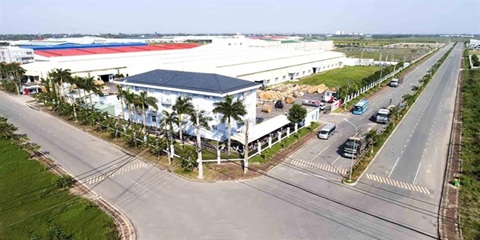
HCM City attracted US$5.7 billion in domestic and foreign investment into its export processing and industrial zones during the first nine months of 2026. The figure exceeded the city's full-year target by 31 per cent, highlighting strong momentum in high-quality industrial investment under Resolution No.10-NQ/TW. Total investment reached 131 per cent of the 2026 target of $4.25 billion and represented a 29 per cent increase compared with the same period in 2025, according to the city's Export Processing and Industrial Zones Authority (HEPZA).

BANKING / FINANCE / INSURANCE / TAX
REMITTANCES TO HCM CITY RISE NEARLY 40% IN Q3
Remittances to HCM City reached more than US$2.83 billion in the third quarter of this year, up 39.5 per cent from the previous quarter and 3.6 per cent year-on-year. This was the first quarter showing positive annual growth this year, helping narrow the decline in remittance inflows over the first nine months. According to the State Bank of Vietnam (SBV)’s Regional Branch 2, remittances transferred to HCM City through credit institutions and economic organisations totalled $2.835 billion in Q3, an increase of more than $802 million from the previous quarter.
VIETNAM ECONOMY INVESTMENT
FOREIGN INVESTORS SEEKING A SYNCHRONISED MANUFACTURING ECOSYSTEM
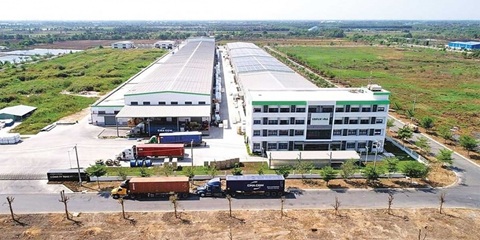
Instead of focusing only on land costs and incentives as usual, foreign investors are seeking a synchronised manufacturing ecosystem, from stable power supply and logistics to shared infrastructure and the convenience of completing residence procedures for experts to serve their long-term investment in the country.
VIETNAM ECONOMY INVESTMENT
HCM CITY ADDRESSES MANUFACTURING, LAND HURDLES FOR Q4 GROWTH PUSH
HCM City is adjusting growth scenarios for lagging sectors and removing key bottlenecks in manufacturing and industrial land pricing to achieve a 13.23 per cent expansion in the fourth quarter of 2026. This sharp fourth-quarter acceleration is required to secure the city's full-year double-digit targets, following a 9.06 per cent GRDP growth recorded in the first nine months.
Events Sponsors






















