Want to be in the loop?
subscribe to
our notification
Business News
TRANSPORT SECTOR SHOWS STRONG DIVERGENCE IN H1 PERFORMANCE
While leading companies are reporting robust growth, others, particularly those with ageing fleets, are facing declining profits.
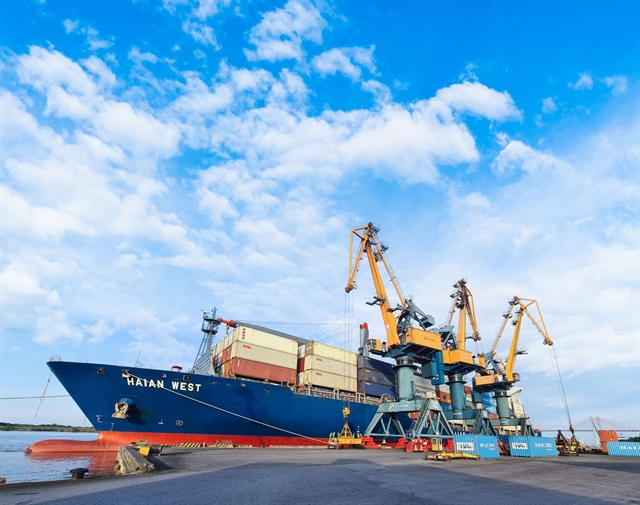
A container ship managed and operated by Hai An Transport & Stevedoring. — Photo haiants.vn
HÀ NỘI — The Vietnamese transport sector has witnessed significant divergence in performance during the first half of 2025, with leading companies reporting robust growth while others, particularly those with ageing fleets, facing declining profits.
This trend reflects the broader dynamics of Việt Nam's trade landscape, which has seen a substantial increase in export and import activity.
According to the General Statistics Office, Việt Nam’s total export-import turnover reached US$432 billion in the first half of 2025, marking a 16.1 per cent increase from the same period last year. Key export commodities, including textiles, footwear, computers and electronic components, maintained double-digit growth, driven by rising demand and a strategy of front-loading to mitigate the impacts of changing tariffs.
In the medium to long term, companies are diversifying their export markets and increasing local content to leverage signed trade agreements, thereby expanding their consumer base and reducing the impact of US tariffs.
As a direct consequence of the shifts in trade flows, the transport sector has experienced a notable difference in performance.
For instance, Hai An Transport & Stevedoring JSC reported a remarkable revenue increase of 47.9 per cent to VNĐ2.44 trillion ($93 million) in the first half of 2025, with profit after tax soaring by 291.3 per cent to VNĐ688 billion. This result meant the company achieved 79.5 per cent of its annual profit target in just six months.
In February, Hai An successfully acquired another container ship, Haian Zeta, with a capacity of 1,702 TEU, increasing its fleet to 17 vessels primarily focused on intra-Asian routes.
However, Haian Zeta has been chartered to partner Sealead Shipping for operations on the route from the Mediterranean and North Africa to the east coast of the US. This marks Hai An's first foray into the US market, paving the way for future investments in long-haul routes to destinations like the US and Europe.
Previously, Hai An has also been proactive in modernising its fleet, adding vessels including Haian Link and Haian Bell (2018), Haian Mind (2019), Haian East and Haian West (2021), as well as Anbien Bay, Haian City and A Roku (2022).
In 2024, the company expanded its operations further by taking delivery of four new container ships.
In contrast, the PetroVietnam Transportation Corporation (PVTrans) saw its revenue rise by 29.3 per cent to VNĐ7.14 trillion, but its profit after tax fell by 6.1 per cent to VNĐ638 billion, completing only 66.4 per cent of its annual profit target.
Meanwhile, Vietnam Ocean Shipping JSC (Vosco) and Vinaship reported significant downturns.
Vosco’s profit before tax plummeted to a loss of VNĐ43.7 billion, while Vinaship's profit dropped dramatically by 98.7 per cent to just VNĐ440 million.
Until recently, neither company had made new investments for over a decade.
Vinaship invested in the Vinaship Unity vessel at the end of 2024, while Vosco announced plans to invest in 10 new vessels, with a total potential value of $414 million. However, their ageing fleets may hinder their operational efficiency compared to newer ships.
Given their performance, stock prices for Vosco and Vinaship have remained stagnant over the past seven months.
Hai An’s stock experienced a surge in May following tariff delays, but has since levelled off, showing only a slight decline of 1.2 per cent from late May to mid-August.
Looking ahead, Shinhan Securities Vietnam predicts that new tariffs imposed by the US are unlikely to trigger a surge in shipping volumes in the latter half of the year.
With average spot freight rates on major routes from the Far East to the US dropping significantly, the industry may face overcapacity challenges.
The long-term application of high tariffs on imported goods, particularly from China, could lead to shifts in maritime trade flows.
Analysts expect increased activity on intra-Asian and Asia-Europe routes as domestic companies adapt to mitigate the impacts of the US market. — BIZHUB/VNS
Source: VNS
Related News

MEMBER CORNER / PROMOTIONS
HCMC | CERTIFIED SUSTAINABILITY PROFESSIONAL (CSP) TRAINING | REGISTRATION OPEN
As sustainability becomes deeply embedded in corporate strategy and supply-chain operations across Vietnam, Hong Kong Business Association Vietnam is pleased to endorse the upcoming Certified Sustainability Professional (CSP) training program by the Asia Institute for Sustainability (AIS) - a premier internationally recognized ESG credential in Vietnam.
VIETNAM ECONOMY INVESTMENT
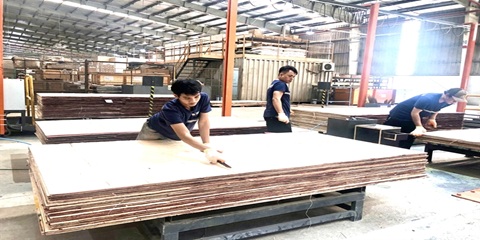
HCM CITY SAYS HOW IT PLANS TO ACHIEVE 10-11% ANNUAL EXPORT GROWTH FOR REST OF DECADE
The southern economic hub aims to strengthen its role as the country’s largest import-export centre while developing into a regional transhipment centre in Southeast Asia, supported by green and digital transformation and a circular economy. HCM City has outlined measures to expand production capacity, cut logistics costs, diversify export markets, and help businesses meet increasingly stringent international standards as it targets average annual export growth of 10-11 per cent through 2030.
VIETNAM ECONOMY INVESTMENT
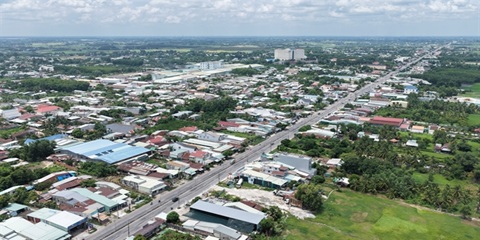
HCM CITY LEADS ECONOMIC RESTRUCTURING IN SOUTHEAST REGION
According to Associate Professor, Dr Vũ Tuấn Hưng, director of the Institute of Social Sciences of the Southern Region, the Southeast is a strategically important socio-economic space in Việt Nam’s development given its advantages in location, industry, trade, services, logistics, science and technology, urbanisation and human resources.
TECHNOLOGY
DIGITAL TRANSFORMATION TURNED INTO PRACTICAL TOOLS FOR PEOPLE, BUSINESSES
Việt Nam is moving its digital transformation agenda beyond policy frameworks and individual technology platforms towards practical applications that address everyday needs, as authorities seek measurable outcomes from science, technology and innovation. Under Politburo Resolution No. 57-NQ/TW issued on December 22, 2024, the implementation is increasingly shifting from simply completing assigned tasks towards developing concrete products and services for citizens and businesses.
TECHNOLOGY
APPLYING TECHNOLOGY FOR ECONOMIC TRANSFORMATION
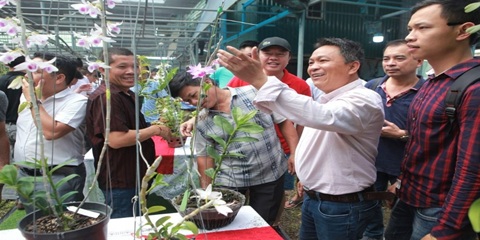
Having completed its new rural development program, Hanoi is shifting its focus toward improving development quality and building smart, sustainable rural areas. The transformation of Dong La orchid-growing village in An Khanh, a western commune of Hanoi, shows how digital technology is becoming a driver of production, market expansion, and higher incomes for local residents.
MEMBER CORNER / PROMOTIONS
VIGLACERA HONORED AS THE "LEADING GREEN INDUSTRIAL REAL ESTATE DEVELOPER 2026"
Organized by the Vietnam Investment Review, this prestigious awards program recognizes industry pioneers advancing eco-industrial parks, clean energy transition, and rigorous ESG standards. Outperforming competitors through a rigorous evaluation, Viglacera Corporation – JSC proudly ranked among the Top 5 highest-positioned enterprises in the Leading Green Industrial Real Estate Developers 2026 category, reinforcing its premier position in Vietnam’s industrial real estate sector.
Events Sponsors






















