Want to be in the loop?
subscribe to
our notification
Business News
TWO-TIER LOCAL GOVERNMENT MODEL SET TO UNLOCK NEW BUSINESS OPPORTUNITIES
The streamlining of administrative structures following the reorganisation of provincial units is beginning to yield clear improvements in the investment and business climate.
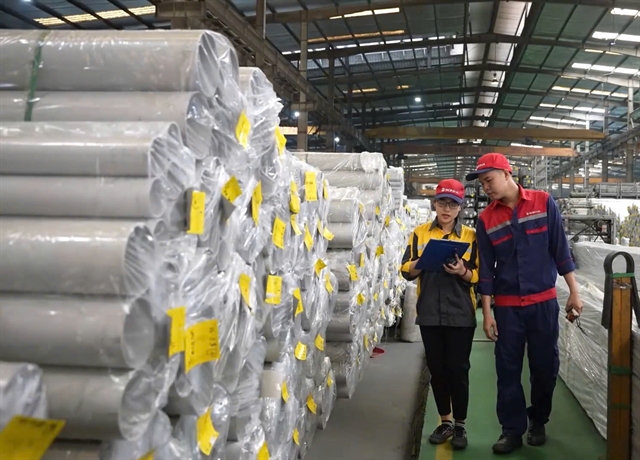
Workers at a firm in Hà Nội. Businesses are seeing positive changes from the two-tier local government system. — Photo baotintuc.vn
HÀ NỘI — The two-tier local government model, which simplifies administrative structures, is creating new opportunities for businesses by reducing time and operational costs, allowing for bolder investment and expansion, according to experts.
New business opportunities
The streamlining of administrative structures following the reorganisation of provincial units is beginning to yield clear improvements in the investment and business climate.
Beyond simplifying procedures, the shift to a two-tier government model – comprising provincial and commune levels – is opening new avenues for businesses to expand investment, tap into markets and optimise operations, experts noted.
Marketing Director of BestPrice Travel Bùi Thanh Tú said that from a travel business perspective, changes in the Government apparatus have led to clearer and faster administrative procedures, with a noticeable reduction in intermediary levels.
Tú told baodautu.vn that the coordination of organising tours, events and tourism promotion will take place on schedule and more effectively. This is very important, as the tourism industry faces high competitive pressure.
He noted that beyond expediting procedures, the transition to a two-tier local government model is also building confidence among businesses to invest in localities that were previously fragmented in their tourism development strategies.
Previously, Hà Nam or Nam Định were localities that had not fully exploited their potential. But now, after merging with Ninh Bình, linked clusters can be formed, such as Tam Chúc to Bái Đính, or the Catholic pilgrimage route from Nam Định to Phát Diệm, Tú said.
And it's not just tourism enterprises that are benefitting. Manufacturing and trading businesses are also experiencing tangible improvements, thanks to streamlined administrative structures.
Mai Đỗ Thùy Dung, CEO of AKA Furniture, which owns well-known furniture brands like Nha Xinh and BoConcept, said that the simplification of the administrative apparatus has made local departments more proactive and flexible in guiding procedures. This shift, she said, has significantly reduced the overlap that once existed between district-level agencies and various departments.
Speaking to baodautu.vn, Dung said when her firm completed the design adjustment documents for a recent showroom, the process of obtaining feedback from relevant agencies was handled much more smoothly and more quickly than before.
She said that these improvements not only help businesses save time and costs, but also create favourable conditions for internal restructuring, optimising supply chains and enhancing the customer experience, all of which are critical to success in the competitive furniture retail industry.
Driving new investment momentum
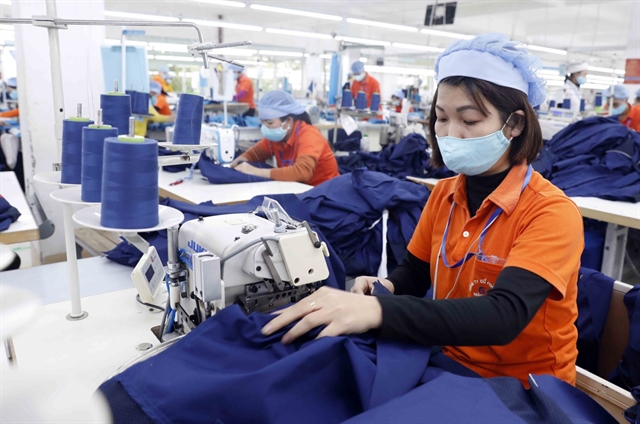
The two-tier local government model is a foundation for promoting domestic investment flows and increasing business competitiveness. — VNA/VNS Photo Trần Việt
Experts noted that the shift to a two-tier government model is doing more than restructuring administrative layers: it is transforming how local authorities support businesses, particularly in project investment.
General Director of Xuân Nguyễn Group JSC Lữ Nguyễn Xuân Vũ said the time to carry out administrative procedures has been significantly shortened. Some documents can be submitted online, or permission can be requested at the commune level if authorised.
However, Vũ said he expects the commune level in the two-tier local government model to be more substantively decentralised, so that it can make decisions on important projects.
He told the online newspaper that bold, flexible and well-trained commune-level officials could help create a breakthrough in Việt Nam’s ongoing administrative reform.
According to Vũ, his company is currently developing the ASEAN+ Cultural Village project in Vĩnh Long, which was formerly part of Bến Tre Province prior to the recent administrative merger.
With an initial infrastructure investment of approximately VNĐ100 billion, the project is envisioned as a cultural and resort complex aimed at promoting community-based tourism in the region.
While acknowledging the strong support his team has received from authorities at all levels, Vũ expressed hope that the newly merged local government will continue to uphold a spirit of companionship, so the project can be implemented more quickly and smoothly.
Dung also expressed her expectations for a 'business-friendly' local government – one that ensures consistent policy implementation and greater use of technology in administrative processes.
She added that her firm hopes to see a single point of contact for each type of procedure, along with more frequent and structured dialogue channels between local authorities and businesses.
Meanwhile, feedback from other enterprises underscores that, when operated with flexibility, the two-tier government system not only streamlines the administrative apparatus, but also contributes to a more transparent, responsive and business-oriented environment.
According to experts, this creates a solid foundation for attracting domestic investment, improving business competitiveness and enabling enterprises to confidently pursue sustainable growth strategies. — VNS
Source: VNS
Related News

CHARITY / EXHIBITION / OTHER EVENTS
INVESTMENT OPPORTUNITIES IN CA MAU PROVINCE: 96 PROJECTS AND 20 STRATEGIC PROJECTS
We are pleased to share with you information on investment projects currently seeking investors in Ca Mau Province. Should your esteemed company or association be interested, we kindly invite you to review the project information and complete the registration form via the links provided. The Ho Chi Minh City Investment and Trade Promotion Centre (ITPC) will consolidate the expressions of interest and facilitate connections with the leadership of Ca Mau Province at a meeting tentatively scheduled for 13 November 2026 in Ho Chi Minh City.
MEMBER CORNER / PROMOTIONS
BẰNG KIỀU LIVESHOW - A SYMPHONY OF LOVE UNDER THE GOLDEN GLOW
A masterclass in live music that takes the audience on a soulful journey through immortal love songs, guided by the peerless artistry and emotive storytelling of renowned singer Bằng Kiều. The highlight of the night is his seamless musical chemistry with special guest Triệu Hồng Ngọc, promising passionate and deeply resonant duets inside the magnificent Grand Ballroom.

INFRASTRUCTURE / CONSTRUCTION / LOGISTIC / PORT
ĐÀ NẴNG GREEN-LIGHTS US$105 MILLION THAI DEVELOPMENT DEAL
The central city has approved an investment proposal by Thailand’s WHA Group to develop infrastructure for the 400ha WHA Đà Nẵng Industrial Park project on two communes of Thăng Bình and Đồng Dương, with an investment of more than VNĐ2.7 trillion (US$105 million). The city said it approved WHA Industrial Development International's status as an investor in the project, which is expected to take place between 2027 and 2034.

VIETNAM ECONOMY INVESTMENT
MOBILE PHONE EXPORTS RISE 20% TO $51.8 BILLION IN FIRST NINE MONTHS
Exports of mobile phones and components rose 20 per cent year-on-year to nearly US$51.8 billion in the first nine months of 2026, with China, the US and Republic of Korea accounting for more than half of the total. Shipments to the three markets reached a combined $26.18 billion, or 50.6 per cent of total exports of the product group during the period, according to data from the Vietnam Department of Customs under the Ministry of Finance.

INFRASTRUCTURE / CONSTRUCTION / LOGISTIC / PORT
VIỆT NAM-CAMBODIA TRADE GATHERS PACE TOWARDS $20 BILLION TARGET
Trade between Việt Nam and Cambodia continues to grow, remaining a bright spot and a key pillar of bilateral cooperation as the two countries aim to raise two-way trade to US$20 billion in the coming years. After setting a record of more than $11.3 billion last year, bilateral trade reached about $8.7 billion in the first eight months of this year, up 8.3 per cent year on year.

VIETNAM ECONOMY INVESTMENT
FRUIT AND VEGETABLE EXPORTS POISED TO HIT $10 BILLION IN 2026
Fruit and vegetable exports are on track to reach nearly US$10 billion in 2026, after rising 19.9 per cent year on year to nearly US$7.4 billion in the first nine months, driven by strong seasonal demand and abundant tropical fruit supplies. The Ministry of Agriculture and Environment said the growth reflected stronger international demand for fresh produce and processed agricultural products.
Events Sponsors






















