Want to be in the loop?
subscribe to
our notification
Business News
UNLOCKING CAPITAL TO SUPPORT VIỆT NAM’S AMBITION FOR DOUBLE-DIGIT GROWTH
Việt Nam needs an estimated VNĐ 38.5 quadrillion (US$1.5 trillion) in investment by 2030 to achieve its double-digit growth ambitions. Experts highlight the need to diversify funding sources, deepen capital markets and improve public investment efficiency to mobilise resources and sustain economic growth.
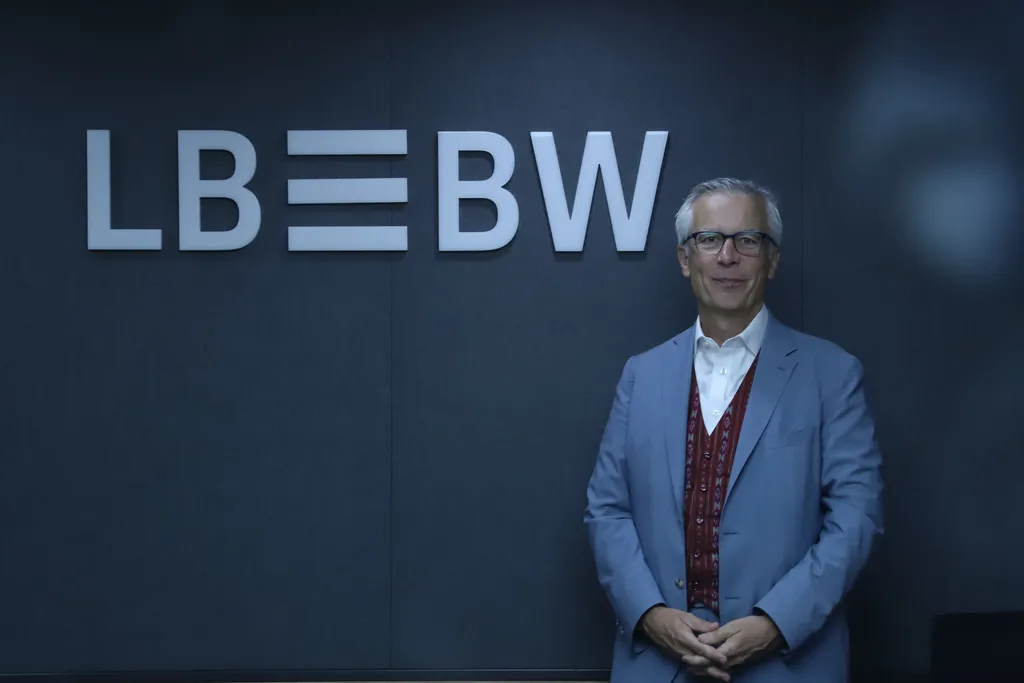
Dr. Moritz Kraemer, former global head of sovereign ratings at S&P Global and currently chief economist and head of research at German bank LBBW. Photo: Thùy Dương/VNA
HÀ NỘI – Việt Nam will need to mobilise approximately VNĐ 38.5 quadrillion (US$1.5 trillion) by 2030 to achieve its double-digit economic growth target. According to experts, diversifying funding sources, developing capital markets and improving the efficiency of public investment will be essential to unlocking financial resources and supporting rapid, sustainable growth.
Dr. Moritz Kraemer, former global head of sovereign ratings at S&P Global and currently chief economist and head of research at German bank LBBW, believes Việt Nam is moving closer to achieving investment-grade sovereign status. He considers the country's target of attaining investment-grade status by 2030 realistic, potentially opening access to a wider pool of international investors and improving conditions for long-term financing.
“Việt Nam is viewed positively abroad. It has high growth, is export-oriented and a magnet for foreign direct investment,” Dr. Kraemer said.
He explained that achieving investment-grade status would enable Việt Nam to attract additional institutional investors, including life insurers and other financial institutions that are restricted from investing in non-investment-grade bonds. These investors typically have substantial financial resources and long-term investment horizons, making them an important source of funding for the economy.
An improved sovereign credit rating could also strengthen Việt Nam's access to international capital and significantly reduce its borrowing costs, although actual borrowing costs would continue to depend on market conditions and the risk profiles of individual transactions.
To achieve this goal, Dr. Kraemer stressed the need for greater institutional transparency, stronger government revenue and improvements to the institutional framework for monetary policy, particularly greater central bank independence. Increasing government revenue while maintaining Việt Nam's relatively low public debt would provide additional resources for infrastructure investment and preserve fiscal flexibility to respond to global economic shocks.
Alongside attracting international capital, developing domestic capital markets will be crucial to meeting Việt Nam's medium- and long-term financing needs.
Dr. Kraemer noted that Việt Nam already has a relatively large and competitive banking system, while its bond and equity markets still have considerable room for growth. Expanding these markets would diversify funding sources and reduce the economy's reliance on bank credit.
Nguyễn Quang Thuận, chairman and CEO of FiinGroup and executive chairman of FiinRatings, shared this view, noting that Việt Nam's substantial financing requirements called for a broader range of funding channels, including local-currency corporate bonds, international bonds, equity financing and private credit.
He warned that relying too heavily on short-term bank loans and working capital facilities to finance long-term investment could increase financial risks. Developing non-bank financing channels would therefore give businesses and investment projects access to a wider range of long-term funding options while easing pressure on the banking system.
According to Thuận, FTSE Russell's decision to upgrade Việt Nam's stock market to Secondary Emerging Market status is a positive step towards attracting additional investment flows. However, making the most of this opportunity will require broader capital market reforms, particularly expanding the institutional investor base, improving project bankability and strengthening market infrastructure.
This includes reliable bond pricing, credit ratings and higher-quality offering documents that meet the expectations of domestic and international investors.
Việt Nam's corporate bond market currently accounts for around 10 per cent of GDP, well below regional peers such as Malaysia and Thailand, where the ratios exceed 50 per cent. Publicly offered corporate bonds account for only about 1 per cent of GDP, highlighting considerable room for expansion.
Greater participation by pension funds, life insurers and bond investment funds could provide additional sources of long-term capital. Investment regulations should also gradually shift towards a risk-based approach. Rather than relying primarily on restrictions by product type, institutional investors could be allowed to allocate a greater share of their portfolios to higher-rated bonds, using recognised domestic or international credit ratings and historical default probabilities to assess risk.
At the same time, developing a benchmark yield curve based on government bonds would provide a more transparent reference for pricing debt and assessing risk.
Turning to international bond markets, Dr. Kraemer said Việt Nam could test investor appetite through an appropriately sized issuance of around US$500 million, rather than seeking to raise a large amount, such as US$3 billion, in a single transaction. This would allow the Government to gauge market demand and gradually establish a benchmark yield for future issuances.
Dr. Kraemer also highlighted the potential role of the Vietnam Development Bank (VDB) in mobilising long-term funding. Drawing on international experience, he cited Germany's development bank KfW, which benefits from government guarantees and holds the same credit rating as the German Government. This enables it to issue large volumes of long-term bonds and provide financing to the domestic economy.
Việt Nam could explore a similar approach with VDB. This could provide an additional source of medium- and long-term financing for infrastructure and development projects while reducing reliance on commercial bank loans. Appropriate guarantees, sound risk management and effective capital allocation would be essential to making such a model work.
Beyond mobilising capital and expanding financing channels, ensuring that funds are used effectively will be equally important in translating financial resources into tangible economic growth.
Thuận emphasised that capital market development should not focus solely on raising more money, but also on improving project bankability through sound project design, appropriate capital structures, and financially strong and credible sponsors.
In this context, he highlighted the catalytic role of the Government, public institutions and multilateral development banks, including the World Bank and the Asian Development Bank (ADB). These institutions could provide guarantees, de-risking facilities and other forms of credit enhancement to help attract additional private investment.
Thuận also argued that the effectiveness of public investment should be measured not only by disbursement rates but also by its wider economic impact. Prioritising projects that stimulate production and business activity, improve connectivity and enable the private sector to expand would strengthen the catalytic role of public spending.
Greater transparency, monitoring and accountability would also help improve the efficiency of capital allocation. He stressed that the ultimate measure of success should be the economic value created, rather than merely the proportion of the budget disbursed.
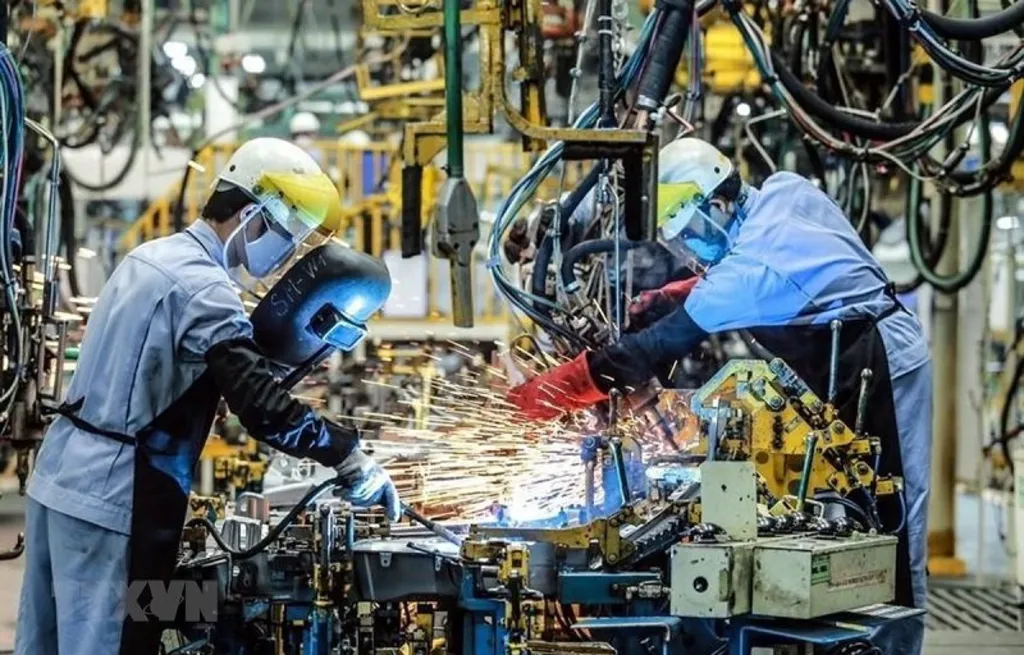
Việt Nam needs to develop new domestic growth drivers and shift towards higher value-added production. Illustrative photo: Danh Lam/VNA
Alongside expanding financial resources, Việt Nam needs to develop additional domestic growth drivers and move towards higher-value-added production. Dr. Kraemer said the country should strengthen domestic demand alongside its established advantages in exports and foreign direct investment.
“Việt Nam should develop a second leg to stand on: stronger domestic demand,” he said.
A stronger domestic market could provide additional momentum for production and business activity while making the economy more resilient to external shocks, he noted.
At the same time, shifting from labour-intensive manufacturing towards electronics, technology and other higher-value-added industries would create opportunities to improve productivity, strengthen competitiveness and move Việt Nam further up the global value chain.-VNS
Source: VNS
Related News
GARMENT / TEXTILE
TEXTILE, GARMENT FIRMS REFORM TO MEET CPTPP ORIGIN RULES
Vietnamese textile and garment manufacturers are aggressively restructuring their supply chains and diversifying material sources to unlock untapped tariff benefits. To capitalise on the Comprehensive and Progressive Agreement for Trans-Pacific Partnership (CPTPP), companies are racing to align with the pact's strict "yarn-forward" rules — a task made difficult by a shortage of raw materials within the trade bloc.

MEMBER CORNER / PROMOTIONS
COSMOPARK ECO INDUSTRIAL ZONE – LONG-TERM ADVANTAGES FOR INDUSTRIAL INVESTORS IN VIETNAM
Spanning 322.3 hectares, with a project operational term extending to 2095 and plans for large-scale power infrastructure, COSMOPARK Eco Industrial Zone offers a strong foundation for manufacturing, high-tech industries, and international supply chain development. As global supply chains continue to evolve, Vietnam is strengthening its position as a strategic destination for international businesses seeking to diversify their manufacturing operations.

INFRASTRUCTURE / CONSTRUCTION / LOGISTIC / PORT
HCM CITY ACCELERATES POWER INFRASTRUCTURE INVESTMENT TO ATTRACT HIGH-TECH CAPITAL
High-tech projects, particularly data centres, are not confined to SHTP but are also expanding into export processing zones and industrial parks across HCM City, driving up electricity demand. Proactively developing power infrastructure, diversifying energy supplies and expanding access to green energy are becoming essential for HCM City to maintain its competitive edge in attracting high-tech foreign direct investment (FDI).

VIETNAM ECONOMY INVESTMENT
VIETNAMESE COMPANIES OPTIMISTIC ON INTERNATIONAL GROWTH
Vietnamese businesses are among the most confident about the outlook for international trade, according to HSBC’s Global Trade Pulse Survey 2026, released on November 16. The survey captures the views of 10,000 senior business leaders across 26 markets on trade, tariffs, supply chains, and technology. Findings show that 94 per cent of Vietnamese businesses expect their international trade to grow over the next two years. Vietnam ranks joint top in the survey with the Philippines, compared with 86 per cent globally.

TECHNOLOGY
ĐÀ NẴNG SEEKS TO BUILD HIGH-TECH AGRICULTURE, INTEGRATED VALUE CHAINS
Đà Nẵng is seeking to transform its agricultural sector from a supplier of raw materials into a technology-driven, market-oriented economy, with investment opportunities spanning concentrated production areas, deep processing, logistics and agricultural product distribution. The city aims to shift from traditional agricultural production towards agricultural economic development, organising value chains and increasing the technological content and added value of products through closer links between production and processing.

TECHNOLOGY
VIỆT NAM'S DIGITAL TECHNOLOGY INDUSTRY REVENUE SURGES 53% TO $254.6B
Việt Nam's digital technology industry generated an estimated US$254.6 billion in revenue in the first 10 months of 2026, up 53 per cent from a year earlier, while exports rose 46.2 per cent to $212 billion, the Ministry of Science and Technology said in its latest report. According to the report, hardware and electronics exports reached an estimated $30.681 billion in October, up 108 per cent from the same month last year.
Events Sponsors