Want to be in the loop?
subscribe to
our notification
Business News
UNLOCKING THE POTENTIAL OF DIGITAL DATA ACROSS VIETNAM
Vietnam has been developing e-government since 2000. After 20 years, we began to move into the digital transformation phase marked by the National Digital Transformation Programme, building digital government, digital economy, and digital society.
Digital data has been an important and crucial part of development for 23 years. In digital transformation, digital data is increasingly recognised as having a clearer and more important role. This is reflected in the fact that we have chosen 2023 as the year of national digital data, promoting digital transformation in all industries, at all levels, and among all-people on a national scale.
There are several stages associated with the level of data development maturity. The first phase features the early development of databases. Data is collected for the first time, followed by basic digitalisation, measurement, and surveys, and it is then put into storage and databases.
Data initially is mainly used for statistics and publications and almost never updated or only updated periodically over a long period of time. Typical examples of built databases are geographic databases, rice land databases or those containing population census data.
In the phase of database information systems. As the application of IT was gradually developed by state agencies, information systems were gradually formed and have effectively contributed to serving ministries, agencies and localities. Large information systems built with their own databases have collected and stored large amounts of data.
However, during this phase data was mainly circulated within the system, and within the scope of operations of state agencies, and industries. Connecting and sharing data was limited, and lacked compatibility in data standards. Typical databases were business registration databases, and insurance and tax databases.
The stage of using databases as the foundation for e-government development only clearly took shape when the national population database was put into operation. The national population database is not built specifically for a specific system or professional activity, but was used as the foundation for implementing many activities and solutions for government development.
The role of this database as the e-government development foundation was clearly shown in the overall project to simplify administrative procedures, citizen documents and related databases in 2013-2020, as well as the project to develop application of population data, identification and electronic authentication to serve national digital transformation in 2022-2025. The role is still being strongly implemented in national databases.
The database that serves as the foundation for e-government is different from the databases in previous periods as it is built for multiple purposes, providing standardised and widely available data sharing services for ministries, agencies, localities, organisations and individuals. Data is shared online, in real time and standardised in line with unified and synchronised data structure standards.
Now data is the foundation for digital transformation of public administration and development of the digital economy and society. This stage is evident when digital transformation has been deployed deeply and widely in social life. Data is increasingly collected and abundant in society and is combined with the advancement of science and technology when new technologies such as AI and big data.
Data is now being collected from social life, and used to solve social problems, and promote creativity and innovation in society. AI will get smarter thanks to more data; public administration will be better; businesses will optimise; new business lines will take shape; and human life will be better, all thanks to data.
Building data is building a foundation for social development. We are moving towards this stage, and new information is being harnesses in digital transformation strategies.
Currently, we have moved from the stage of applying IT (computerisation) to the stage of digital transformation. Along with the rapid changes in technology, with many new digital technologies being taking shape, the perspectives and approaches to data in digital transformation, new actions should be taken to unlock the huge potential of digital data in the time to come to enable us to achieve the goals of developing a digital and digital society.
Source: VIR
Related News

MEMBER CORNER / PROMOTIONS
KNIC ENGAGES WITH GOVERNMENT AND HIGH-TECH BUSINESS COMMUNITIES IN CHINA
From Beijing to Shandong, KN Holdings and KN Industrial City are continuing to expand their engagement with government authorities, trade promotion organizations, and high-tech business communities in China. In Beijing, the delegation met with the Center for International Economic and Technological Cooperation under the Ministry of Industry and Information Technology (MIIT), exchanging perspectives on industrial and technology cooperation between the two markets.

VIETNAM ECONOMY INVESTMENT
VIETNAM’S TRADE TOPS $825 BILLION BY MID-SEPTEMBER
Figures released on September 21 showed goods trade reached nearly $55 billion in the first 15 days of September alone, bringing cumulative turnover since the beginning of the year to more than $825 billion. The strong growth reflects robust trade flows, with demand for consumer goods and production inputs remaining high.

TECHNOLOGY
VIỆT NAM'S BUSINESSES MOVE TOWARDS AI AGENTS
Việt Nam’s AI landscape is entering a new phase as businesses move beyond generative AI (GenAI) tools designed to assist human users towards autonomous AI, agentic AI and AI agents that can take action with limited supervision, experts have said. The shift comes as Việt Nam seeks to accelerate science and technology, innovation and digital transformation under Politburo Resolution 57-NQ/TW, issued on December 22, 2024.
GARMENT / TEXTILE
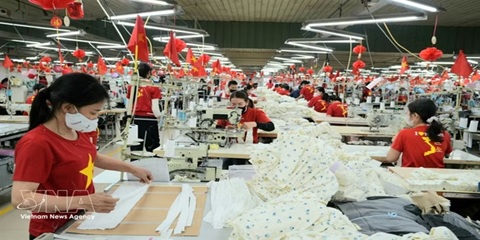
VIỆT NAM TARGETS $48 BILLION IN TEXTILE-GARMENT EXPORTS
Việt Nam’s textile and garment industry is facing both opportunities and challenges amid complex and unpredictable developments in the global market, prompting businesses to improve growth quality, optimise production costs and enhance adaptability in pursuit of an export turnover of about $48 billion this year. The target is considered an important milestone that requires concerted efforts from management agencies and the business community.
INFRASTRUCTURE / CONSTRUCTION / LOGISTIC / PORT
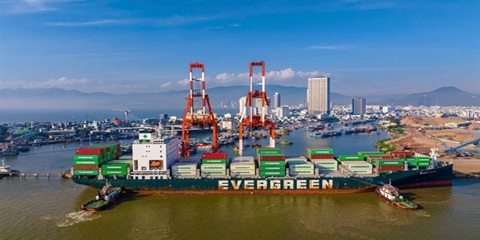
CUTTING LOGISTICS COSTS KEY TO BOOSTING EXPORTS
Reducing costs has become an increasingly urgent priority for import-export activities, particularly logistics costs, a conference in Hà Nội was told on Tuesday. According to Deputy General Director of the Ministry of Industry and Trade's Agency for Foreign Trade, Trần Thanh Hải, import-export activities has remained a bright spot for the economy in recent years, playing an important role and helping drive macroeconomic growth.
LEGAL UPDATE / POLICY
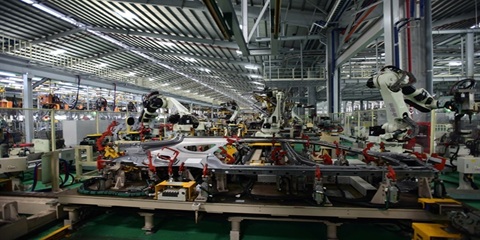
FLEXIBLE FISCAL POLICY HELPS DRIVE ECONOMIC GROWTH
Việt Nam’s fiscal policy has been implemented in a targeted expansionary manner since early 2026, helping maintain macroeconomic stability and supporting the country’s goal of achieving double-digit economic growth. According to the Ministry of Finance, State budget revenue in the first eight months of 2026 was estimated at VNĐ2.02 quadrillion (US$77.7 billion), equivalent to 80 per cent of the annual estimate and up 16 per cent year-on-year.
Events Sponsors






















