Want to be in the loop?
subscribe to
our notification
Business News
VAT HIKE PROPOSAL: FURTHER CONSIDERATION NEEDED
The Ministry of Finance’s recent proposal for a hike of value-added tax (VAT) from 10 per cent to 12 per cent from early 2019 is stirring up public concerns. In the event that people's livelihoods and business performances are still hard, applying a higher tax rate will force them to carry a heavier burden.
“It seems to be certain that this content will stir up mixed public reactions and opinions. But, this is just a proposal for modifying policies. After consulting ministries, localities, associations and people, the Ministry of Finance will submit it to the Government for specific action,” said Mr Pham Dinh Thi, Director of Tax Policy Bureau under the Ministry of Finance, at a press conference to this effect on August 15. The Ministry of Finance announced its approaches to amend five laws concerning tax, with many taxes to be increased, including special consumption tax, corporate income tax, personal income tax and VAT.
Relatively low rate triggers the hike
Giving explanations to the VAT hike reasons, the Ministry of Industry and Trade said that the current VAT of 10 per cent is relatively low and inconsistent with international practices. Therefore, the ministry proposed two VAT increase options: (1) raising from 10 per cent to 12 per cent from January 1, 2019, and (2) raising to 12 per cent from January 1, 2019 and 14 per cent from January 1, 2021. And, it opted for the first choice. Mr Thi explained that countries, including developed ones, tend to hike indirect taxes such as VAT when public debts grow. Most developed countries apply very high VAT rates. For example, EU countries applied VAT of 19 per cent in 2000 and 21.5 per cent in 2014.
In the region, VAT rates in many Southeast Asian countries are ranging from 6 per cent to 12 per cent, typically 6 per cent in Malaysia, 7 per cent in Thailand and Singapore, 10 per cent in Laos, Cambodia and Indonesia, and 12 per cent in the Philippines. In Asia, Taiwan taxes 5 per cent of VAT, Japan (8 per cent), South Korea (10 per cent), China (17 per cent), and India (18 per cent). In the Group of 20 countries, commonly known as G20, Canada imposes 5 per cent and Switzerland has a rate of 8 per cent. Nevertheless, many other G20 countries have significantly higher rates, such as Mexico (16 per cent), Brazil (17 per cent), Russia and Turkey (18 per cent), Germany (19 per cent), the UK and France (20 per cent), the Netherlands and Spain (21 per cent), Italy (21 per cent).
In many countries, VAT is usually kept stable to stimulate demand but it may be hiked in case the country suffers from economic difficulties. For example, at the back of the global economic crisis in 2007-2008, 14 EU member states decided to raise VAT in 2009 - 2010.
Japan kept VAT of 3 per cent for quite a long period. In a bid to reduce public debts, Japanese Prime Minister Shinzo Abe set a timetable for picking up VAT to 5 - 8 per cent in April 2014 and 8 - 10 per cent in October 2015. Nevertheless, this strong tax hike also encountered public opposition and weakened purchasing power in the context that the Japanese was still facing the risk of deflation. To date, Japan has yet to launch the second phase of the VAT increase roadmap.
Careful consideration to avoid negative effects
This proposed tax increase is forecast to confront strong reactions from businesses and people. Economic experts also agree that comparing Vietnam's tax rate with regional peers is irrational. Right within ASEAN, Vietnam’s tax rate is not low. Raising VAT will make Vietnam's investment environment less attractive than other countries in the region such as Laos and Cambodia. At the same time, a weaker purchasing power as a result of VAT hike will certainly have a direct impact on consumers. Regardless of having high or low income, consumers must pay the same VAT rate for the same taxable product. But as low-income people have to spend a larger proportion of their incomes on consumption, the tax burden they bear will be higher on their income.
From another angle, analysts pointed out that “With the current universal VAT rate of 10 per cent, VAT revenue account for 27.5 per cent of Vietnam's total budget revenue. Meanwhile, with a higher average VAT rate of 21.3 per cent, VAT accounts for 21.4 per cent of total EU budget revenue.” Thus, hiking VAT does not necessarily improve its role in the total budget. Besides, rising tax rates to balance expenditures requires more transparent budget spending.
Indeed, public investment is ineffective and wasteful. “Regular expenses for the bureaucracy are too cumbersome and expensive. So, if government spending is not transparent enough, it will be very hard to convince the public to support the tax hike,” a business manager in Hanoi said. For that reason, to bring a tax policy to life, communications are important to make the public understand the move.
Source: VCCI
Related News
VIETNAM ECONOMY INVESTMENT
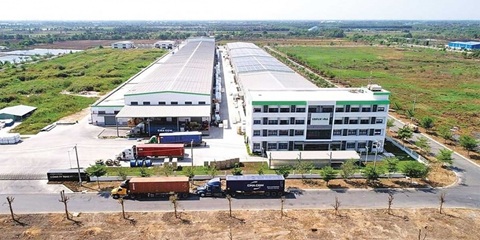
FOREIGN INVESTORS SEEKING A SYNCHRONISED MANUFACTURING ECOSYSTEM
Instead of focusing only on land costs and incentives as usual, foreign investors are seeking a synchronised manufacturing ecosystem, from stable power supply and logistics to shared infrastructure and the convenience of completing residence procedures for experts to serve their long-term investment in the country.
INFRASTRUCTURE / CONSTRUCTION / LOGISTIC / PORT
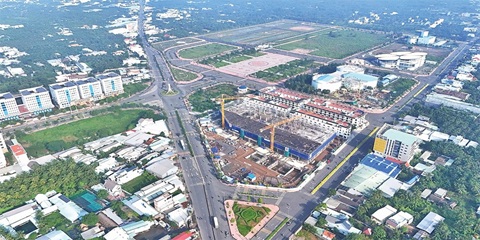
DONG THAP PROVINCE STEPS UP INDUSTRIAL EXPANSION AND INFRASTRUCTURE CONNECTIVITY
Accelerating public investment, strengthening inter-regional connectivity, and expanding industrial land are helping Dong Thap efficiently bolster competitiveness and drive economic growth. Following the 2025 merger of the former Dong Thap and Tien Giang provinces, the expanded Dong Thap province in the Mekong Delta faces mounting pressure to accelerate infrastructure development and strengthen connectivity among local economic zones, urban areas, industrial parks (IPs), and production centres.
PROPERTY / INDUSTRIAL ZONE
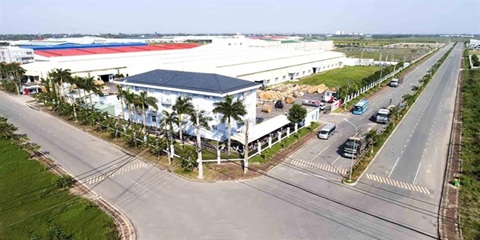
HCM CITY ATTRACTS US$5.7 BILLION INTO EXPORT PROCESSING AND INDUSTRIAL ZONES
HCM City attracted US$5.7 billion in domestic and foreign investment into its export processing and industrial zones during the first nine months of 2026. The figure exceeded the city's full-year target by 31 per cent, highlighting strong momentum in high-quality industrial investment under Resolution No.10-NQ/TW. Total investment reached 131 per cent of the 2026 target of $4.25 billion and represented a 29 per cent increase compared with the same period in 2025, according to the city's Export Processing and Industrial Zones Authority (HEPZA).
BANKING / FINANCE / INSURANCE / TAX
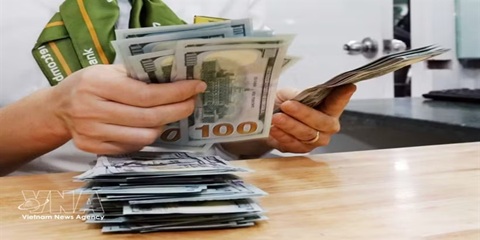
REMITTANCES TO HCM CITY RISE NEARLY 40% IN Q3
Remittances to HCM City reached more than US$2.83 billion in the third quarter of this year, up 39.5 per cent from the previous quarter and 3.6 per cent year-on-year. This was the first quarter showing positive annual growth this year, helping narrow the decline in remittance inflows over the first nine months. According to the State Bank of Vietnam (SBV)’s Regional Branch 2, remittances transferred to HCM City through credit institutions and economic organisations totalled $2.835 billion in Q3, an increase of more than $802 million from the previous quarter.
VIETNAM ECONOMY INVESTMENT
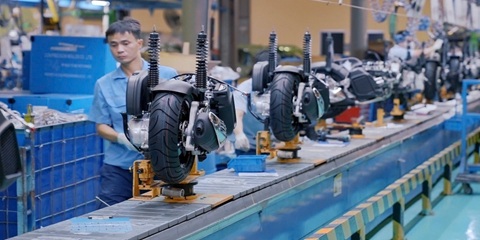
LOCALITIES REPORT BREAKTHROUGH RESULTS IN FDI IN FIRST NINE MONTHS
In Ho Chi Minh City, total registered capital reached $17.2 billion in the first nine months, up 4.2 times from the same period last year. The figure included more than $9.35 billion in newly registered capital and over $4.9 billion in additional capital for existing projects. Foreign investors also registered more than $2.9 billion through capital contributions and share purchases.
TECHNOLOGY
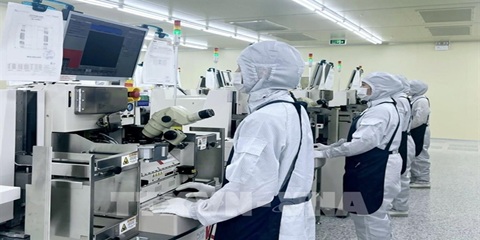
TECH SECTOR GROWTH OPENS UP OPPORTUNITIES FOR VIỆT NAM TO GO GLOBAL
The growth of the electronics, semiconductor and high-tech sectors worldwide is opening up a variety of opportunities for Vietnamese enterprises to integrate more deeply into the global supply chain. However, to become suppliers for these corporations, domestic enterprises must meet rigorous standards regarding quality, technology, productivity and order fulfilment capabilities.
Events Sponsors






















