Want to be in the loop?
subscribe to
our notification
Business News
VIỆT NAM, CHINA EYE CROSS-BORDER ALUMINIUM VALUE CHAIN
The Red River Basin cooperation mechanism is emerging as a platform for deeper economic integration between Việt Nam and China’s Yunnan Province, particularly in the development of the aluminium industry.
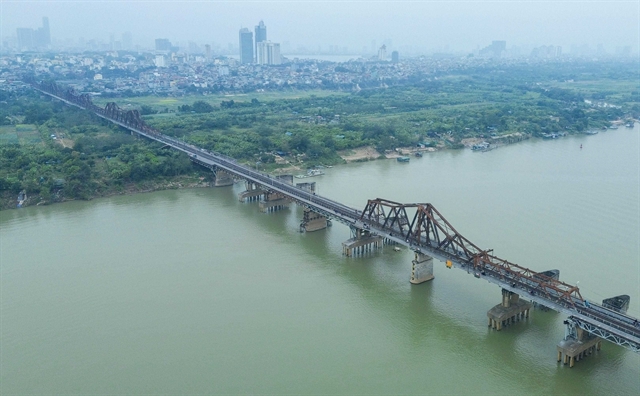
A view of Red River in Hà Nội. There is great potential for economic cooperation in general and the aluminium sector in particular between localities along the Red River Basin. — VNA/VNS Photo
HÀ NỘI — The Red River Basin cooperation mechanism is emerging as a platform for deeper economic integration between Việt Nam and China’s Yunnan Province, particularly in the development of the aluminium industry.
The initiative links seven localities in Yunnan with eight northern provinces of Việt Nam, aiming to streamline trade, logistics and industrial development along a shared economic corridor. Its focus on border economies, aluminium production and high-value agriculture reflects a broader attempt to institutionalise cross-border supply chains.
Officials argue that complementarities are clear. Yunnan brings strengths in machinery, chemicals and processing technologies, while Việt Nam offers abundant bauxite reserves, competitive energy costs and a fast-expanding domestic market.
“Close business linkages will be a direct driver of sustainable trade growth,” said Nguyễn Thị Thu Thuỷ of Việt Nam’s Ministry of Industry and Trade.
Geography reinforces the logic. Yunnan’s proximity to northern Việt Nam, combined with established river systems and multiple border crossings, lowers logistical friction. More importantly, the two sides occupy different but potentially compatible positions within the aluminium value chain.
Highlighting opportunities for cooperation and investment, Huang Li, general director of Yunnan Aluminium Joint Stock Company under Aluminium Corporation of China, one of the largest aluminium producers in Yunnan, said that Việt Nam’s rich bauxite reserves, combined with Yunnan Aluminium’s advanced technology and production capacity, could enable a model for developing a cross-border aluminium industry chain.
According to Huang, the company operates a fully integrated chain from bauxite mining to downstream aluminium processing with annual capacities exceeding 1.4 million tonnes of alumina and more than 3 million tonnes of aluminium.
Its facilities in Lancang, Honghe and Wenshan, clustered near Việt Nam’s Lào Cai and Lai Châu provinces, benefit from multimodal border infrastructure spanning road, rail and waterways. This provides the physical backbone for a cross-border supply chain, Huang said.
“As a large-scale alumina producer in the region, we are well positioned to support Vietnamese enterprises in terms of technology,” he added.
Yet Việt Nam’s aluminium ambitions remain constrained by domestic weaknesses. Despite favourable fundamentals, particularly low electricity costs and large bauxite reserves, the sector is still underdeveloped.
Local firms face persistent shortages of capital, skilled labour and advanced metallurgical technology. High-value output remains limited and domestic companies account for only around a fifth of export value, with foreign-invested enterprises dominating the sector.
Environmental pressures are tightening further. As global supply chains shift towards greener standards, the cost of compliance is rising. Without a rapid technological upgrade, Việt Nam risks being locked into the lower end of the value chain.
Huang suggests that cooperation could extend beyond resource extraction to include technology transfer, workforce training and the development of smart manufacturing systems incorporating data-driven production and advanced controls.
In the long term, the two sides should promote cooperation in high-potential areas, including bauxite exploration and mining, development of alumina and electrolytic aluminium projects, aluminium recycling, circular economy development and the establishment of industry standards.
Experts believe the aluminium market outlook is highly positive in the coming years, with global demand projected to increase by around 25 per cent by 2030.
Domestically, a series of large-scale infrastructure projects is generating strong demand for aluminium, particularly extruded aluminium products.
However, experts emphasise that to capitalise on these opportunities, enterprises cannot rely solely on preferential policies. The decisive factor remains internal capacity, including technological innovation, product quality improvement and the development of a highly skilled workforce.
Li Zhangwu, deputy prefect of Honghe Prefecture in Yunnan, stressed the potential for economic cooperation in general and the aluminium sector in particular between localities along the Red River Basin.
He proposed enhancing infrastructure connectivity, focusing on border gates, upgrading clearance points such as Hekou and Jinshuihe and resolving bottlenecks in cross-border transport.
At the same time, both sides should leverage industrial complementarity and expand cooperation in manufacturing, cross-border e-commerce, agriculture and tourism. As a bridge, Honghe Prefecture is ready to promote cooperation among Red River Basin localities and ensure that agreements are effectively implemented. — VNS
Source: VNS
Related News

INFRASTRUCTURE / CONSTRUCTION / LOGISTIC / PORT
VIỆT NAM-CAMBODIA TRADE GATHERS PACE TOWARDS $20 BILLION TARGET
Trade between Việt Nam and Cambodia continues to grow, remaining a bright spot and a key pillar of bilateral cooperation as the two countries aim to raise two-way trade to US$20 billion in the coming years. After setting a record of more than $11.3 billion last year, bilateral trade reached about $8.7 billion in the first eight months of this year, up 8.3 per cent year on year.
TECHNOLOGY
AI BEGINNING TO RESHAPE RECRUITMENT CRITERIA
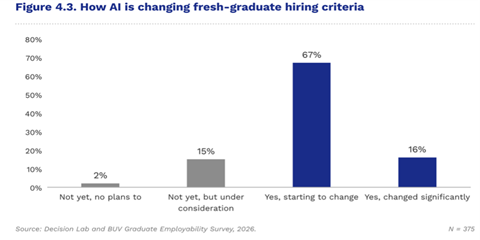
Digital literacy is the only capability area in which fresh graduates meet employers’ expectations, according to a new report. Yet, it is also the standard rising fastest, as businesses increasingly expect new hires to use AI effectively in the workplace. Some 83 per cent of employers say AI has changed, or is beginning to change, their hiring criteria, while 94 per cent report higher expectations for digital and AI capabilities than they had two to three years ago.

INFRASTRUCTURE / CONSTRUCTION / LOGISTIC / PORT
ĐÀ NẴNG GREEN-LIGHTS US$105 MILLION THAI DEVELOPMENT DEAL
The central city has approved an investment proposal by Thailand’s WHA Group to develop infrastructure for the 400ha WHA Đà Nẵng Industrial Park project on two communes of Thăng Bình and Đồng Dương, with an investment of more than VNĐ2.7 trillion (US$105 million). The city said it approved WHA Industrial Development International's status as an investor in the project, which is expected to take place between 2027 and 2034.

VIETNAM ECONOMY INVESTMENT
MOBILE PHONE EXPORTS RISE 20% TO $51.8 BILLION IN FIRST NINE MONTHS
Exports of mobile phones and components rose 20 per cent year-on-year to nearly US$51.8 billion in the first nine months of 2026, with China, the US and Republic of Korea accounting for more than half of the total. Shipments to the three markets reached a combined $26.18 billion, or 50.6 per cent of total exports of the product group during the period, according to data from the Vietnam Department of Customs under the Ministry of Finance.

VIETNAM ECONOMY INVESTMENT
FRUIT AND VEGETABLE EXPORTS POISED TO HIT $10 BILLION IN 2026
Fruit and vegetable exports are on track to reach nearly US$10 billion in 2026, after rising 19.9 per cent year on year to nearly US$7.4 billion in the first nine months, driven by strong seasonal demand and abundant tropical fruit supplies. The Ministry of Agriculture and Environment said the growth reflected stronger international demand for fresh produce and processed agricultural products.
GARMENT / TEXTILE
TEXTILE EXPORTS FACE DUAL CHALLENGES OF SUSTAINING ORDERS AND BOOSTING EFFICIENCY AMID GROWING COMPETITION
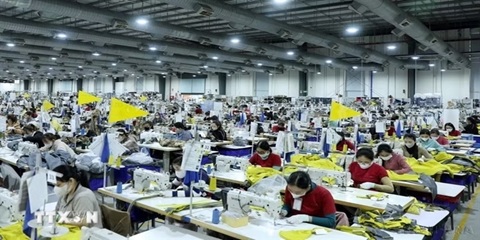
Data shows that the textile and garment sector maintained its growth momentum in the first nine months of this year. The industry's total export turnover reached an estimated US$35.721 billion in the first nine months of this year, up 3.3 per cent year-on-year. Despite posting encouraging export figures, Vietnamese textile and garment enterprises continue to navigate unpredictable market variables.
Events Sponsors






















